Category Archives: news

Anime NYC 2025, Saturday

Saturday is always the busiest day, but this one proved challenging, with panels ranging from noon to 8:45pm on my schedule. It was like running a gauntlet. At the start, I was debating whether to see SuBLime Manga, Dark Horse Manga, or a guest appearance by Yu Saito, the editor-in-chief of Weekly Shonen Jump. I chose the latter, and I’m glad I did, as he was a very outgoing, nice guy who gave some great answers.

For those living under a rock, Weekly Shonen Jump started in 1968, and publishes every Monday. It has 20 manga series every issue, and currently has 1.05 million in circulation, not counting digital. It sells MUCH better than, say, Batman (which Saito loves). But it used to sell 6 million back in the good old days. It also has lots of sister magazines, like Grand Jump, Ultra Jump, V Jump, and Jump Square. Jump is, per its editor-in-Chief, best at finding new talent and putting them in the spotlight – each new series gets a cover.

Saito startled everyone by admitting he started job searching and was hired by Shueisha in 2005, and has been there ever since. This was his first company! He started editing titles such as Gintama and Hunter x Hunter, and also was the first editor on Kuroko’s Basketball and Nisekoi. He was asked if Bakuman was accurate in terms of how it depicts Jump, he admitted that the best series for realistically portraying it is Tokyo These Days – out from Viz!

Again and again, the same thing came up. Jump nurtures new talent, and seeks it out. Which means a lot of failed series, but they are always encouraged to try again. He had a funny story about Gintama’s author, famous for blowing deadlines. One time an entire page was still blank, so as they drove to the printers, Sorachi sat in the back of the taxi and drew the entire page in half an hour. Saito’s editorial job was to make sure the ink did not spill all over the cab.

He was asked about the difference between Jump in 1968 and now. Jump back then had Umezz doing shonen work, as well as things like Barefoot Gen! He insists that Jump is essentially the same, as they want to publish what they find interesting. He was asked about trends, and admits he gets asked that a lot. They’re too busy to make trends! He was also asked how an editor cheers up a depressed author, and he said fan mail is always the best medicine – especially overseas fan mail.

Asked about his vision for the future, he says it’s to make Jump the best environment for both editors and creators to make the best manga they can. Both existing and new creators have an equal shot with every new Jump series. Asked about overseas readers and creators, he said that there are non-Japanese winners in competitions, and while there are still hurdles, he thinks they will have more. It ended up being a terrific panel, and I was very happy I attended.

The next panel I attended was called Oh, Grow Up! Seinen and Josei. This was a panel more along an educator/library track. It featured Billy Tringali, Jamila Rowser, Tony Weaver, Jr., Regine L. Sawyer, Ajani Oloye, and the moderator, Dr. Shamika Mitchell. They all have a lot of experience with this sort of thing, being parts of foundations, academia, manga creators, content directors, and publishers. And they wanted to discuss what seinen and josei means HERE – not in Japan.

This is important, as in Japan it’s fairly easy. Something published in, say, Weekly Morning is seinen, regardless of the genre of the manga itself or the main characters. Whereas the panel here were quite happy to discuss Bleach or Naruto as examples (briefly, a ship war started to burble up so they moved on). The idea is that as the series went on and the characters aged and matured, it got more serious, and had a lot more blood, gore and death. Is it still a shonen manga for kids?

Genres in the West change a lot. Stuff for people in their 20s is now “new adult”, not “young adult”, which was new to me. Manga that comes out here also has content warnings. All Ages, Teen, Teen +, and Mature. A lot of folks admitted they ignored the ratings entirely when searching for a new title. It can also depend on intended sales. Tokyo Ghoul has enough violence to be Mature, but it’s Teen Plus, because they know it sells like hotcakes.

Some titles we consider Shonen as they run in Jump may not be. Spy x Family is rated Teen Plus because of its themes of war and the aftereffects, as well as violence towards children. A series read by 5-year-olds as a manga could not, if it was written by someone here, get bought by Scholastic. What’s more, educators have to be careful what they teach, as sometimes budding young Karens are quite to go to the Dean and say this manga is against their moral standards.

Folks were asked what they wanted to see more of, and a more diverse race/nationality in manga was mentioned. There is a manga called Hanbun Kyodai that is a short story collection about those who are part-Japanese and part-another nationality, such as French Caribbean, or Chinese. Someone used the word “half”, and it came up that in this manga, that word is discussed, as some folks are fine with it whereas some folks really hate hearing it.

They also talked about series that deal with adult concepts that are not sex or violence, such as Life Lessons with Uramichi-Oniisan, put out here by Kodansha. The adult content there is taxes. As for josei, it’s hard to market here, as the publishers don’t see a market for adult women. That applies to manga as well – Skip Beat!, a series about an up-and-coming actress, has reached 50 volumes here, but never gets any publicity.

Q&A had a Barnes and Noble employee ask about what happens when a kid wanders into the manga section there and gets something inappropriate. “Parents need to parent!” was the consensus – everything these days seems to be about finding something else for parents to blame. This was quite an interesting panel that went in directions I had not considered.

I knew Yen Press would be packed to full, so I did something I hadn’t done in some time – I room camped. This meant watching the premiere of a new anime not due out till October, Hero Without a Class. It was a double-episode premiere that, frankly, seemed to have every predictable cliche in the book. That said, at least it wasn’t unpleasant, and I could have sat through much worse. If you enjoy series about guys who work hard to get really overpowered, this is one.

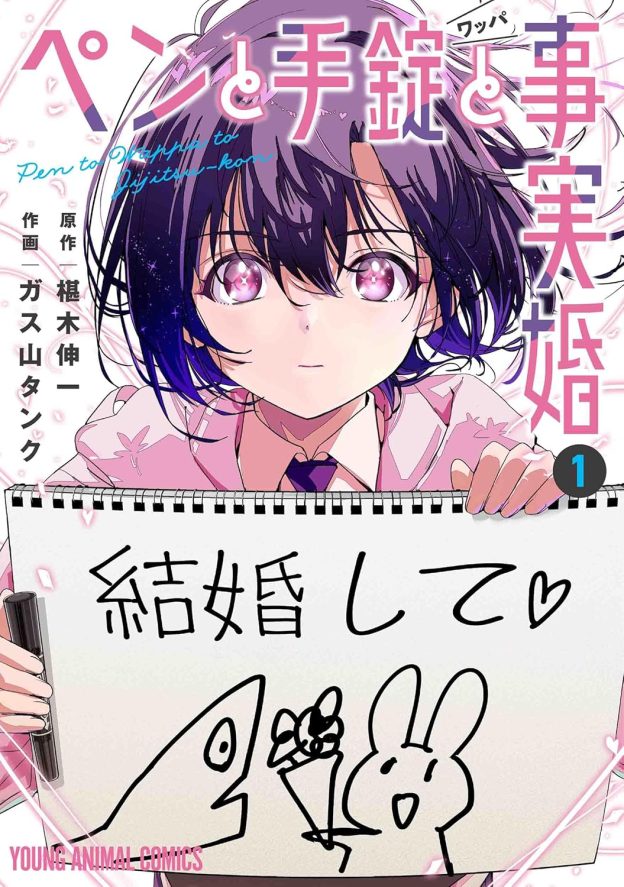
As such, I was there when Yen finally started their panel, 10 minutes late. They were having AV issues, meaning we did NOT see the videos for the new Blade & Bastard and Holy Grail of Eris anime due out soon. Yen knew what we were here for, and went straight to announcements, starting with A Pen, Handcuffs, and a Common-Law Marriage (Pen to Wappa to Jijitsu-Kon), a Young Animal series about a mute girl who witnesses a crime, and when dealing with the detective who’s on the case, falls for him. But he’s oblivious!

Yen had already licensed Sailor Zombie digitally, but it’s now coming out in print omnibuses. Associate Professor Akira Takatsuki EX is a spinoff short story collection from the main series, also licensed by Yen. Bad Girl will be familiar to folks from the anime, but now Yen have the manga, which runs in Manga Time Kirara Carat. Our heroine falls in love with her senpai, who is on the disciplinary committee. The best way to get her attention is to be… a bad girl! Too back she’s horrible at being bad.

Battlefront of the Great Powers (Rekkyou Sensen) is a SF dystopia from Comic Zenon. The nations of the world must fight in a giant tournament. How to Love a Loser (Dame Ningen no Itoshikata) is from Web Comic Apanta, and is a romance between a pathetic loser and his perfect girlfriend. Casebook of Kurumi Takisaki, Magic Detective (Majutsu Tantei Tokisaki Kurumi no Jikenbo) is a short story collection that is a spinoff of Date a Live, featuring one of the supporting characters.

The Bubble Love of the Mermaid (Ningyo no Awakoi) is a new series from the creator of My Happy Marriage. It deals with some of the same themes, also staring a young woman being abused by her family. To the Monster I Love (Bakemono no Kimi ni Tsugu) is a light novel about a spy who is being interrogated by his own workplace about the monsters who he loves, appropriately enough. Lycoris Recoil: Recovery Days is another slice-of-life short story collection.

Legend of the Far East’s Savior (Gyokutō Kyūseishu Densetsu) is a novel series about a world that is about to fall to demons, but fortunately, they have giant mecha. For Gundam fans, apparently. And the big news was Frieren: Beyond Journey’s End ~Prelude~ (Shōsetsu Sōsō no Frieren ~Zensō~), a prequel short story collection to the insanely popular manga and anime series. You’d think Viz would have snatched this up, but it’s going to Yen On instead.

The Denpa panel was fairly unique, mostly as Ed Chavez could not be there this year (he was at the con, just not the panel), so the other three Denpa employees chaired it. They clearly missed Ed, but they soldiered on. I say Denpa, but this was a combination Denpa and KUMA panel, and it became clear very fast that the bulk of the enthusiasm in the room – some ear-splitting – was for the BL. Appropriately enough, they only had two new licenses, and they were both BL.

Fukutsu no Zono (no English title yet that I could see) was expected, as there’s apparently already a preorder page up. Two rivals who are also delinquents have an awakening when it turns out that one… makes erotic noises? This runs in B’s-Lovey Recottia. The other title was Takatora and the Omegas (Takatora-kun to Omega-tachi). This got a HUGE SCREAM from the crowd, it was ear-splitting. The plot concerns an heir and standup citizen, at a classroom made for alphas, discovering (you’ll never guess), he’s actually an omega! This has fans.

The final panel was J-Novel Club, at a very late hour – I apologize to Sam for ducking out right after the announcements, but I wanted to get back and type up the day. They too went straight to the new titles, and there were a lot. Finding My Way to (You) in This MMO World (Game no Sekai ni Tensei Shita Ore wa ○○ ni Naru Made) is a new BL title in the J-Novel Knight line. A young man with memories of this world as a game has to escort a prince who is disguised as his sister. Love ensues.

The Girl with the Green Eyes: Heir to a Monstermancer (Mamono Tsukai no Musume: Midori no Hitomi no Shōjo) was already announced at AX, but not available until after this con. She’s cute! She’s a monstermancer’s heir! She wears a slime as a hat! Fired? But I Maintain All the Software! (E, Shanai System Subete Wanope Shiteiru Watashi o Kaiko desu ka?) is an unusual manga (based on an as-yet-unlicensed light novel) about a woman who gets fired for cosplaying at work, and then hired by a friend to teach coding. This is a genre J-Novel Club have not ventured into before. It runs in Comic Pash!.

One Last Hurrah! The Grayed Heroes Explore a Vivid Future (Jijibaba Yūsha Party Saigo no Tabi ~Oita Saikyō wa Iroasenu Mama Mirai he Susumu Yō desu~) stars a former hero and saint who are now in their old age. Wanting to journey to see grandchildren, they end up getting the old party back together. Miss Blossom’s Backward Beauty Standards: Give Me the Ugly Crown Prince! (Bishū Abekobe Isekai de Busaiku Ōtaishi to Kekkon Shitai!) stars a reincarnated girl who finds herself in a world where ugly is beautiful and vice versa, but she’s determined to get her guy anyway.

Looks like a Job for a Maid! The Tales of a Dismissed Supermaid (Maid Nara Tōzen Desu. Nureginu o Kiserareta Bannō Maid-san wa Tabi ni Deru Koto ni Shita) is sort of a the mage version of a disgraced noble book. Maid framed for crime, fired, ends up on a journey and shows how awesome she is, others regret firing her. This Alluring Dark Elf Has the Heart of a Middle-Aged Man! (manga) (Watashi no Kokoro wa Ojisan de Aru) is based on the light novel published by Cross Infinite World. An introvert dies and finds he has been reborn… into the body of a powerful female dark elf! But he still can’t talk to people normally. This also runs in Comic Pash!

My Death-Defying Dog: Man’s Best Friend, World’s Best Savior (Uchi no Inu ga Tsuyosugirun Desu ga!? Tensei Shitara Megami-sama no Shukufuku de Sekai o Sukū Koto ni Narimashita) is *also* Comic Pash!. Guy sad when his dog dies can be reunited with him in another world… but the dog is the dog hero who saves the world. The guy is just a guy. Royal Spirits Are a Royal Pain! Give Me a Regular Romance (Tensei Reijo wa Seirei ni Aisarete Saikyō Desu…… Dakedo Futsū ni Koi Shitai!) is another one of those “I want to be normal and yet everything I do makes be weird” type of light novels.

The Amazing Village Creator: Slow Living with the Village Building Cheat Skill (Bannō “Murazukuri” Cheat de Otegaru Slow Life: Mura desu ga Nani ka?) is… well, if you guess “shunned and disowned for bad skill, but it’s really a great skill!”, give yourself a cookie. Manga Up! has the manga. The Fearsome Witch Teaches in Another World: Pay Attention in Class! (Isekai Teni Shite Kyōshi ni Natta ga, Majo to Okorareteiru Ken ~Ōzoku mo Kizoku mo Kankei Nai kara Majime ni Jugyō o Kike~) has a teacher with regrets reincarnated into a fantasy world where she becomes a powerful sorcerer. Now she has to teach problem children. They also have the manga, which runs in Comic Earth Star Online.

Lastly, they have The Isle of Paramounts: Reborn Into a Slow Life Among the Strongest in the World (Tensei Shitara Saikyō Shu-tachi ga Sumau Shima Deshita. Kono Shima de Slow Life o Tanoshimimasu), a slow-life harem title about a guy who wants a quiet life on an island, but fins it overrun with powerhouses. We then got ads for the Blade & Bastard anime, the 100th Time’s the Charm anime, and a promise that the 3rd light novel contest is coming soon. And then I ran off, so I could eat a very late supper and type this up.

Tomorrow I only have one panel, so it will be much faster than this. What a stacked day.
Anime NYC 2025, Friday

Anime NYC is back! Just you and 140,000 of your closest friends at the Javits Center in New York City, here to celebrate anime, manga, light novels, manhua, manwha, webtoons, danmei, etc. As ever, most of the meat of this con is on Saturday, but there were several items worthy of interest. First of all, the con actually began on Thursday, with a couple of screenings and a few hours of the exhibit hall and Artist’s Alley available. Alas, I was across town at the Japan Society, but will have to wait on telling you about that till later. For the purposes of my blog, the journey begins Friday, with a panel I had not planned to attend but which ended up being very interesting.

Mangamo! Which I almost missed because it was advertised as being about My Love Story with Yamada-kun Is Level 999, but I noticed that they were also tied into the new Random House imprint Inklore, so they were also talking about the new title I Wanna Be Your Girl, which debuted last month. On the panel were Kwok-Wai Hanson of Mangamo, as well as a representative from Comikey. Mangamo is one of those $5 per month digital manga by chapter apps, with 400+ titles. I Wanna Be Your Girl is coming out here with 1-4 (eventually) in print, which is more than it got in Japan. It’s rare we get print but Japan is digital only.

The author was not present, but shared some thoughts in slides. They were dealing with being a “troubled student”, who had class in a room separated from other students, and also dealing with identity issues. They also talked about how they love readers yelling at the characters when they screw up and make mistakes. They were shocked but delighted when they heard the series was licensed in English. We then got a video (meant for phones, so it was a bit small) advertising Yamada Level 999. The author (also via slide) thanked everyone for the messages and notes they got last year from the ANYC 2024 panel, and will treasure them.

Mangamo went over their recent series, and then gave us some new announcements. My Gyaru Wife’s Secrets (Gal Yome no Himitsu) is an office romcom where the married couple have to keep things a secret, as their office forbids romance! It runs in Ganma! 12cm Promise with a Cool Girl (Kakkoi Onnanoko to 12 cm no Yakusoku) is one of those “short cute boy/tall handsome girl” series. Also from Ganma!. I’m That Monster Girl You Once Helped Out: A Middle-Aged Teacher Finds Unexpected Popularity in Another World (“Ano Toki Tasukete Itadaita Monster Musume Desu.” Isekai Ossan Kyōshi Totsuzen no Moteki ni Konwaku Suru) is another Ganma! title about a guy who was isekai’d 20 years ago and is now a teacher, then a monster girl transfers into his class.

Damedol and the Only Fan in the World (Damedol to Sekai ni Hitori Dake no Fan) is a manga about an idol who can’t sing, can’t dance, and is kind of unpleasant… but she has one fan who really loves her. Ganma! again. I Offer My Manliness To You (Kimi ni Sasageru Otokomae) is also a cute guy/handsome girl title, and like all the other announcements, it runs in Ganma! This may be a one-magazine publisher, but if you like cute romcoms, they’re right up your alley. They also promised that they’re going to start doing some webcomics soon, as they’ve worked out how to use the app to show them.

After this, it was time for the panel devoted to recent American Manga Awards Hall of Fame recipients Studio Proteus! If you read any manga in the 1980s or 1990s, chances are that they were behind a lot of it. Nausicaa, Appleseed, Ghost in the Shell, Oh My Goddess, Dirty Pair, etc. It was the brainchild of Toren Smith, who sadly passed away in 2013. However, they did manage to get Tom Orzechowski on the panel, and he had plenty of stories to tell about its history and what things were like back in the day. Deb Aoki moderated, and we also had Carl Gustav Horn of Dark Horse Comics and Patrick Crotty of Peow.

The panel started with some Peow announcements. They told us about the November release of classic 80s shonen manga Stop!! Hibari-kun!. The story of a young man who moves in with four daughters, only to find that one of the daughters is a boy. This is very “of its time” while at the same time being incredibly ahead of its time. It’s worth checking out. They also announced a huge reprint of SF3D Chronicles, the old history of 80s model kits by Kow Yokoyama. This also looks like a labor of love, as well as a brick. They’re working with Zimmerit on this, and it has articles from Hobby Japan from 1982-1985.

After this we got into the nitty gritty of Studio Proteus, back in the days of 32-page floppy comics, analog art, and photostats galore. There was simply not a market for unflipped, 200-page manga titles in 1987. Toren was right, the only way to sell manga at that time was the way that they did. Their first title was Outlanders, back in 1987. Black and white comics were a niche at the time, and one that dark Horse Comics was uniquely suited for. Carl pointed out that a lot of the huge deluxe editions of manga we get these days are simply the same size as the old comics of the late 80s/early 90s.

We then got the history of Studio Proteus. This starts back in the days well before anime cons, when they had anime rooms at science fiction conventions. The best rooms were always the ones run by Toren, who went above and beyond and even printed show notes for people, as these were raw Japanese shows – no fansubs yet! Carl met Toren when Carl was just 14 years old. Tom met Toren in 1987, also at a convention. Tom had been lettering X-Men for Chris Claremont for years by this point. Tom felt excitement while reading manga that reminded him of the times reading underground comics in the 1970s.

They talked about photostat, which was an oversized film print – how they made tankobons back in the day. Tom had to glue SFX directly to the page, and it was a lot of hard work. The biggest of their titles was, of course, Ghost in the Shell. Which came out flopped, and in color, very rare for manga at the time. It made the cover of Wizard Magazine, the only manga to do so. Nowadays, manga has long outlived Wizard Magazine. Toren never even considered not flipping the manga, as he felt the learning curve would be too difficult. Ten years later, Tokyopop proved that it was a lot easier than everyone had thought.

There was a brief quote from Frederick Schodt, who could not be at the panel. Once, he was completely flummoxed about what a line in GitS meant, and faxed Shirow to ask. Shirow responded “I’m not sure what I meant either. Make something up.” Deb was able to speak with Tomoko Saito (who was a famous mangaka in her own right) for one of the few times after Toren’s death. She spoke about how Toren, who had sold everything he owned to get money to go to Japan, was broke, and Gainax let them stay free at their filthy, FILTHY apartments, which Toren was in charge of cleaning. Landlords would not rent to manga artists. they were too messy.

Studio Proteus’ offices were in Tom’s house, as Toren was usually broke in some way or another. He had offices below Tom’s washer/dryer. He slept in a room of purples and pinks, which, as Toren was slightly color blind, ended up making him sick! Tom admitted that dealing with manga artists was a lot easier than dealing with Chris Claremont. He had no idea how well the titles were doing at the tie, as he just kept working. They also discussed the Studio Eros manga that Studio Proteus did for Fantagraphics – the sales of which kept that company in business! They had to de-mosaic and draw in some censored art – Tom asked Toren what to do, and Toren responded, “Well, you’ve got a penis, use it as a reference.”

Tom was a great panelist. He talked about dropping Marvel titles if he didn’t like them, which stunned everyone in that work for hire culture. He also says that manga have actual endings, as opposed to most US comics, which are not allowed to end. Overall, it was a fantastic panel, I was enthralled.

The final panel I attended on Friday was Seven Seas Entertainment, which was packed and full of raffle giveaways. We had publisher Lianne Sentar, marketing person Lauren Hill, and licensing person Lena LeRay. Seven Seas is the #1 independent manga publisher, with oodles of separate imprints, which they broke down. Seven Seas itself, Ghost Ship (naughty manga for guys), Airship (light novels), Steamship (naughty manga for girls), and Siren (audiobooks). There’s also their danmei, webtoons, boys’ love, and girls’ love. They went over many of their recently licensed titles out later this year, including their first baihe (Chinese yuri) title, The Beauty’s Blade.

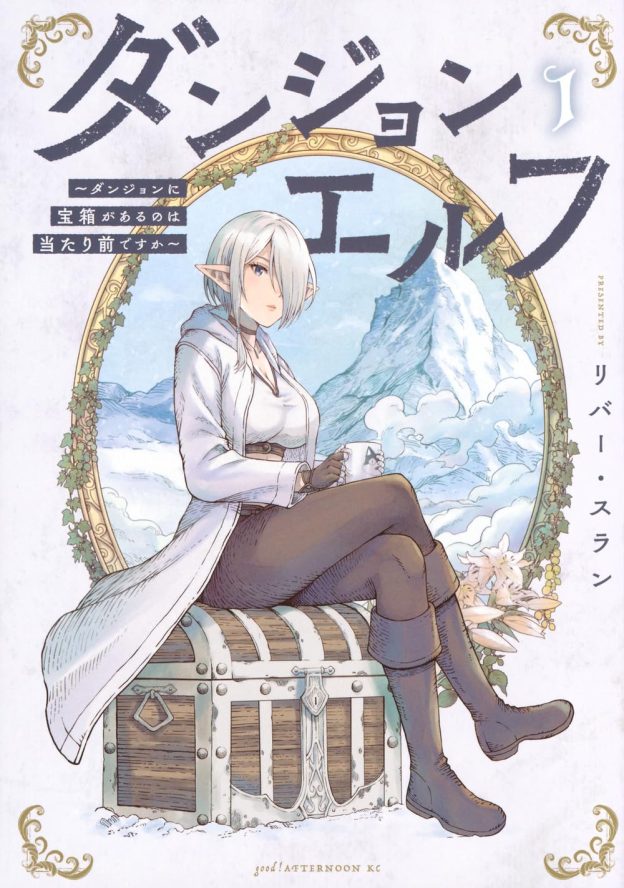
New licenses started with the main imprint. Dungeon Elf: What’s a Dungeon without Treasure Chests? (Dungeon Elf – Dungeon ni Takarabako ga Aru no wa Atarimae desu ka?) is a seinen manga from good! Afternoon, which has been on the K Manga app. It’s about the girl who places the treasure chests in dangerous places in the dungeon. A Prince of a Friend (Ouji-sama no Tomodachi) is a shonen comedy from Dra-Dra-Sharp#. An unlucky guy is bad at romance. Can his super hot friend who is a girl (but not a girlfriend) help him out? Catnaps, Catnaps Everywhere! (Acchikocchi Necchi!) is the latest title from PANDANIA, the cat author whose titles Seven Seas has been pouring out.

Girl Meets Rock! (Futsu no Keionbu) was the big get for me. A Shonen Jump + title about a musical girl who tries to get a band going in high school despite being, well, awkward, it’s got an incredible amount of buzz. They also announced an omnibus version of Dai Dark, by the Dorohedoro author. 3-in-1 editions. They then announced a bunch of new Siren titles, including The Twelve Kingdoms, which was the one that interested me the most. We’re also getting Love Between Fairy and Devil, Riverbay Road Men’s Dormitory, Astrolabe Rebirth, and Legend of Exorcism.

The one big Airship title was History of the Kingdom of the Orcsen: How the Barbarian Orcish Nation Came to Burn Down the Peaceful Elfland (Orcsen Oukokushi ~Yaban na Orc no Kuni wa, Ikanishite Heiwa na Elf no Kuni wo Yakiharau ni Itatta ka~). We’re also getting the manga for this. A dark elf driven out of her country by those she trusted must now ally, somehow, with Orcs. We’re also getting a short story collection for the popular manga The Dangers of My Heart. There was also a Webtoon announcement, How to Survive As a Maid in a Horror Game. It’s a basic shoujo “reincarnated into a game” series, only the game is horror, and the murderer has already found her.

The first BL series announced was His Little Amber, which ran in a magazine with the name (not making this up) of NUUDE. A yakuza picks up a leopard cub five years ago. Now, the leopard cub is… a guy? Who is sexy? Who would have thought it? Dear Sister, I’ve Become a Blessed Maiden (Zenryaku, Onii-chan wa Seijo ni Narimashita) has another great magazine name, BL Screamo core. A young man who adores his sister saves her when they’re both isekai’d. Sadly, now the man has to take his sister’s place as a sexy magic dispenser. Wild Love: A BL Guide to the Animal Kingdom (Ikimono BL Zukan – Sekai wa XX ni Michiteiru) runs in Pureri, and is a genuinely researched guide to animals… it’s just the animals are portrayed as gay couples.

The one yuri title announced was The Delinquent and the Transfer Student (Sukeban to Tenkousei ga Kudaranai Asobi o Suru dake no Hanashi), a Comic Action title that’s an “old-school 80s comedy” between a sweet transfer student and a rough delinquent girl. Their last announcement was danmei, and it was Panguan: The Twelfth Gate. This runs in the same universe as Copper Coins. Best described as “what if the man who rowed people across the River Styx got a roommate?”.

And that’s the end of Friday! Saturday is longer, much longer – my last panel ends at 9:45pm. I apologize if the next post drags into Sunday.

Anime NYC 2024, Sunday

Sunday is usually my quietest day at Anime NYC, usually because I need to leave with enough time to get home before it gets too late. (Which is why I missed the Loner Life in Another world premiere, sorry, Haruka, I hope you were super annoying). I had two panels to cover, though, starting with one that is always a favorite, J-Novel Club! Sam Pinansky was nice enough to explain that the timing of this particular convention means that they had fewer titles than usual to announce, as they usually announce 8-9 titles every two months, and this falls into the gap. Joining him was Madison Salters, their business director.

Before we got to the announcements, though, there was a recap of the first J-Novel Club Original Light Novel Contest, which had a grand prize of 10,000 dollars, and in addition to the JN-C staff had, as one of the judges, Saga of Tanya the Evil author Carlo Zen. Generally speaking, the ones that got a prize (who were announced at AX) were the ones who recognized how to hew close to the spirit of what “light novel” means these days, gliding along the paths while making everything interesting. The grand prize winner was ATLAS: Her, the Combatant and Him, the Hero, by John W. Rohman. It impressed Carlo Zen so much that he lobbied a publisher to have it translated and released in Japan!

They also announced there will be a second contest, which, after gaining experience from the first one, will be divided into two categories. The first is books that work well as a stand alone, that feel complete in one volume, even if there may be a sequel hint. The second category is books that are clearly part of an ongoing series, and leave plot threads dangling by the end of the book. The word count for the second category is deliberately shorter, as they also ask the contest entry to have 10,000 words with a detailed plot breakdown of how the series will go and descriptions of the major characters. The submission form will be on J-Novel Club’s website starting in September.

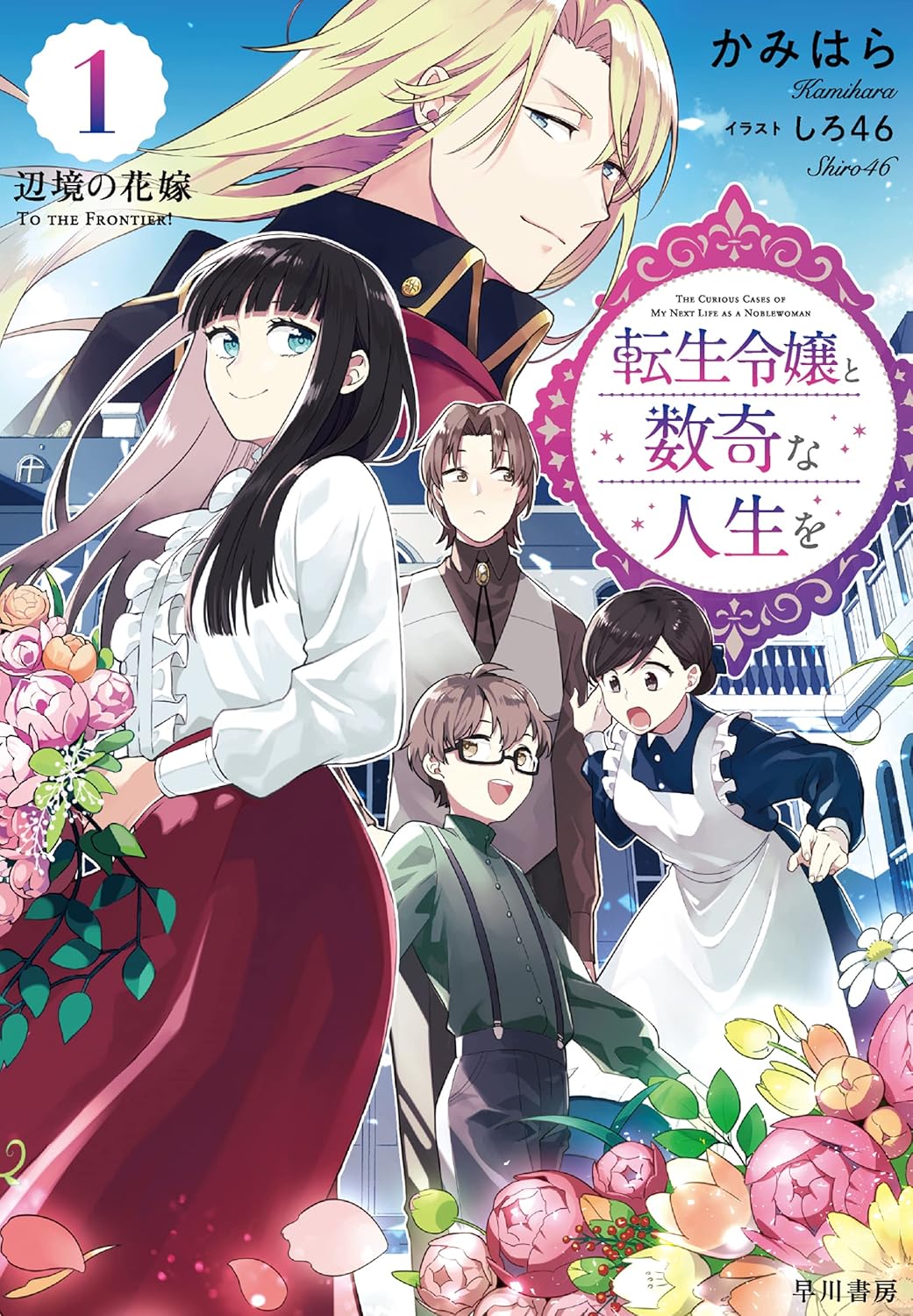
We then got to the announcements. The biggest for me, which means that I’m moving it to be first, is The Trials and Tribulations of My Next Life as a Noblewoman (Tensei Reijou to Suki na Jinsei wo). This one has a LOT of buzz from LN readers – it was in the top 10 of the Kono Light Novel ga Sugoi! lists, some fans call it “josei Game of Thrones”, and its volumes are bricks – in fact, the volumes are so long Sam is asking the publisher (Hayakawa, who normally do science fiction, so this, like JK Haru, is outside their wheelhouse) to divide future books in two. Karen is reincarnated as a noble, living the easy life. Then she’s banished! Now she’s scrounging as a commoner. But then she’s brought back into the family! Except she has to choose between suspicious marriage #1 and suspicious marriage #2. Apparently twists and turns are this book’s bread and butter. Don’t let the simple, generic title fool you.

The actual first announcement was From Villainess to Healer: I Know the Cheat to Change My Fate (Kaifukushoku no Akuyaku Reijō). This is just the manga for now, though stay tuned regarding the light novel. It’s another girl with dark magic whose engagement is broken. Her ex wants to marry a healer. So she changes classes to become a healer… and goes off on adventures. Because who wants to deal with her loser ex anyway? The Dorky NPC Mercenary Knows His Place (Kimo Ota Mob Yōhei wa, Mi no Hodo o Wakimaeru) is a sci-fi series (and Sam begged readers to buy more SF, as they don’t sell nearly as well as the fantasy isekai stuff) about a merc who is familiar with how stories go, and knows he doesn’t want to be a hero of any story. He wants to be “space pilot #6” in the credits. Unfortunately… he keeps attracting gorgeous women! This is apparently more of a deconstruction.

Lastly, we have Dimension Wave, from the author of The Rising of the Shield Hero. This one is lighter in tone than Shield Hero, and apparently is what the author writes when they want to take a break. A young man decides to join his sisters in playing in a popular game where you can live years in just 24 hours. But he’s tricked, and now he’s in the game as a girl. With a name that’s totally cringe. Oh well, I’m sure he’ll do fine as long as he finds enough wacky, eccentric characters to hang out with. This seems to be fluffier and hopefully a bit less edgelord than Shield Hero.

I then attended my final panel of the day, A History of Manga by Decade. The moderator was Jillian Rudes, the panelists were Erica Friedman and Zack Davisson. The panel was designed in part to promote a new book coming out, Manga: A Visual History. Coming out next year, it’s a big coffee table book that covers manga’s entire history, though Zack and Erica start with the 1940s for the purposes off this panel. The authors are Frederik Schodt, Rachel Thorn, Zack, Erica, and Jonathan Clements. They talked about how it was a commissioned book – the publisher wanted the book, then found writers, rather than the writers shopping a book to a publisher.

The authors were assigned titles. Sometimes this means they got a series they didn’t like, and they grew to like it, such as Zack with Initial D. Sometimes they ended up hating it even MORE, like Erica with a series she refused to name. The series it’s part of is very regimented, so they had to deal with word counts, sidebars, having your sidebars rejected, etc. It’s definitely a book that you might get for a family member who wants to know what the fuss is all about with this manga stuff. For this panel, they took a decade and Zack and Erica each picked one title they felt exemplified that decade.

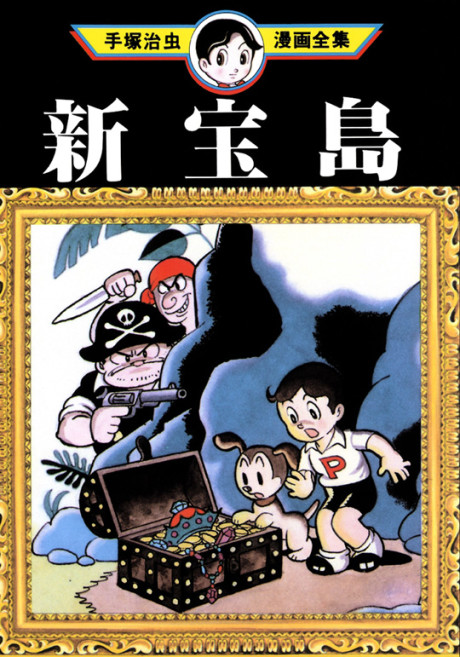
In the 1940s, Zack’s book was Shin Takarajima, aka New Treasure Island, the first manga drawn by Osamu Tezuka. Tezuka is the manga who created so much of what we now think of as the manga style. He made manga feel like a film. This was one of the first manga that was a story, rather than a collection of gags or bits. Erica chose Sazae-san, by Machiko Hasegawa. One of the most iconic manga in all of Japan, even people who have no idea what manga or anime is know and have read Sazae-san at some point. It’s a simple daily life of a woman and her family, and she’s described by Erica as a “little feminist”.

For the 1950s, they both picked Tezuka, though not the same title. Erica’s choice was Jungle Taitei, aka Kimba the White Lion, one of the first of Tezuka’s series to really hammer on environmental issues, which he championed his whole life. It was also the inspiration for the famous anime… and yes, also the inspiration for The Lion King, Disney’s 1990s musical which changed the landscape of animated movies. Zack’s choice was Tetsuwan Atom, aka Astro Boy, the ultimate “robot boy with real human emotions” story, which also spawned a legendary anime, as well as the modern retelling Pluto by Naoki Urasawa. It’s not about robots, it’s about people – and about class structure, with the differences between the rich and the poor really showing.

For the 1960s, Zack chose (we all knew this was coming) Gegege no Kitaro, by Shigeru Mizuki. If you ask who was the most influential manga artist who wasn’t Osamu Tezuka, Shigeru Mizuki is the obvious answer. He wrote in the days of “rental manga”, cheaply made and printed, and also grubbier and more punk. The yokai genre, and really any manga series with a monster in it at all, would be noting without him. Speaking of genre defining, Erica picked Cyborg 009, by Shotaro Ishinomori. Ishinomori is known as the father of “sentai” shows, and this was an early example, with nine people being experimented on and then fighting back. It’s the first superhero team manga.

Time for the 1970s, and here again the answer was obvious for Erica, who picked The Rose of Versailles, by Riyoko Ikeda. Summed up as “the greatest shoujo manga epic ever”, this story of Marie Antoinette and “Lady Oscar”, the captain of the royal guard, allowed Ikeda to show readers revolution and popular uprising within a manga supposedly for young girls to read. And young girls definitely read it – and loved it. Zack chose Harenchi Gakuen, aka Shameless School, by Go Nagai. Nagai is better known for his giant robot and mecha titles, as well as the titillating Cutey Honey, but Shameless School went beyond titillating. A scandalous sensation at the time, parents of Weekly Shonen Jump readers demanded it be toned down. Instead, they made it worse. A comedy high school series filled with enough lechery that Ataru Moroboshi would blush, this one is still probably too hot to be licensed in North America.

Both Erica and Zack agreed on the author in the 1980s, but once again had two different series. Zack chose Maison Ikkoku, by Rumiko Takahashi, which he describes as a perfect love story that still makes him swoon when he reads it. It’s Takahashi making an effort to be realistic, despite including her signature funny and incredibly annoying characters (including the leads). Erica also picked Takahashi, but her choice was Ranma 1/2. She pointed out that Takahashi excelled at writing romance manga that was also really funny, and also in giving the reader exactly what they wanted. Ranma was also a breakout hit in the West, one of the most influential series in terms of gathering fans. (including myself – I got into anime as a major fan via Ranma.)

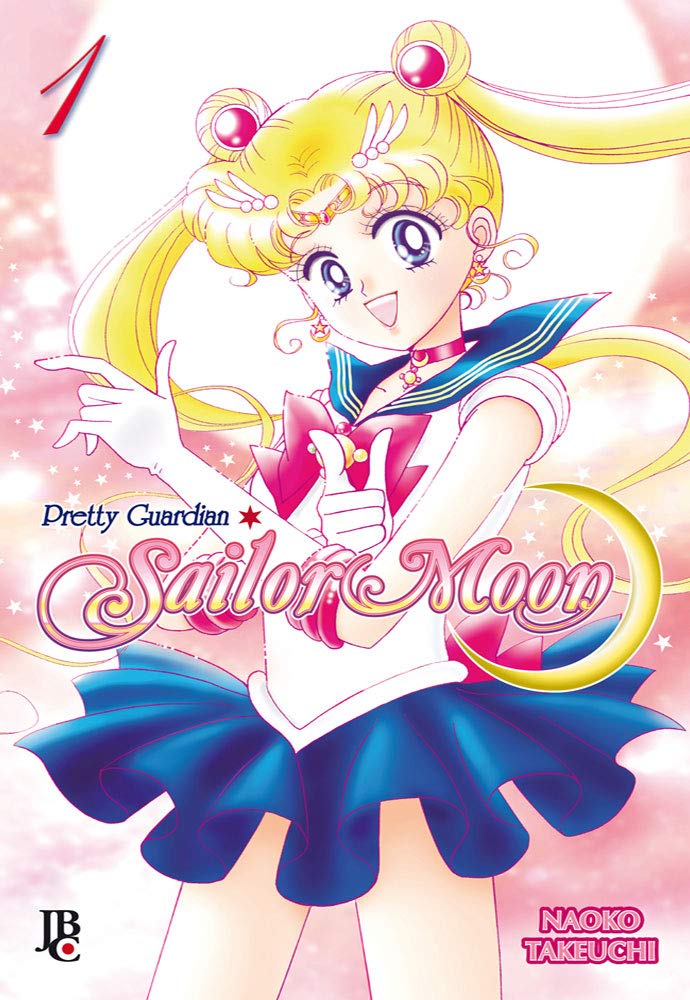
Erica once again has a really obvious choice for the 1990s: Bishoujo Senshi Sailor Moon by Naoko Takeuchi. This series had magical girls that *everyone* could identify with, not just young girls. It changed the way that people saw anime. Zack’s choice was one I wasn’t expecting, but makes sense: Monster, by Naoki Urasawa. Any number of Urasawa titles could be picked, including the 80s-90s hit Yawara – the Fashional Judo Girl. But Monster was really amazing, a deep, literary work that forced the medium to move to the next level.

If you thought Zack’s 1990s title was a surprise, wait till his 2000s title: Dārin wa Gaikokujin, aka My Husband Is a Foreigner, by Saori Oguri. Zack identifies hard with this title for personal reasons, but it’s also a great example of the biographical manga format that was springing up at this time, with a wife who can’t stop finding weird things about her foreign husband. Erica’s pick is Yokohama Kaidashi Kikou, by Hitoshi Ashinano, a melancholic yet also peaceful and relaxing look at a world that is slowly dying and the android Alpha who can still find joys in it even as life moves on around her. A gorgeous title, that Zack said he has not read but he now plans to.

For the 2010s, Erica chose Shimanami Tasogare, aka Our Dreams at Dusk, by Yuhki Kamatani. Not only is the art in this series absolutely jaw-dropping, but the cast features a variety of LGBTQ people – young, old, gay, lesbian, asexual, agender, and trans. It’s groundbreaking. Zack’s choice was I Am A Hero, by Kengo Hanazawa – a choice that, for once, Erica did NOT agree with. Zack admits that the manga has its problems, and may not be one of the best, but it’s also a zombie story where the first zombie doesn’t appear for two hundred pages. Zack, who has worked for Marvel Comics, appreciates a slow build title that allows the story to grow and does not need to have a plot point on every page.

Finally, we get the 2020s, and Erica picks She Loves to Cook and She Loves to Eat, a queer manga by a queer creator published by a major publisher about women falling in love and eating some really delicious food. It’s a sign of how far the manga industry has come that this has been a huge success. Zack chooses Akane-banashi, a Weekly Shonen Jump title that he and Erica both love. It’s about the Japanese storytelling art of Rakugo, and is refreshing for having no romance in it, but instead being about a young woman’s passion for the craft and art of its subject.

This panel was so packed it left little time for Q&A, and I had to leave to go catch my train. It was a lovely end to an excellent Anime NYC, though, which felt well-organized and lacked any major issues that I noticed. One of the best conventions in North America right now.