By Kaoru Mori. Released in Japan as “Otoyomegatari” by Enterbrain, serialization ongoing in the magazine fellows!. Released in North America by Yen Press. Translated by William Flanagan.
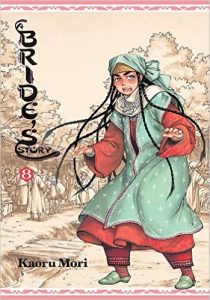
As you might have guessed from the cover, Pariya is the main focus of this volume, though we do see a brief wrapup of the ‘two wives’ arc from the previous book. We’ve been building up to this storyline for a while, Pariya being the most obvious next bride in line (at least, back at our home base of Amir’s village). But this is definitely going to be a story that will take longer than just one volume, as Pariya’s issues are not ones that are easily solved. I’ve called her the tsundere of A Bride’s Story, but the label doesn’t quite fit her well (indeed, you can argue that most tsunderes don’t fit the label all that well). Pariya is highly emotional, has difficulty focusing, and most importantly, has a low self-image of herself due to everyone’s expectations of what a good wife should be.
I’ll be honest, it’s very clear that Mori loves drawing Pariya’s faces, especially when she’s frustrated, humiliated, or otherwise blushing her head off. And I love it, even as I sympathize with her. She feels like a modern girl trapped in the late 19th century, and things aren’t helped by the events that begin her arc in this volume: their house burns to the ground, taking with it most of the cloth that had been saved up for her dowry. The family panics; they don’t few Pariya as someone who’s easily married off to begin with, and now without something to give to her potential husband’s family, it’s going to take even more years to make things happen. Pariya, of course, is painfully aware of this, and because she actually DOES like her latest suitor, she’s determined to do something about it, even if it involves… grr… actual needlework.
The scenes of Pariya’s slow, steady progression with the needle, as she drives herself forward by imagining the caustic words of the village elder, who she is literally hallucinating behind her. The good news is that her hard work IS rewarded, and the others are there to show her the joy that can be taken in it – seeing Pariya with a happy blush as opposed to frustrated is also a reward to the reader. That said, the last chapter is darker, as Pariya imagines her future husband dumping her at the altar because of her personality, and then, thanks to her overenthusiastic physical labor during the cleaning of the streams they use for water, she is terrified that he’s scared of the “real” her. (My guess is it’s probably the opposite, but we’ll have to wait till next time to figure that out.)
Pariya is also not helped by having Amir as the perfect example of a superwoman – not only does she have the temperament of a good bride, she also rides horses, hunts big game, can prepare an instant picnic, is good at making friends… she’s the impossible standard that Pariya can’t hold herself up to. No wonder Karluk is trying to improve himself so that he can stand beside her as a good husband. Whether you like Pariya or Amir, though, this is a typically excellent volume of A Bride’s Story.