Monthly Archives: August 2017

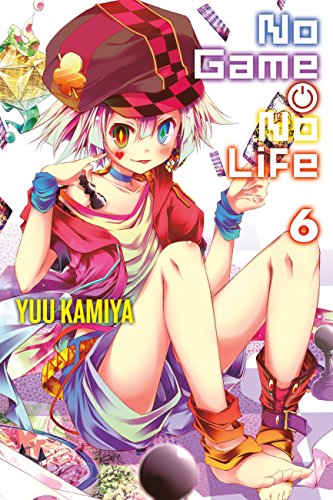
No Game No Life, Vol. 6

By Yuu Kamiya. Released in Japan by Media Factory. Released in North America by Yen On. Translated by Daniel Komen.

The author says in this afterword that this 6th volume was very last minute, as the anime was coming out soon, they needed something quick, adn his editor suggested that he do this flashback explaining the past of Disboard that he had laid out for “some point in the future”. I applaud the editors, because it’s an excellent choice, and ends up giving us what is easily the best volume in the series to date. Told by the God Tet (in disguise) to Izuna (mostly so that she can break in and point out the obvious similarity between the stars in the past and our current stars), we get a “grim and gritty” backstory that actually works for more than just “being dark”, showing us the horror of the war-torn land and why it was worth sacrificing so much in order to ensure it became the game-ruled world it is today.

Of course, we’re not necessarily dealing with an entirely new cast – as Izuna testily points out, Riku and Schwi are clearly analogues for Sora and Shiro, and Couron is Steph’s distant ancestor and the founder of their kingdom. This allows readers to get a good visualization of them, even if the personalities don’t quite intersect – Schwi is pretty dead on for Shiro, but Riku is basically Sora if he’d been broken by reality even more. As for Couron, she’s Steph without the abuse, and therefore perfect. Indeed, a lot of the “ha ha the writer thinks this is funny” fanservice is absent from this book, as the war setting means that it’s hard to trot out the sexual perversions and humiliation of Steph. Yes, Riku is teased about being a lolicon, and there’s a few “dying a virgin” remarks that Sora would be proud of, but that’s about it. This book knows now is not the time.

We also, by the way, see Jibril, and in many ways she’s the villain of the book. We knew that her past life before the Games became the rule was filled with a lust for blood and carnage, and her fight with Schwi here shows off her impatience and tendency towards overreacting, even if it ends up doing her harm in the end. That said, we also see that she’s definitely different from the other Flugel, even if it will take Sora and Shiro to really drag her potential forward. Much of the book is Riku doing what Sora normally does, which is to say plan an elaborate series of moves that end up winning the game for humanity. Tet says Riku and Schwi are stronger than [ ], as their world didn’t have the “game rules”. Sadly, this also means that they’re not granted protagonist immunity, so be prepared for some tragedy as well.

This was an excellent book, and the big downside to it is that it shows off that the author can be really good when he wants to be, but frequently lets it get buried under a need for fanservicey jokes and stupid anime tropes. Book 7 (which is in December, NGNL has settled into twice a year now) returns us to Sora and Shiro, and it will be nice to see them again, but I hope we can keep some of the added depth and gravitas we saw here and not just have a series of jokes about Steph’s tits. If you want to test out the series, though, 6 is the way to start, oddly enough.

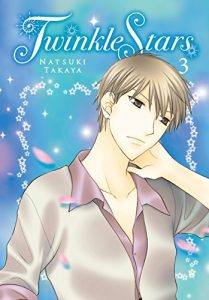
Twinkle Stars, Vol. 3

By Natsuki Takaya. Released in Japan as two separate volumes by Hakusensha, serialized in the magazine Hana to Yume. Released in North America by Yen Press. Translated by Sheldon Drzka.

I laugh heartily at my comment in the last review that Hijiri was absolutely perfect. She’s still my favorite, but this omnibus seemed entirely designed to show off that no, Hijiri is not perfect, that she is arrogant and headstrong and coming from a definite position of privilege, and when combined with the genuine fear she has of seeing her best friend get hurt again, it naturally leads to a bad confrontation. Which does, at least, get us Chihiro’s backstory, and the girl that he was supposedly in love with, Sakura. The love that it was, though, was a deeply unhealthy one, something the reader is well aware of as it plays out. Takaya is always at her best when showing off emotional pain, and we get that in spades here – there’s a suicide attempt, mostly successful, and implications that Chihiro also has suicidal thoughts. Fortunately, Takaya also writes Pollyannas, and that’s exactly what’s needed from Sakuya here.

Back to talking about Hijiri, literally everyone in the book realizes that she is doing the wrong thing and calls her out on it. First Yuuri, then Saki… it’s something that only she can do, being rich enough to basically have Chihiro’s entire past investigated to make sure that he’s not going to be causing Sakuya pain. And then, when she finds out about Sakura, his old love, telling her about it. Then she compounds it by refusing to admit what she did was wrong. It takes everything tat we’ve loved about the character for the last two omnibuses and turns it on its head, showing off the unpleasant and negative sides that her personality can have. We also learn how she first met Sakuya, and how her curiosity about those who felt pain turned to guilt and horror as she realized what that really means. Oh yes, and thankfully the crush on the teacher is not going to happen.

As for Chihiro, he’s more of a Yuki than a Kyo, if you know what I mean. It’s always a challenge to see someone repressing all their past emotional wounds and scars and not have them turn out somewhat flat, and again, Takuya is a master of doing this the right way. His confrontation with Sakuya at the reservoir is the highlight of the book, as we see that his obsession with Sakura (even the names are similar – at least in romanji) to an eerie degree) can turn to hatred as much as it does to love. Sakura is also a lonely child with a tragic past of abuse, like half the cast here, but she’s not written in a sympathetic way. I’ve no doubt she’ll wake up at some point, and I do wonder if she and Sakuya will ever meet.

Twinkle Stars gives fans of this author exactly what they want – deep emotional heartache and catharsis, calling out abuse for what it is, and showing that just because someone has a tragic past does not mean that their current joy and happiness has to be faked. I can’t wait to see where this goes next.

Durarara!!, Vol. 7

By Ryohgo Narita and Suzuhito Yasuda. Released in Japan by ASCII Mediaworks. Released in North America by Yen On. Translated by Stephen Paul.

Sooner or later in the life of every light novels, you get the volume that consists of short stories, usually because the author is still figuring out where to take the series next. And so it is with DRRR!!, which gives us 4 stories here surrounded by Izaya recuperating from his stab wound he got last time in the hospital, where he runs into a girl that literally everyone has forgotten, including him (and the creators of the anime, who were unhappy to see this, I imagine). The ‘theme’ of these stories seems to be Ikebukuro on holiday, and indeed, Narita has discussed the idea of the city as a character in the volume before. And of course there’s also some setup and moving of chess pieces for future books, most obviously in the story with Shizuo and Tom, which gives them a new co-worker.

First, though, we have to deal with the story nobody wanted. I think if you were to ask Western fans in particular which DRRR!! characters they never want to see or hear from again, the insane triangle of Namie, Seiji and Mika would likely top the list. And what’s worse, Narita has them in your face here, never letting you forget how much Namie wants to screw her little brother, or that Mika is seriously looking to EAT CELTY’S HEAD so that she can get closer to Seiji, or that Seiji… well, no, Seiji continues to be a nonentity. He gets some depth here, of a sort, but his main theme still seems to be “what do these two see in him?”. It’s not the most pointless story in the book, but it is the most disturbing. We then get a look at the backstory and current life of Akabayashi, the yakuza with a sweet cane and missing an eye we’ve seen in the previous book. He deals with the fallout from Akane’s kidnapping, stops some drug dealing on his turf, and escapes an attempt on his life with ease. He’s here to be incredibly cool, and succeeds. He also has a surprising tie to Anri, which is good as the “main” trio of teenagers otherwise make very minor to no appearances in this volume.

The best story in the collection, even if you don’t love her (which I do) is the third one, in which Vorona is cooling her heels at Russian Sushi and wondering what to do with her life now that she’s been beaten and humiliated. The answer? Join Shizuo and Tom in shaking down local deadbeats who rent porn and then never pay for it or other such offenses. Tom is rather startled at how good Vorona is at beating others up, and impressed at her wikipedia brain. Shizuo (who does not recognize her as the woman who kidnapped Akane, as she was wearing her motorcycle helmet) is just happy to be able to mentor someone. And Vorona is watching Shizuo closely, seeing how he manages to be stronger than everything else, and deciding that he’s her “prey”… much to the displeasure of Akane, who has decided that she needs to take out Shizuo as well, despite the fact that she really likes him. (It is implied that getting kidnapped on top of the family revelations kind of broke Akane, but that’s Narita for you.) This story is filled with humor and unnecessary violence, and the book is worth getting for just this one.

We end with a cute, if completely pointless, date between Shinra and Celty, who have gone off to the mountains to get closer but keep getting interrupted by the rest of the cast calling Shinra for one reason or another. This mostly serves to remind us that, eccentric as they are, these two are the least screwed up couple in the series. The book overall is marking time, but it’s still worth reading, provided you don’t mind the author occasionally reminding you that he loves to read horrible people being horrible at each other.