Category Archives: arifureta

Arifureta: From Commonplace to World’s Strongest, Vol. 8

By Ryo Shirakome and Takayaki. Released in Japan as “Arifureta Shokugyou de Sekai Saikyou” by Overlap. Released in North America digitally by J-Novel Club. Translated by Ningen.

The last few reviews I’ve talked about Hajime as Christ figure, Hajime as overpowered author fantasy, and Hajime as nerd. Given the events in this volume, particularly near the end, it seems appropriate to talk about Hajime as asshole. Hajime’s experience in the dungeon in the first volume broke him in many ways, and aside from his power levels the most obvious has been in his attitude towards… well, almost everything. And while we’ve seen occasional nudges back towards non-sociopathy, particularly thanks to Aiko, there’s still an awful lot of Hajime making the choice that will upset people the most, either because he wants to or, more frequently, because he can’t be bothered. And the main reason he does this, of course, is that the author (and I assume readers) find it funny. Honestly, given all the attention focused on humiliation being a subset of arousal in this book, I suspect we learn a bit TOO much about the author’s mind here. But at the end of the book, Hajime seems to genuinely mellow out.

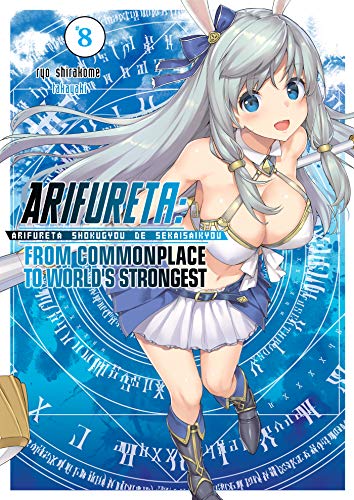
The bunny girl on the cover is one of the big reasons, to be honest. Much has been made by Hajime of the fact that Yue is the girl he loves and the rest of his harem are far, far below her. And while that’s still fairly true, Shea’s actions over the course of the series, and particularly in the last two books, have led Hajime to realize that he does, in fact, love her as well. Not the same way he loves Yue – there’s no sex here, much to Shea’s disappointment, though I’m not sure “platonic” is how Hajime feels either. But Shea makes Hajime happy, and he wants her to be with him – and not with anyone else. This is helped along by the other big thing that mellows Hajime out, which is that he gains magic that should finally lead him to being able to return home to Japan. Just the idea that he can escape this, let’s face it, pretty dystopian world makes him smile like his old self, much to everyone’s surprise.

Speaking of ‘harem tiers’, the majority of this book is spent clearing another dungeon, this one designed to tend the bonds of love, friendship, and teamwork. Along for the ride are the B-team Japanese group, and let’s just say they don’t do really well. Dungeon-wise, the ‘tiers are Hajime & Yue -> Shea, Kaori and Tio -> big gap -> Shizuku -> Kouki, Ryutarou, and Suzu. You’ll notice Shizuku is a level higher than the others, and indeed we also see it becoming more obvious that she’ll be part of the harem eventually, which everyone else seems to have accepted but her. Indeed, at the end of the dungeon the bottom three don’t get the reward for clearing it – they weren’t good enough. That said, props to Suzu for stepping up and asking to go try the next one anyway, especially because she tells Hajime her reasoning is to be powerful enough to try to talk sense into Eri when they next see her. I suspect the reader knows this is futile, given the epilogue, but I was honestly surprised that the whole group is going to stick around. Even Kouki, who was on his best behavior in this book.

The author says we’re in the home stretch, though I suspect that still means about 3-4 more books. Till then, this volume is very long but satisfying, particularly if you like sweet, heartfelt scenes – that last short story was almost pure sugar. On the other hand, when you get to the scenes with the “slime creatures”, take my advice and skip a few pages. What is it with Japan and “fake bukkake”?
Arifureta: From Commonplace to World’s Strongest, Vol. 7

By Ryo Shirakome and Takayaki. Released in Japan as “Arifureta Shokugyou de Sekai Saikyou” by Overlap. Released in North America digitally by J-Novel Club. Translated by Ningen.

I’ve talked before about Hajime as Christ figure, and Hajime as simply another example of the overpowered hero going after the kids that bullied the author in middle school, but in this book it’s also worth taking a look at something that has remained a core part of Hajime’s character despite every possible attempt to extract it: Hajime the nerd. (Yes, yes, I know, chuuni. I never saw that anime, so feel uncomfortable using the expression.) Hajime’s inner monologue has had the occasional taste of otaku culture throughout the series, but this volume really sees it in full flower. When he’s in the bar gathering information, and has to impress the bartender, you can almost hear him squeeing. And while the core purpose of his “arranging a distraction” was to humiliate and get a bit of revenge on Shizuku for laughing at him, the fact that he dresses them all as a sentai team also shows this off. Hajime is badass, but still a nerd.

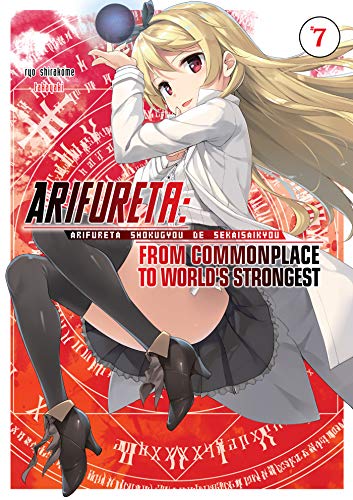
We seem to have run out of cover girls, as we’re back to Yue. (Technically it should be Liliana, but honestly ignoring her in favor of Yue is perfectly in character.) That said, in terms of content, Shea should really be the one on the cover, as she and her rabbit tribe own this book. Considering that turning the rabbits into savage killers was a passing joke in the 2nd book, it’s become quite a large thing, and the best running gag of the volume was everyone giving Hajime the stink-eye as they realize how much he brainwashed everyone into being Rambo. (They also inherited his nerd tendencies, coming up with hilariously bad “names” for themselves.) Since the Empire is doubling down on Beastmen being enslaved, the rabbits take matters into their own hands – with a little help from Hajime, admittedly, but mostly entirely on their own – to convince the Emperor to change his mind. Again, those who like over the top battles will be very happy.

The demons also get their asses handed to them by the rabbits, but they have a much stronger response, coming up with 400 or so of the Angels that Hajime had a little trouble with in Book 6. I suspect the eighth volume will deal with the fallout from that. One last thing that impressed me, though, was the final extra story. Usually in light novels these extra stories are pure fanservice, but this one not only advances the plot but makes a nice refreshing change from the “all religion is evil” trope we’ve seen in Arifureta and other light novels. A new pope is appointed to fill the void caused by the events of Book 6, and he proves to be an excellent choice, coming across both Yuka (the girl Hajime saved in Book 1) and Aiko and helping them get over their dithering and try to move forward. It comes across as a confessional, and this is exactly the sort of thing that confessions should be about. I really liked it.

A very strong Arifureta book. Except for Tio. God, I hate Tio. More accurately, I hate the way the author writes Tio.

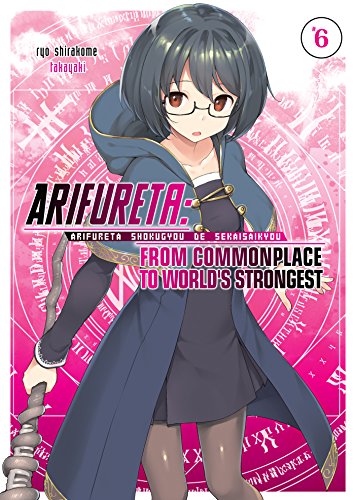
Arifureta: From Commonplace to World’s Strongest, Vol. 6

By Ryo Shirakome and Takayaki. Released in Japan as “Arifureta Shokugyou de Sekai Saikyou” by Overlap. Released in North America digitally by J-Novel Club. Translated by Ningen.

Arifureta is taken from a web novel, which the author and publisher then rewrite, add to, and extend in order to make the published light novel version. As such, it seems a bit ridiculous to suggest that the author was told by the editor to move things along as they need to cut to the chase. But that’s what seems to be happening here, as several plot threads wrap up so fast that you expect some other hand behind it all. Aiko was rescued so quickly that I actually was worried that a chapter had been skipped, and the resolution of who is the traitor among Hajime’s fellow students also seemed to happen very fast (though if you looked at the cover and said “who the heck is that?”, you might have had an inkling). Other than that, this is a typical volume of Arifureta – over the top fighting, the occasional really good character introspection, and turning very bad when the author tries to be funny – something he shares with other light novel authors I could name.

The strengths of the book are quite obvious. The author likes to write overpowered fights, and is good at it. Seeing Yue and Shea team up to fight a horde of demons was fun, especially as absolutely nothing seemed to faze them. This contrasts with Hajime’s fight with an Angels sent to kill him, which goes very badly for him, mostly as he’s trying to fight while also holding Aiko. Once that problem is solved, things proceed to go Hajime’s way a lot more. Aiko is once again probably the best character in the book, as she’s forced to use her powers in order to completely wipe out the church bishops and priests (yes, her farming powers – it makes sense in context) and feels hideous amounts of guilt and shame for murdering people. The aftermath of this, and Hajime’s response to her, is beautiful, and makes the entire book worthwhile.

Some other parts don’t make the book worthwhile, sadly. As I said before, the pacing of this volume seems incredibly rushed, and a lot of it felt like the author wanted to clear the decks so he could start on the second half of the series (I think we’re about halfway through it right now). Our villain, once she gets revealed, gets to fall straight into the yandere stereotype, and is far duller than I’d hoped based on past manipulations. I’ve no doubt we’ll see her again, but I doubt she’ll have any more significant successes. And I hated absolutely everything about the scene with the okama muscle guys, which is grotesque negative stereotype central. Hajime’s harem stays the same size here, though he is aware Aiko loves him, and the narrative is aware that it’s only a matter of time for Shizuku. Oh yes, and Kaori’s now got an Angel body after being murdered by her insane classmate, meaning she gets to be as ludicrously overpowered as the others – which is what she’s always wanted, to be fair.

Arifureta is always going to have that air of “I am getting back at the bullies who tormented me in school” to it, and the villains this time round make that comparison more painfully apt than usual. Still, it’s fun mostly, provided the author isn’t being humorous, and should definitely please ongoing fans.