Category Archives: reviews

Ayakashi and the Fairy Tales We Tell Ourselves

By Kosuzu Kobato and Meij. Released in Japan on the Shousetsuka ni Narou website. Released in North America by Cross Infinite World. Translated by Dawson Chen.

This is one of those books that I probably would not have picked up if I didn’t already know the author. Kosuzu Kobato has basically never written anything I’d dislike, This is also complete in one volume, so it’s a good book to take a flyer on. And, unsurprisingly, I enjoyed it. The plot, though, actually ended up being a lot quieter than I expected. There were dark hints in this book that the heroine has bad ayakashi causing her harm (which leads to a reputation of being clumsy). There’s the heroine’s tragic past, as well as the hero’s tragic past. And there’s these weird ayakashi showing up away from the main house and acting, seemingly, menacing. It felt like it was building up to a big confrontation, or perhaps a kidnapping and rescue, or that sort of thing. But that’s not what happens here, and it’s not the point of the book. This book is about accepting your past, and it’s also about accepting that you don’t need to have your entire future mapped out by the time you’re fourteen years old.
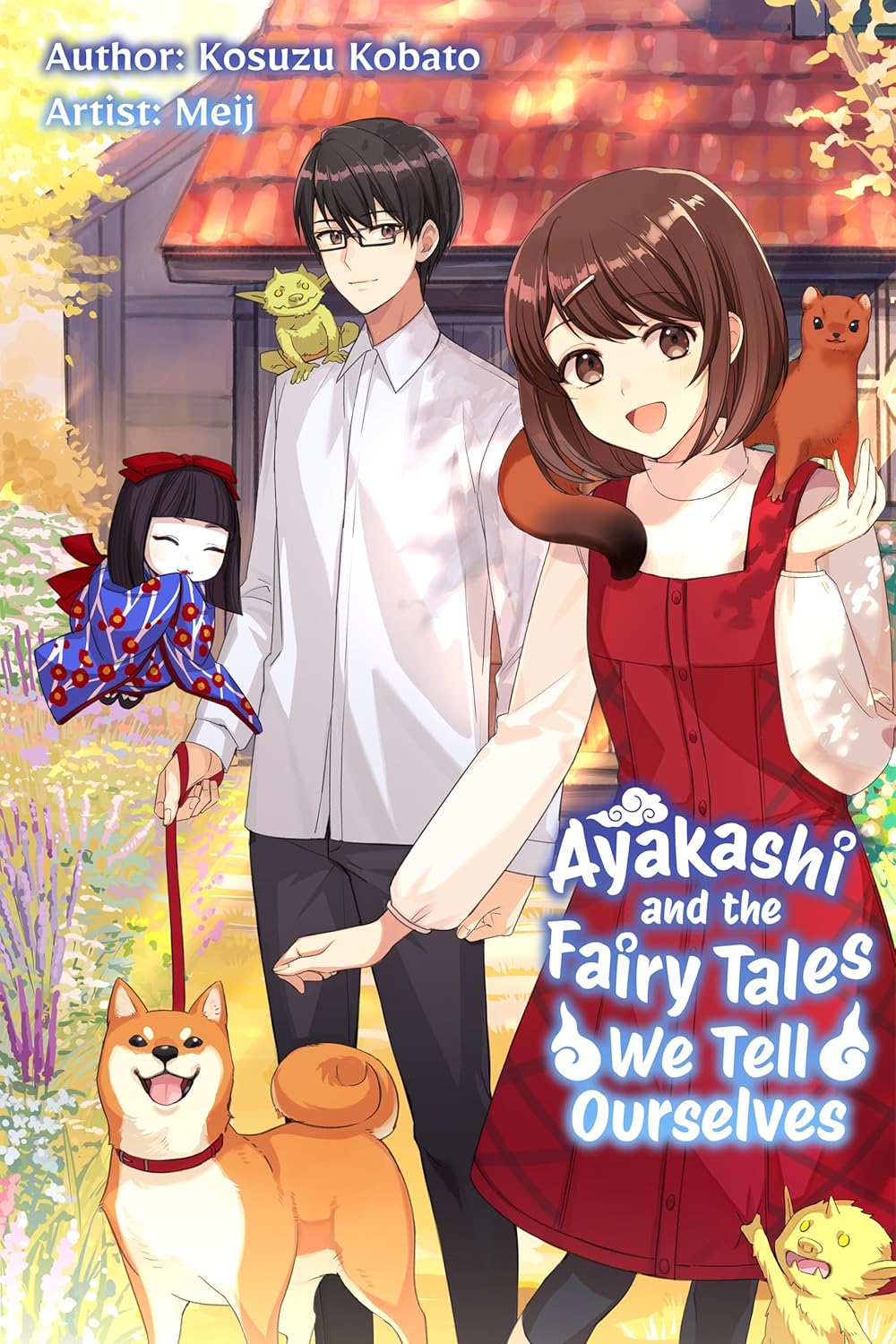
Haruka has recently moved to the town, and is still settling in at school, though she has made two best friends. She’s a relatively shy, reserved person, and despite being exceptional at ballet and cooking she seems to regard herself as lacking in something. Then one day she runs into (literally) Ayako, a woman who was biking and not watching where she was going. Going back to her home to bandage Haruka’s scraped leg, she then runs into Takumi, who she doesn’t know but who clearly goes to her school. As the book goes on, and she stops by Ayako’s house more and more, it becomes apparent that she can see ayakashi, the mysterious spirits that litter the house. Takumi can see them too, and that fact has caused him grief throughout his life. Can these two damaged middle-schoolers be the best things that happened to each other?

This book sneaks up on you – it doesn’t really get into anything supernatural until about a quarter of the way in, and even then, the ayakashi end up being more of a spice than anything else – the book is solely about its two leads. Honestly, there were times when it felt like we were going to get more – Haruka’s childhood featured her being hospitalized, and the description of how it happened made me wonder if it was going to tie in with malevolent ayakashi impulsively seeking to harm her or something. But no, it was just a garden-variety horrible human thing. But that’s fine, as the book really excels in the two kids slowly recovering and looking forward to the future again. Haruka recalls her past, accepts it, and is able to move forward in being a blushing girl in love. Takumi realizes that despite everything that happened with his family, his father is trying to support him the best he can – he’s just horrible at emoting. The end of the book has them essentially becoming a couple without naming it as that, which fits the reserved tone.

It’s just a sweet little book. I wish there were more of it, but there isn’t. It’s a good read about some serious kids.
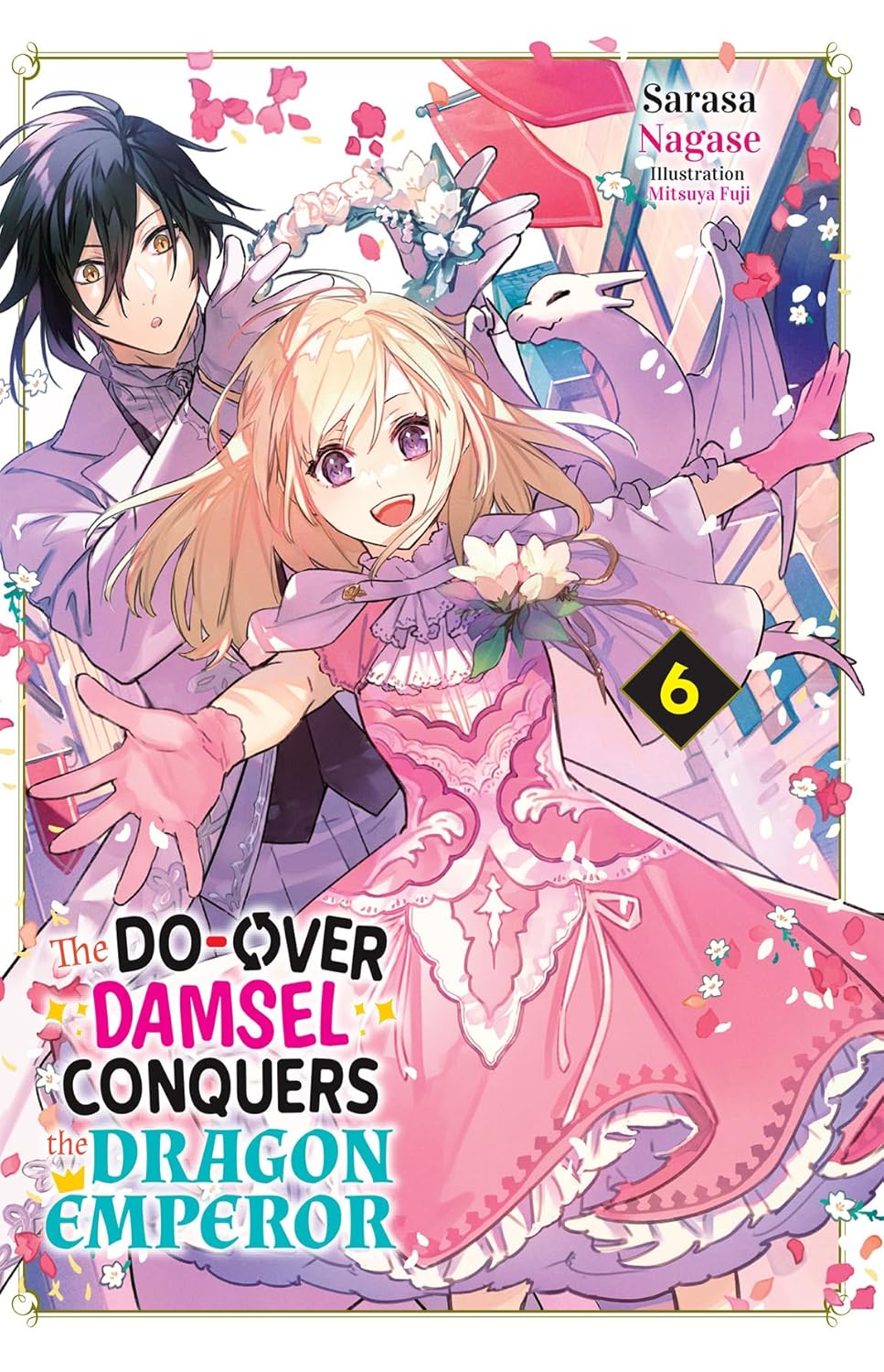
The Do-Over Damsel Conquers the Dragon Emperor, Vol. 6

By Sasara Nagase and Mitsuya Fuji. Released in Japan as “Yarinaoshi Reijō wa Ryūtei Heika o Kōryaku-chū” by Kadokawa Beans Bunko. Released in North America by Cross Infinite World. Translated by piyo.

As I write this, we are less than a day away from the premiere of the anime version of this series. As such, I wish to make it clear that I am well aware of the problematic nature of this series. We’ve discussed it before. The series opens with incest, and then it ends up hitting “I’m going to marry a ten-year-old”. It is the definition of “oh dear”. And I am here to tell you that the author is absolutely reveling in it. Given a chance to, say, have a timeskip, or perhaps move away from the incestuous kingdom, she instead insists on doubling down on everything. This volume in particular talks about how awkward it is for Jill to be eleven years old multiple times, and it also manages somehow to double the incest! Unfortunately… or, well, fortunately, to be honest… that does not double the fun. I can tell you that both plotlines are for plot-related reasons, and the plot is insidious, and REALLY wants war.

After the relative light-heartedness of the last volume, we’re bundled back into political intrigue at Jill and Hadis’ home base in this volume. There’s been a poor harvest, and the three dukes whose support Hadis need are 100% ready to throw Jill under the bus at a moment’s notice. They propose an impossible task – revive the Dragon Flower Crown Festival, something which will require the help of all the other consorts who stay at the Empress’ palace. Unfortunately, they’re all (well, almost all) trying to sabotage Jill – clearly at the behest of some mysterious party. Oh yes, and Jill has been getting mysterious love letters confessing to her and urging that she meet in the Garden of Resting Dragons… a place well known for adulterous affairs. There’s a mad old man setting traps in the Dragon Consort’s Palace (a place Jill didn’t even realize was there). Oh yes, and Minerd’s back, and totally not planning something evil.

It’s refreshing to see this series come back to “at any moment, history will revert and Jill will die” territory again. We’re not quite there yet, but we’re one step closer to war, thanks to the events near the end of this book, which lean heavily on the squickiest of the series’ plotlines and rub it in our faces. it’s chilling. As for the actual bad guy, well, they’re rather pathetic and sad, but that’s the point, and fits pretty well with everything that we’ve heard bfeore. Much better are the other consorts, who theoretically present an enemy that Jill simply can’t beat to submission with her fists. She is being forced to actually think politically and scheme… and then, when that doesn’t work, she beats them to submission with her fists. Jill does not quite shout “IT’S CLOBBERIN TIME!” once a volume, but it’s not for lack of trying.

After that nasty cliffhanger, it’s a good thing we’ve got the next volume coming s–what’s that? Short story volume? Sigh. Of course. In any case, please enjoy this series, which rampages through its problematic aspects with TINY FISTS.

Invaders of the Rokujouma!?, Vol. 45

By Takehaya and Poco. Released in Japan as “Rokujouma no Shinryakusha!?” by HJ Bunko. Released in North America by J-Novel Club. Translated by Warnis.

After the events of Vol. 43 (44 being a SS volume), you will not be surprised to hear that this is a very serious affair. There’s almost no humor to be found, and even the romance, with the exception of Elfaria (who joins everyone else in the cast in trying to make it clear, but not TOO clear, that he’s the only one for her) is absent. The reason for this is that after the events of the last book, Koutarou is depressed and uncertain how to go forward. It’s a good reminder how little time this series has taken place in – we’re only about two years later here, and much as the girls are all cognizant of their own feelings and able to support each other, when it comes to the man they love they don’t have the fortitude to kick him in the ass, and have to leave it to Kenji, who of course can baseball it out of him. No one is quite mature enough to confidently be in a polycule revolving around one man just yet. Least of all the man.

We pick up just before the cliffhanger of the last book, as we see Ralgwin’s final moments before his soul is overwritten by Maxfern’s. He seems rather calm and accepting of this, and is apparently assuming that Koutarou will somehow save the day. Unfortunately, that point is not this volume. Koutarou, as I said before, starts off in a big funk, especially once Maxfern goes on live TV to declare war on the royal family and ask allies to join him. Now they need to avoid another war, and in order to do this have to infiltrate the enemy… which is a lot easier given that they’re bringing in a lot of new troops and staff. Unfortunately, they all fail to realize that Maxfern is, unlike every other villain we’ve seen in this book, someone who does not care about ANYONE. And that troops don’t necessarily have to be alive.

So yeah, I hate to break it to you, but once you take zombies out of the box, you really can’t put them back. That said, this is part of a new theme with this book. All our previous villains, be they Ralgwin, or Elexis, or even Darkness Rainbow, have all had someone that they care about and want to protect, in some way, shape or form. Their goals are not 100% genocidal. Maxfern is different. He died swearing vengeance, and he will get vengeance, no matter who dies or is left unhappy. The second half of the book sees our heroes infiltrate the e3nemy for clues, and they barely escape with their lives, because the villain doesn’t care about just throwing death at a problem until it goes away. It’s genuinely scary.

We get a cliffhanger suggesting Maxfern is going to attack the “smart girls” in the group – Clan, Kiriha, and Ruth – next time. Till then, this is still good, but it’s a bit less “fun”, per se.