Category Archives: reviews

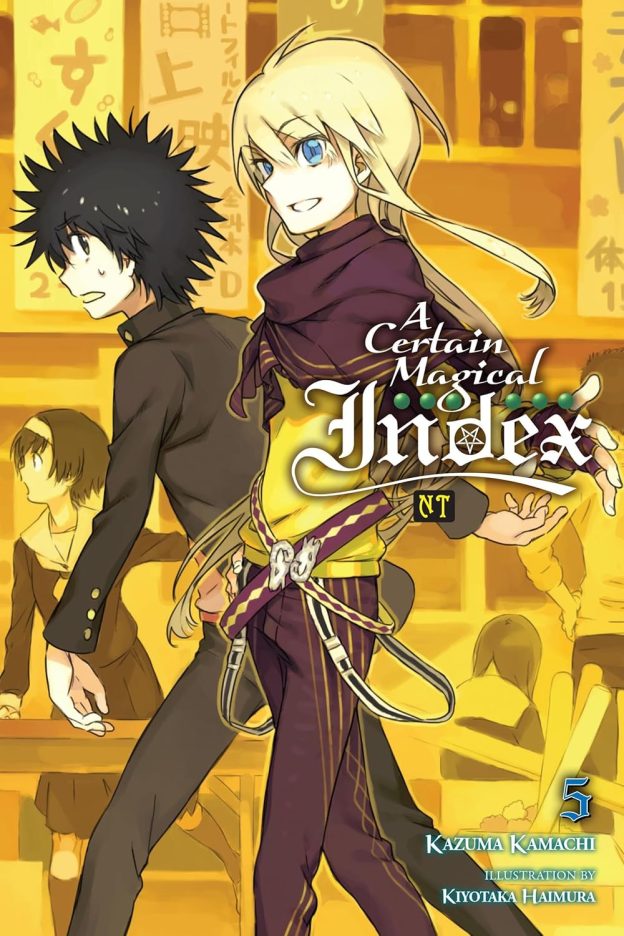
Sasaki and Peeps: A View-Count War Breaks Out on Social Media! ~My Neighbor’s Explosive VTuber Debut~

By Buncololi and Kantoku. Released in Japan as “Sasaki to Pi-chan” by Media Factory. Released in North America by Yen On. Translated by Alice Prowse.

The danger of a series like this, which tries to change genres with every new volume, is that eventually you’re going to hit up against one that you’re not really all that interested in. When I saw that this volume was going to be about VTubers, I sort of groaned. It’s not my thing, and I don’t do the virtual idol thing either. So when Type Twelve decided to make this her new thing, I was prepared for this to be a slog. Fortunately, I was saved by the fact that the author knew which character to give the spotlight to this time around. Kurosu has gotten short shrift for a good deal of the series (when the anime came out, most wondered why she was even there at all), but her deadpan horrible personality meshes really well with trying to be a hot VTuber success, especially since we also still have her desperate 13-year-old horny urges to bang Sasaki (which is never going to happen, and I think she knows it deep down).

As noted above, Type Twelve is done with school because of … well, see Book 8. Instead, she’s decided to try uploading videos to Youtube (yes, they use the actual word). This becomes a competition, with everyone in the “family” (thus not including Elsa and Peeps, who already have a Youtube channel) competing to see who can get the most page views… and the winner has to order the loser to obey any command. Naturally, this gets Neighbor Girl tremendously excited, as even she knows that middle-management dude Sasaki is not going to be able to compete with four cute young-looking girls. She decides to (with Type Twelve’s tech help) become a cute, happy VTuber… which is a disaster. However, the backlash actually forces her to use it to her advantage, and she comes back admitting the happy girl was a fake and she’s a depressed introvert. This goes MUCH better… to the point where she’s scouted!

I’ve talked before about how the neighbor girl is so screwed up and horrifying that it almost comes around to being funny, but that’s not really sustainable if you’re going to have the series develop characterization (which is debatable – honestly, I think this author is far happier having its characters be cutely meta than learning anything about themselves). Over the course of the last few books she’s been forced to endure a lot and also interact with others far more than she ever did before. As a result, while her quiet cynical sarcasm is present and correct, as is her twisted sex with Sasaki fantasy, she no longer looks as if she’s actively trying to kill herself. Actually, she may have found a career path – her quick deductions at the scene of a crime, while getting in the way of the plot, show off a detective skill that’s actually kind of scary. Is she healing? A bit?

The others, rest assured, get stuff to do, and Hoshizaki gets the funniest part of the book. But yeah, this continues to interest me, even when it’s playing around in sandboxes I don’t care about.

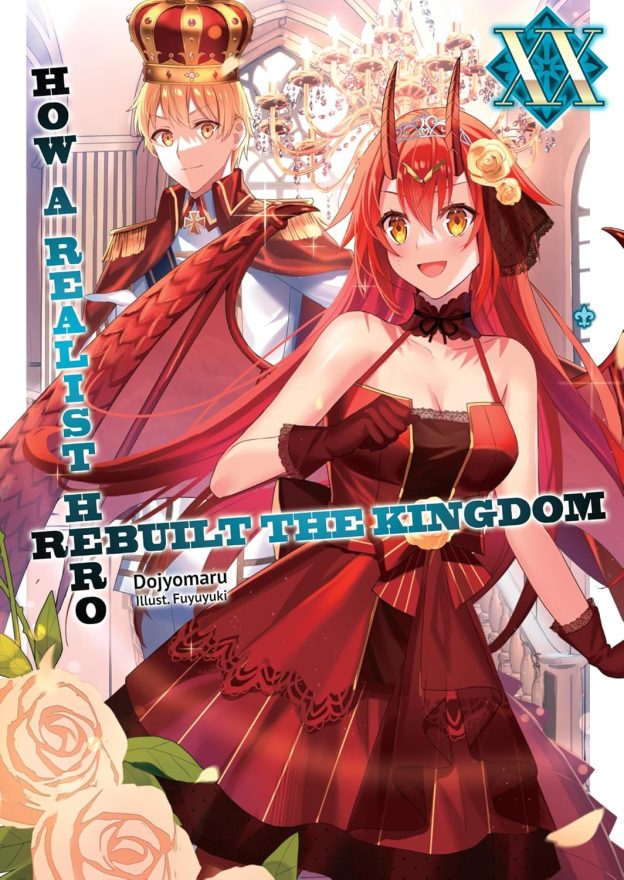
Chitose Is in the Ramune Bottle, Vol. 7

By Hiromu and raemz. Released in Japan as “Chitose-kun wa Ramune Bin no Naka” by Gagaga Bunko. Released in North America by Yen On. Translated by Evie Lund.

Throwing up the spoiler warning here: I discuss the big revelations in this book, but not till the third paragraph.

I was expecting something else, to be honest. After the trauma of the last few books, the sturm und drang and Yua playing Baker Street over a sobbing Chitose, that we would sort of go back to everyone smiling, going back to their normal high school lives, and have a nice, relaxing 7th book. And, to be fair, so was the author. There is an extra-long afterword describing their thought process while writing this book, and you can see how the first, oh, third of the book is written by a very different person from the one who wrote the last two-thirds. Because the author is correct, that is what the characters want. It’s what the readers want. We do not want more angst. We want to relax. Unfortunately, for the sake of the story, the author cannot give that to us. And so… see the girl on the cover>? She’s a first-year. She’s spunky, cute, and loves the whole cast. And she’s also a bomb.

After the events over the summer, Chitose is hoping that everything will go back to normal. And, aside from Yuuko having the traditional “moving on” haircut, they do. Which means it’s time to plan for the culture festival, which is two months away and seems to involve both a sports day AND a culture day. Naturally, Chitose and company are very involved, especially since, in his first year, he was not in the right headspace to handle a festival. Now he and the rest of the group want to be on the cheer squad. They’re joined by Asuka, who is happy to do something with them before she has to graduate. They are also joined by Kureha, a first-year who has heard all the stories about the very famous Chitose and his very famous friends, and is star-struck. She rapidly becomes part of their group. A bit too rapidly. The reader gradually feels that things are about to go very, very wrong.

As our little bomb sent everyone into a coma over the course of the last third of the book, I noticed that Yuuko was pretty much absent. She’s not like all the others, after all. She actually confessed and was rejected. So Kureha can’t really do much about her. It’s worth noting that Kureha is being written as a horrible villain after the reveal, and the reader sees her as one long before that, but to all the other girls, she’s not. Particularly Yuzuki, who is on the cover of the next two books in this series, and I strongly suspect is going to step past Yuuko to steal the main girl spotlight. But the way that Kureha demolishes Haru, Asuka and Yua with “innocent” ease shows off that much as we’d like all the girls to be equal in their chances to win Chitose, that’s not how love works. You have to commit. You have to be ready to hurt others to get what you want. Yuuko understood that, and the hurt was devastating to her. Kureha is able to hurt far more easily, but so far only Yuzuki, who has always been the most aloof of the group, is ready to take things to the next level.

As the anime seems to be polarizing people, the novels are hitting another high point. Just… be ready for things to not be safe and fun.

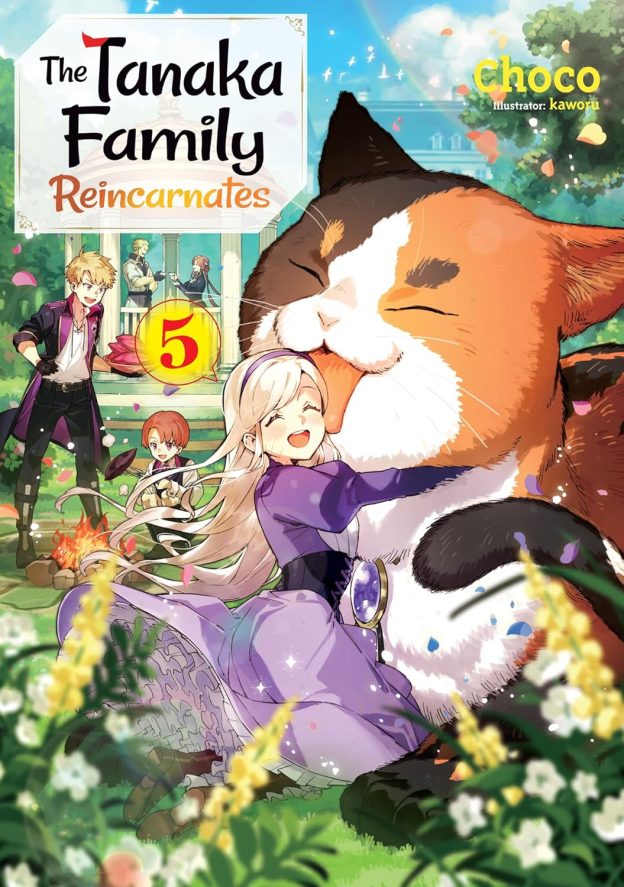
The Wicked Princess and Her Twelve Eyes: The Legendary Villainess and Her Elite Assassins

By Daken and saino. Released in Japan as “Aku no Reijou to Juuni no Hitomi: Saikyou Juusha-tachi to Densetsu no Akujo, Jinsei Nidome no Kareinaru Musouroku” by Overlap Novels. Released in North America by Airship. Translated by piyo (Irene Nakano). Adapted by Rei Geronimo.

I was going to buy this anyway simply as I like the genre, but then I saw it was by the author of Who Killed the Hero?. And then, for some reason, as I was reading it, I totally forgot that. I’m not sure why. But the first, oh, two-thirds of this book is content to just be a hoot. You’ve got the usual villainess who goes back in time and does things over again. There’s a large helping of humor, both because she’s an absolute sadist but also from the author themselves (one of the color pages tells us what each of her squires excels in, and one girl is simply “energetic!” in a “no thoughts, head empty” sort of way). That said, don’t worry, this *is* by the author of Who Killed the Hero?, and the last 50 pages or so made me sit up, and then made my jaw drop as I recalled all the things I hadn’t bothered to pay attention to.

Serena Rosenberg starts this book, as all good villainesses do, by getting her engagement broken in front of a large crowd of nobles. Unlike most villainesses, she really is guilty of a lot of attempted murder against the heroine. Even though none of her attempts succeeded, she’s sentenced to death. As she’s forced to drink poison, she realizes that her biggest fault was that she did not have competent minions. Then she wakes up as a baby again, but with memories of her past life. Unfortunately, she’s still pretty much a terrible person, but she definitely wants to avoid her previous fate. Therefore, she actually studies magic and the sword, getting good at everything. She also goes to an orphanage, grabs the six “problem children” from it, and puts them through training. Ridiculously hard training.

The bulk of this book goes sort of how you’d expect, being one of those “Serena does something with evil intentions, but everyone else sees it as good” sort of books. Her hellish training really is needed to snap this orphans out of their mindsets, and makes them better people. She gets them dogs, who become good pets and like family to them. She does this for absolutely WRETCHED reasons, but because she’s being so good, those reasons have to be abandoned. And as the book goes on, we see her realizing that she doesn’t really want to get revenge, and doesn’t care if the heroine marries the prince after all. It’s headed for a “doing good thing feels good” sort of ending… and then we’re reminded about things we took for granted because this genre has lots of mediocre things that make the brain assume. Like why does her mother avoid her? Like why did she go back in time in the first place? The last chunk of this book is here to answer the questions, and the answer is pretty terrific. And yes, author, I appreciated the added ending.

If you like this author, cool plot twists, or books where the protagonist is terrible but in a fun way, this is a must-read. Also, I teared up a bit when I realized what the title meant.