Category Archives: reviews

Formerly, the Fallen Daughter of the Duke, Vol. 2

By Ichibu Saki, Nemusuke, and Ushio Shirotori. Released in Japan as “Moto, Ochikobore Koushaku Reijou desu” by Mag Garden Novels. Released in North America by J-Novel Heart. Translated by Andrew Schubauer.

The author admits in the afterword that a lot of the fans of this work were very thrown off by the twist at the end of Book One, and even more by the start of the events in the second book. I can’t really blame them. Book one read like a nice, pleasant villainess story with a happy ending. A bit boring, but not actually so much so that you walk away. And now we’re back to the start, and we have to do things all over again. The trouble here is that our heroine does not quite have the self-esteem needed to try to regain her fiancee, so we get nearly an entire book of “it’s OK if he doesn’t love me this time around, I’m fine with being friends”. The other issue, of course, is Charlotte, who remains The Absolute Worst. It’s never quite made clear if she also has memories from Japan, but there’s certainly a lot of “I’m the heroine, why is everything not going my way?” to her.
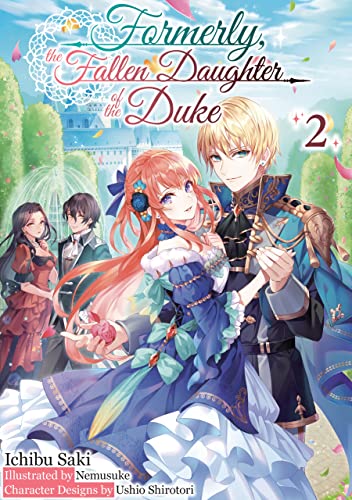
After the events at the end of the last book, Claire finds herself back where she started, in her old country and about to get her old baptism. She manages to make a few quiet changes (like taking her mother’s note to her so it can’t be used by Charlotte), but for the most part everything goes as it did last time. Except… her family seems a lot nicer and more considerate? In fact, she’s being sent off to school in the country that she fled to in the last book, and can reunite with her old friends and old fiance. But there’s a hitch. Claire is not the only one that went back in time for a redo. And the forces of evil are using the power of capitalism to try to destroy any chance Claire has at getting the powerful magic she needs to achieve her happy ending.

The book keeps its feet firmly in the fantasy in this volume, with almost no mention of the “Japanese game” part of the series. For the most part, as I noted, the most interesting part of the book is Claire reacting to her family being nice to her. Claire never explicitly states this, but being treated like garbage in the previous world hurt her a lot, and it means that when her ex-fiance or brother are kind and caring towards her (indeed, the fiance is trying to fix the ‘ex’ part) it just throws her off. There is an iffy part of the book, though, which involves brainwashing someone. First of all, the setup to this is ham-handed and obvious, and I rolled my eyes. Second, even though the person being brainwashed is an antagonist, and Claire freaks out and tries to undo it, it really seems like an easy “get out of bad plots free” card. Fortunately there’s still Charlotte around to make everything worse, but still.

This book does NOT end with another loop, much to my relief, and there is a third volume in the series. I’d put this in the middle tier of villainess books.
7th Time Loop: The Villainess Enjoys a Carefree Life Married to Her Worst Enemy!, Vol. 2

By Touko Amekawa and Wan*Hachipisu. Released in Japan as “Loop 7-kaime no Akuyaku Reijou wa, Moto Tekikoku de Jiyuukimama na Hanayome (Hitojichi) Seikatsu wo Mankitsusuru” by Overlap Novels f. Released in North America by Seven Seas. Translated by Amy Osteraas. Adapted by Aysha U. Farah.

I’ve frequently made fun of the fact that many villainesses in these books, with Katarina Claes being the best example, keep constantly trying to “solve” all the problems facing them without realizing that the problems have solved themselves simply due to being empathic and kind. Because Katarina, and Rishe in this series, know the real truth: even if you are as sweet as pie, never assume that the narrative has gone away. Rishe knows that her recurring deaths, and the war that leads to them, are not something that can be solved by simply marrying the man behind it all and showing him how to be happy. There’s a lot more to it than that. This is especially true of this second volume, which brings back a number of characters from her life as an apothecary. Including one who is, for all intents and purposes, a terrorist.

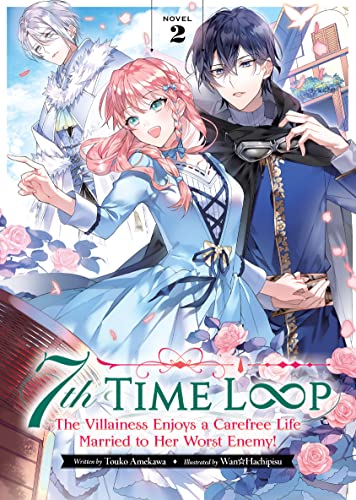
Rishe remains dedicated to her efforts to live a happy, carefree life by overworking herself to death in order to get it. She takes sword training from Arnold, and when she realizes that she absolutely lacks the stamina she had in her knight life, not to mention the elite training Arnold’s knights have, she secretly disguises herself as a boy and enrolls in the knight course. As this is happening, a delegation from Coyolle, a country which has relied on its mining to help it not be taken over and destroyed by other countries, has arrived, including Prince Kyle, who Rishe knew in her apothecary life, and Michel, an alchemist who enjoys inventing things, and if they’re weapons of mass destruction, well, they need to be used. You can’t just NOT use poison once you’ve made it.

Michel was probably the best character in this volume. He’s given a tragic backstory, of course, but for the most part he is the genial mad scientist, willing to blow up the world as long as it shows that his theories are correct. He and Rishe get along surprisingly well. Then again, getting along with everyone is Rishe’s thing. And this includes Prince Kyle, who briefly makes Arnold jealous as in his country all women are meant to be venerated, meaning his attention to Rishe is, shall we say, too much for our grumpy Crown Prince. That said… war does appear to be the the first response for him, and Rishe has to work her ass off to show that diplomacy is the better answer in this case. The answer to “why do I keep dying?” is still not an easily solvable one, but at the very least Arnold finds her fascinating, and is unlikely to brutally murder her this time, unless some horrible misunderstanding happens. Which is unlikely, I mean, this is a light novel…

Fans of the genre, or just fans of shoujo romance, should find plenty to dig into here.

High School DxD: Pandemonium on the School Trip

By Ichiei Ishibumi and Miyama-Zero. Released in Japan by Fujimi Fantasia Bunko. Released in North America by Yen On. Translated by Haydn Trowell.

This may be the least horny DxD volume to date. Which, trust me, means it’s still ridiculously horny, and filled with consensual groping and non-consensual destruction of clothing. But the title is actually High School DxD, and this volume wants to remind you of the first part, as Issei and his class are going to Kyoto. And they actually do make an effort to put in the “look, I did the research” work. There are, of course, supernatural bad things going on on their trip. And they naturally seem to center around Issei. But his teachers say to leave it to them, and to try to have a normal fun school trip. Which makes sense. Most of our protagonists are either demons, fallen angels, or angels, and “high school romcom” is theoretically not high on the list of things they have to do. Unless you’re High School DxD, of course, where Issei cannot walk two steps without having another gorgeous young woman fall in love with him. This volume’s candidate is very young indeed.

As noted, everyone’s off to Kyoto!… well, almost everyone. Rias and Akeno are, of course, one grade higher than Issei, so aren’t going, much to their annoyance. That said, everything is official and they even have special thingummies that will allow them to visit the very religious temples without, y’know, bursting into flames or the like. Things are going well… despite a growing rash of breast gropers among the populace. And the elementary-school aged fox girl who demands that Issei give back her mother, who has been kidnapped. That said, if you recall the events of the seventh volume and wonder “if this perhaps the work of the guys trying to reverse engineer balance breakers so humanity can fight angels and demons?”, you would be absolutely correct.

I will admit that the human side does have a point here, in that if you happen to know about angels and demons and dragons and the like, and they’re all fighting each other, you start to feel like a pointless statistic in comparison. That said, if you want humanity to triumph, I’m pretty sure “terrorist acts” is not the way to go. As for Issei, he’s getting better not only at fighting but also at leading, which is good because without Rias the group seems to lack anyone to give them strategy beyond “hit things very hard”. (Or heal things very hard, in Asia’s case.) I was also amused to see that Issei’s power is very similar to Izuku’s in My Hero Academia (which came out well after this book), complete with prior users who give him cryptic advice. And are also a fan of his signature breast moves. Which is a real sentence that I just typed out, and I still can’t really believe that.

So we’ve had the sports festival, and the class trip, so I think I know what’s coming next. Till then, enjoy a solid volume in this horny series.