Category Archives: reviews

Altina the Sword Princess, Vol. 6

By Yukiya Murasaki and himesuz. Released in Japan as “Haken no Kouki Altina” by Famitsu Bunko. Released in North America digitally by J-Novel Club. Translated by Roy Nukia.

Unsurprisingly, a lot of these books are devoted to scenes of battle, with clever tactics and lots of cool action. It’s well-written, but it does leave very little for me to talk about. I am reminded of reviewing those titles like K-On! or Sunshine Sketch, which rely on cute girls doing cute things. Here we have soldiers doing soldier things. Or, in the case of this particular book, sailors doing sailor things. The enemy is simply better at everything right now, and so Regis is sent to try to stop their supply line. This involves trying to outwit their naval force, something Regis is once again able to do with the help of some books he read once. That gimmick, I fear, will only take him so far. That said, there are more important things going on here that will affect future books: first, Regis won the battle but lost the war, and second, battle commander Latrielle has a war injury that is far more serious than anyone thinks.
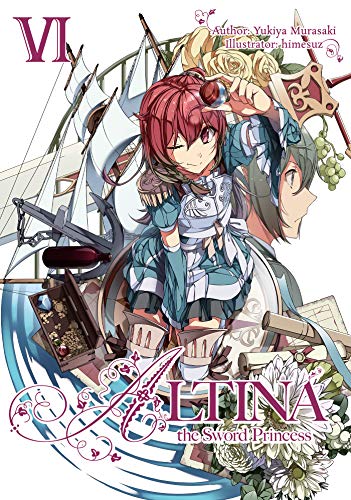
The scene with Latrielle and his aide meeting up with Altina and Regis is a very interesting one. Regis notices Latrielle is acting oddly, and is puzzled, but doesn’t really get to the bottom of what’s wrong, and neither does the reader until it’s revealed to us afterward. In the meantime, Regis finally gets listened to by actual powerful people. He also gets a promotion that comes with a title, meaning he can add ‘du’ to his name – not that he plans on doing this. His attempts at remaining a quiet little adviser who reads books seem to be growing less likely every day. Altina also sticks by his side throughout the book, which is handy as he gets to explain everything to her muscle brains. (Her loathing of reading is palpable here.) We also meet a version of what the two of them would be if they were commoners, as Regis hires a boat run by the perky Narissa and her aggrieved childhood friend Phip. Altina is nice enough to forgive Narissa being rude to a princess, but is also immature enough to be jealous of her and Regis getting close.

As for the naval battle itself, we don’t see much of it from the other side except from the perspective of one ship captain, Morins, who would prefer to spend most of his time in bed with his adjutant, Laurelin. He’s clearly meant to be an antagonist who will crop up again someday, so it’s rather annoying that he’s such a sexist asshole. On the bright side, that means I’m quite pleased to see how he gets routed by Regis, who comes up with such clever strategies as “ram the ship with a rowboat full of explosives”. His seasickness means we’re unlikely to see him putting his brain to use for the Navy all that often, but it’s still impressive. Now if only he could take some pride in his achievements. Or even notice that both Altina and Clarisse are clearly in love with him.

The rather imperfect victory at the end of this volume means, I suspect, that the next book in the series will be a bit more serious. Till then, though, this is another fun example of a military potboiler, with a likeable lead couple (even if they aren’t one yet).

An Archdemon’s Dilemma: How to Love Your Elf Bride, Vol. 11

By Fuminori Teshima and COMTA. Released in Japan as “Maou no Ore ga Dorei Elf wo Yome ni Shitanda ga, Dou Medereba Ii?” by HJ Bunko. Released in North America digitally by J-Novel Club. Translated by Hikoki.

This series is trying its hardest to keep a good balance between the light-hearted romantic comedy that the majority of its readers are here for and the increasingly dark backstory that is constantly threatening to become the front story as well. That continues in this book, which has an awful lot of Zagan and Nephy being incredibly blushy and goofy around each other, wearing each others clothes, being in each other’s dreams, and generally being the most adorable couple around that haven’t even gotten to first base yet. Contrasted with that is the increasingly doomed Alshiera, the plotting, sinister or otherwise, of the various other archdemons, and the continued horrors being piled upon Dexia and Aristella. Fortunately, with one or two exceptions, this remains very readable overall, even if you are only in it to see when these two lovebirds will finally get it on. (Spoiler: don’t hold your breath.)

The main plotline involves Lilith, who is a succubus that controls dreams. She’s able to give Zagan and Nephy a shared dream (that, oddly, shows them in a Japanese high school) and is also trying to rescue a boy who is stranded in a nightmare. He’s connected to Alshiera, who is still slowly dying from events in previous books, and is trying to show everyone that this is fine and that she’s content with it, ignoring the fact that there are others who are absolutely not content with it. To make matters worse, Zagan and friends may have found Azazel, who is also in Lilith’s dreamland, and is likyly going to kill Alshiera once and for all. And, perhaps worst of all, Foll is going around asking everyone what they think about love. Is there someone actually interested in her? Or is she just a normal girl? (Well, a normal powerful dragon girl).

Describing the plot is somewhat difficult, as you can tell from the preceding paragraph, but it holds together pretty well. One irritating negative is a new character is introduced, and there is some anti-trans humor about them, so be warned. Still sadly very popular in Japanese manga and light novels. Lilith is, for the most part, taken seriously, and proves to be pretty awesome when she tries. I especially liked Alshiera gently trying to push Lilith away and get her to accept Alshiera’s death, and Lilith basically saying “nope, fuck that, gonna save you”. Zagan is also awesome as always, though there is worrying evidence that he’s pushing himself too hard that may come up in future books. Oh yes, and Kuroka gets drunk and horny on catnip wine. Let’s ignore that.

The series seems content to meander along, both in its romantic plotlines and its more serious fantasy-based plots. And we’re caught up with Japan, meaning we’ll likely be waiting even longer for the next book. Still, if you enjoy archdemons and elfs being super cute together, and don’t mind the occasional tonal crash when the bad guys have a scene, this remains a good series to be reading.

Otherside Picnic, Vol. 4

By Iori Miyazawa and shirakaba. Released in Japan as “Urasekai Picnic” by Hayakawa Bunko JA. Released in North America by J-Novel Club. Translated by Sean McCann.

Last time I talked about the fact that the narrative voice in this series is Sorawo’s, and how that makes the character of Toriko more intriguing. After this book, I’ll go even further and say that the narrative of Sorawo is vital to what makes Otherside Picnic so good, and that it’s even better because it can’t be trusted. In the first story in this book, Sorawo worries that she and Toriko are becoming desensitized to horror, but quickly shoves that off to the side, which is a shame, as yes, she absolutely is. More to the point, the horrific urban legends that she and Toriko are seeing are starting to be personally aimed at her, to the point where 3/4 of this book takes place in the “real world”. Sorawo’s past is not a pleasant one, and this book wants to remind her of it and, if ,possible, drag her back into it again. And then there’s Toriko, who is finally able to get Sorawo to stop denying what’s really, really obvious.

There are four short stories here. Two are good (1 and 3), two are great (2 and 4). The first sees our girls joining Migiwa and the rest of his organization in cleaning up the remains of the “farm” where Sorawo was kidnapped, and finding several Otherside creatures and booby traps along the way. The second sees Sorawo being threatened by something in the apartment next door to hers, to the point where she’s forced to stay first with Akari (to the displeasure of a jealous Natsumi) and then Kozakura, before finally confronting the source with Toriko. The third story sees the two (plus Kozakura) at a hot spring, which is mostly Toriko trying to make her feelings clear but also involves a brief brush with mannequins. Finally, after getting their APV upgraded, Sorawo and Toriko spend a night in the Otherside… at a crumbling and abandoned love hotel, where Sorawo’s past finally catches up with her and tries to get her to make a tragic choice.

I joked on Twitter about how Sorawo made a deal to have all that urban legend knowledge (her bookshelves are RIDICULOUS) at the expense of being unable to recognize lesbians, which is not really true, but it feels like it at times. She doesn’t seem to quite get why Natsumi is jealous of her staying with Akari, and the first half of the book has the usual uncomfortable denial of Toriko’s feelings. After a while, though, it becomes more clear that Sorawo really does know what Toriko means, but is too busy being scared and self-loathing to confront it. She can say ‘I love you and want to spend the rest of my life with you” here, but that’s not quite the same thing as what Toriko wants – Toriko wants physical affection. It’s not clear where things go from here, but after confronting her past again in the Otherside (that kerosene bit – brrrr), I do think they’re in a better place to actually be in a relationship.

The anime is airing as I type this, and seems to be leaning more into “cute girls doing cute horror things” than I’d like, but for those who would like a bit more terror and a bit more yuri, this volume fits the bill perfectly.