Category Archives: reviews

Didn’t I Say to Make My Abilities Average in the Next Life?!, Vol. 11

By FUNA and Itsuki Akata. Released in Japan as “Watashi, Nouryoku wa Heikinchi de tte Itta yo ne!” by Earth Star Novels. Released in North America by Seven Seas. Translated by Diana Taylor. Adapted by Maggie Cooper.

There was a point in the second story here, when they came across a scavenger that is trying to repair the machines keeping the world alive, that I realized that this was actually a plot that we had seen several volumes ago, and was meant to be quite important. MMAA does have an ongoing plot thread, but it can take many volumes to get back to it, as we’ve seen, and then it will happily wander away from it again. The book is here for fun overpowered little girls, and not much else. And you know, that’s fine too, because – sorry, nanomachines – I’m not really that invested in saving this world as a long-term plotline. And neither is Mile, who points out – possibly incorrectly – that she’ll be dead before it happens so doesn’t care. (I get the sense, honestly, that Mile may end up living forever.) I want to read fluff and cute character moments. We get both of those here.
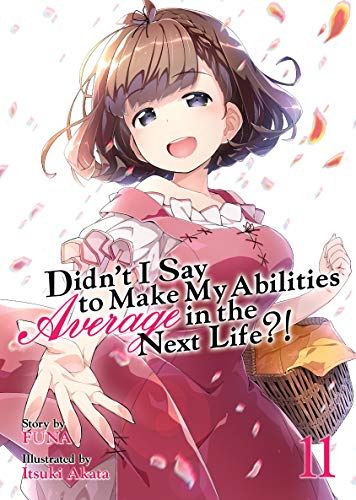
Pauline is on the cover, and is also the focus of the first story, where our heroes meet a mother and daughter who are in trouble with money lenders. I appreciated Pauline’s vigorous defense of them, but of course, this book being the type of series it is, it turns out the money lenders ARE assholes, so she turns on a dime and gleefully destroys them. We then go to a mountain village which has a few golems on the mountain, who are mysteriously… not really doing much. This ties in most with the main plot I mentioned above, and is also an excuse to watch Mile and company accidentally go crazy without realizing it to help a group of orphans who live up there. We then cut back to Adele’s friends from the noble school, who have graduated and set off, at the princess’ request, to find Adele by any means necessary. Naturally, they walk right past each other without knowing it. The best story in the book has the Crimson Vow meeting up again with the Servants of the Goddess, who have managed to temporarily escape Leatoria’s protective father, and the two have a friendly competition.

I really liked this last story a lot. It had some great action scenes, and, given the groups weren’t trying to kill each other, relied a lot more on tactics than the group usually does. This also leads to Reina’s biggest concern with the Vow, which is that they’re not a TEAM – they’re four overpowered girls who basically blast through anything. They’re not coordinating the way most hunter teams do. (There’s also Reina’s crush on the leader of the SotG, but that’s mostly played for laughs – indeed, one senses the author found out about the slight yuri fandom this series has and took offense, as there’s another extra story at the end with Mile wishing she had a boyfriend… but her sights are set way too high.) Honestly, I think Reina’s concern is not really needed – the Crimson Vow may not fight as a tactical team, but they are still the best of friends.

Despite the occasional carp, this was a strong volume in the series, which I think is almost caught up with the Japanese release. We’ll see if the nanomachines get Mile to care a bit more about the world in the next book.

Bottom-Tier Character Tomozaki, Vol. 5

By Yuki Yaku and Fly. Released in Japan as “Jaku Chara Tomozaki-kun” by Gagaga Bunko. Released in North America by Yen On. Translated by Winifred Bird.

As I write this review, the Tomozaki anime is about to start, and I am very curious to see how it does, given how much of this series is just dialogue with very little action. It’s about two gamers, and at times reads a lot like you’re reading their gaming log, particularly when characters get together to try to decide how to fix things. On the bright side, Tomozaki has improved by leaps and bounds, and there is very little “normie” chatter here. He barely feels like Hachiman at all now. That said, he is somewhat humbled when he tries to apply the same lessons he, a shy cynical introvert, learned over months to Tama-chan, who is merely very serious and dedicated, and when she tries his helpful hints, she improves far faster than he ever did. That said, the true star here is probably Kikuchi, who starts high above everyone else and just soars ever higher. It’s a shame girls like her are never the lead.

Hinami is the lead, but… let’s save her for later, OK? A good 3/4 of this book is a lot of fun. Tomozaki tries to help Tama-chan by helping her change herself so that she’s more open and likeable to her classmates, which would defuse some of the tension caused by Konno’s bullying. Part of that is simply not fighting back constantly (It’s noted that Tama-chan is basically “attack, attack, attack” in terms of game metaphors), but also to try and have her fit in with banter, conversation, and self-deprecating jokes. There’s a great moment when everyone realizes that Tama-chan does not really care much about the rest of her class, and I enjoy that it’s seen as a flaw but she’s not shamed for it. He also bonds with Kikuchi, brought in as a conversation partner for Tama-chan, and I think he is beginning to realize he likes her as more than a friend.

That said, this is not helping with the basic issue, which is Konno. Except it isn’t, because in the back quarter of the book, we realize that Hinami has taken this far more to heart than Tomozaki or anyone else had expected, and she proceeds to wreak an absolutely epic r3evenge that almost destroys Konno. (It does not completely destroy her, and thank god for Tama-chan coming in at the end, or else this book would be even darker than it already is.) The book ends up being about Hinami, whose “mask”, as it turns out, is pretty obvious to most of the rest of the class, particularly Tama-chan, who feels responsible for Hinami having to go as far as she did. Notably, aside from one or two brief meetings, Hinami and Tomozaki barely interact here. I imagine readers ended up being pretty unnerved.

That said, I have to agree with Tomozaki: I desperately want to know more about the real Aoi Hinami, and she’s still my favorite reason to read this book, as I find her fascinating. (As for who Tomozaki should date, well, let’s leave that for now.) For a series that started off as “what if My Youth Romantic Comedy but milder”, it’s really started to come into its own. I can see why it got the anime.

Kokoro Connect: Precious Time

By Sadanatsu Anda and Shiromizakana. Released in Japan by Famitsu Bunko. Released in North America by J-Novel Club. Translated by Molly Lee.

This final volume of Kokoro Connect, as you might guess by the ‘Time’ subtitle, is a short story collection, with one shorter story and three longer ones. It’s a fitting finale for a serious that has really dragged its cast across razor blades at times, and fortunately is not nearly as stressful as previous books in the main series have been. The series has always been, to a degree, about growing up and moving forward, and this final volume really emphasizes that, with each story hammering the point home. The first three don’t have the main cast as the regulars, although they do get narrative voice at times. Fittingly, the final story is in Iori’s narration, the one member of the CRC not paired up (OK, there’s Uwa and Enjouji, but come on, we all agree it’s just a matter of time, right?) and someone who’s still excellent at putting on a mask to disguise her own pain. Fortunately, there are answers for her here.

The first story is the shortest and the slightest, as the CRC are coming over to Taichi’s house one afternoon, and his sister Rina decides she’s going to interrogate… erm, interview them all to make sure that there’s nothing wrong with them. This is, for the most part, amusing, and of course the real issue is that she feels he’s growing up and leaving her behind. The longest story in the book, Fujishima organizes a giant couples-only battle royale event, mostly to give the third years something “unique” to remember the year by. This is the most CRC-focused of the stories, though it includes the entire school cast, and does finally hook Maiko up with a guy (sorry, fans of her glomping Iori). The third story is the weakest, though its themes are good, as we get an introverted first-year determined to “fit in” at high school but unable to expend any effort to do so, finding a home in the CRC, which just did that the previous year with Uwa. Finally, Iori’s future is laid out for her… so why is she so depressed?

There’s no real drama or conflict in this story, which fits given it’s basically a final “present” from the author to the readers. I did like seeing Gossan as an actual slacker teacher (who still gives good advice when he needs to) rather than the usual “I have been possessed by Heartseed” version we’re used to. Heartseed are blissfully absent from the whole book, as is typical with SS books but also as it’s the final one. Our heroes are getting ready to graduate and move on, and hare making decisions about what to do with their lives. For the most part, they’re good ones (and I do wonder how long Inaba and Taichi are going to wait before getting married – the tsun and dere of Inaba’s personality are perfectly blended here, and it’s a definite highlight). Taichi is not leaving his little sister behind, but the cast is leaving us behond, as they go off to do whatever they want to. (Technically there are fanfics, but alas, very, very few.)

Despite the fact that it seems I spent most of these reviews talking about how angsty and depressing everything was, in the end Kokoro Connect, was a wonderfully solid series with a terrific cast. Kudos once more to the translation by Molly Lee, which really gives you the great sense of a bunch of teenagers having terrific conversations. I’ll miss this a lot.