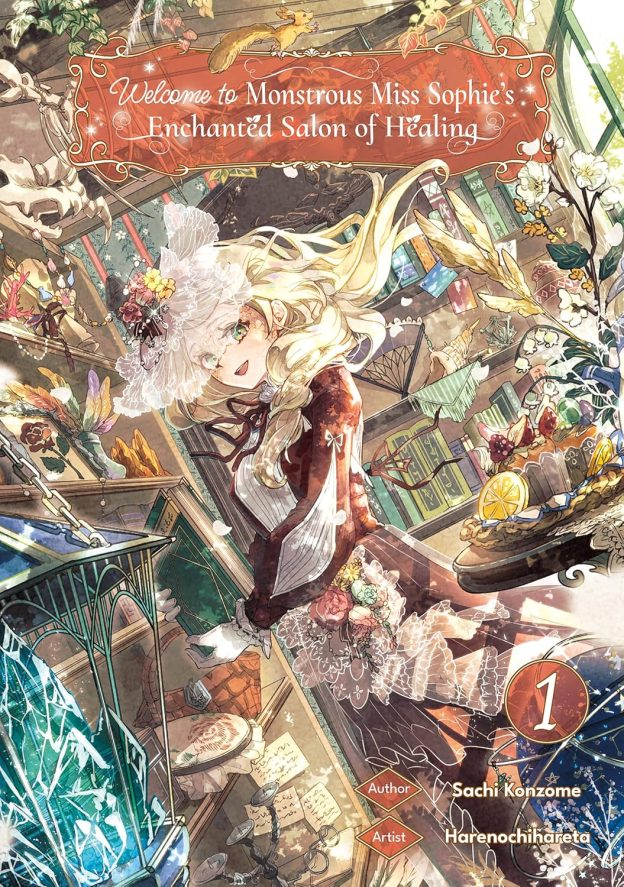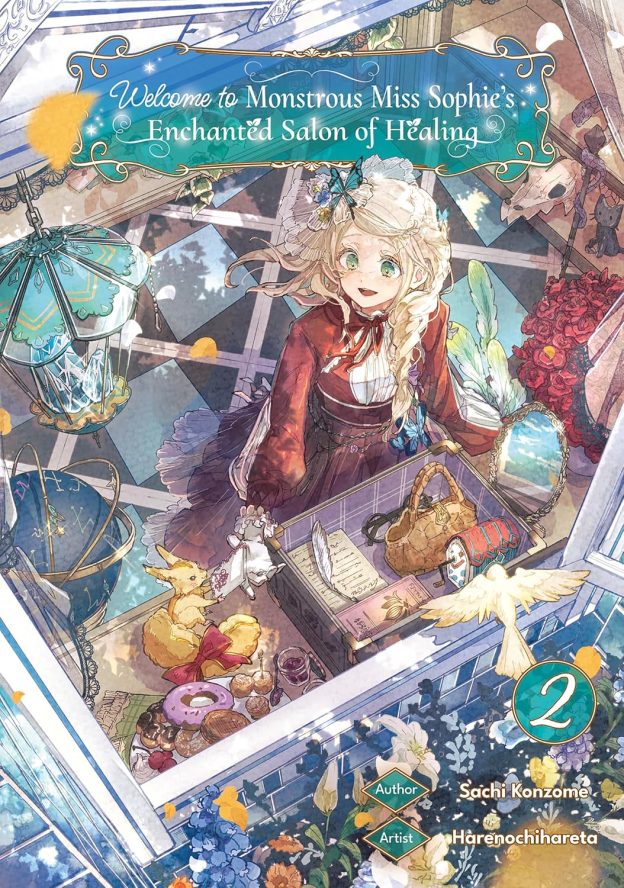
By Sachi Konzome and Harenochihareta. Released in Japan as “Bakemono Jou Sophie no Salon: Gokigenyou. Kawa Ichimai nara Naosemasu wa” by Mag Garden Novels. Released in North America by Cross Infinite World. Translated by Dawson Chen.
Endings are hard, especially when a book is only two volumes long. Honestly, I think this might have worked better as one big brick, but I can guess why the publisher didn’t want that – these are chunky books as it is. But the main issue is that the first volume was alternating between Sophie and Kurt and their budding love and Sophie essentially having a new customer every chapter with a scar and a story. The second volume also starts out this way, but it almost reads like the author was told to wrap things up, as a little over a third of the way into the book, we end up dealing definitively with Sophie’s skin issues and disfigurement, as well as her self-loathing which is preventing her from accepting Kurt’s love now that he has finally realized what emotions are and that he has them. It’s still a good book, but it feels unbalanced.
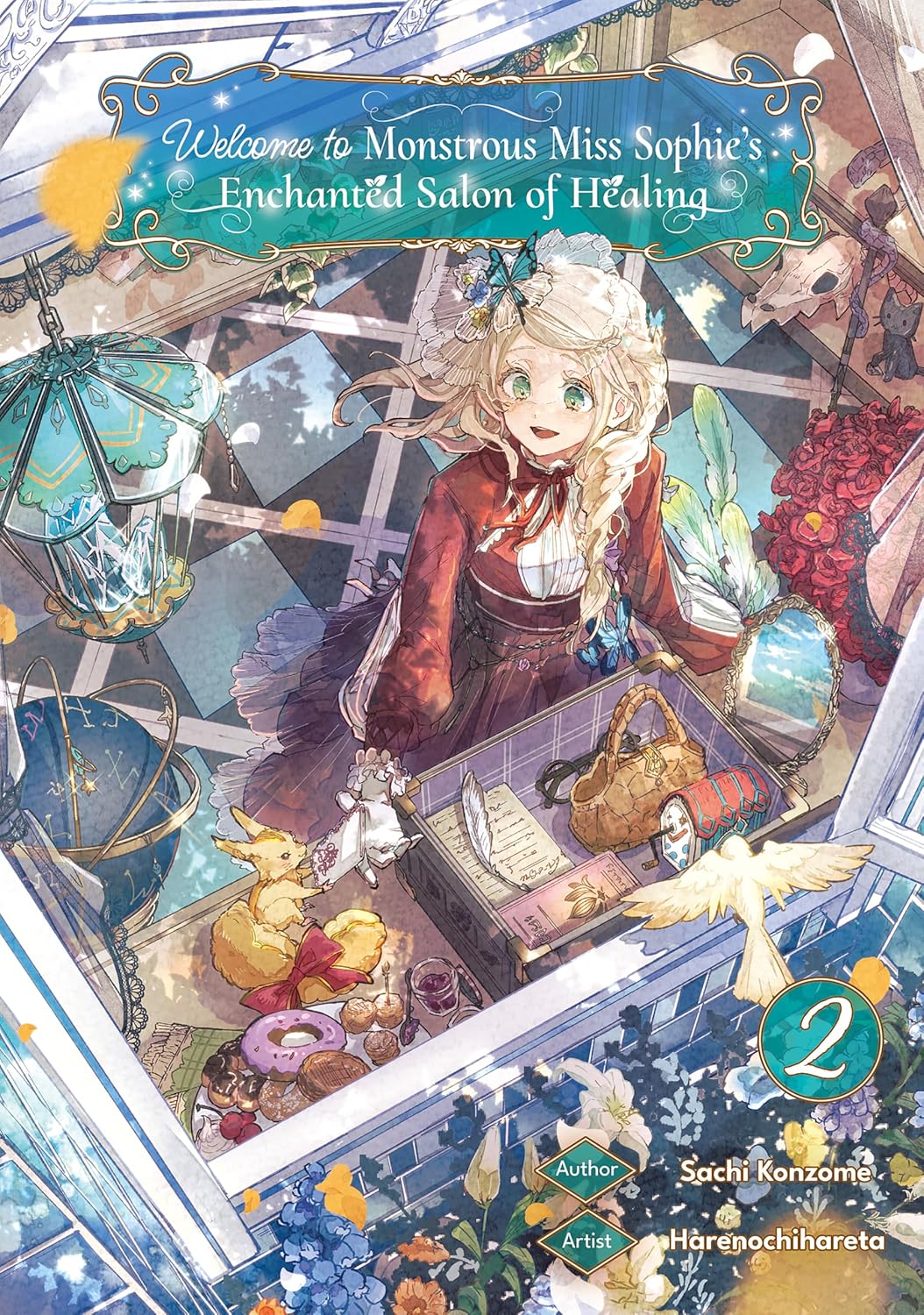
The book starts with Sophie still taking care of clients with issues. We meet two kids who claim to be lost princesses but the truth is something far more tragic and well-worn; a clown following in his grandfather’s footsteps who wears his tragedy on his face; a beastman gatekeeper who is struggling to bring up a wayward daughter; and a bartender who is troubled by her past as a pirate. Throughout this we also get Kurt, who is going off to help fight a monstrous dragon, a task so dangerous that he gives Sophie half his dog tags, something you usually only give to your wife or fiancee. She’s very, very worried about him. Then, he returns, with a nasty scar (which she heals of course), and a proposal. She rejects him bitterly due to her condition. Can something be done about that?
The book wears its heart on its sleeve, sometimes a bit too much. Sophie’s cure amounts to finding a doctor who knows what it actually is, and the psychological component of it all, which I was sure might cause her to reject an immediate cure, does not come into play – at least not like that. The little girls’ story is tragic, but also somewhat incomplete – I was expecting the story to circle around to the mother and daughters once more, but it never did. The back half of the book is almost pure fluff – the one cure Sophie administers is to a literal living magical creature that makes people happy. It’s an emotional book, but I wish it had a bit more heft to it. Everything here happens pretty much exactly as you could have guessed. And they all lived happily ever after.
Still, it wasn’t that long, and I enjoyed Sophie essentially collecting tragedies and then upending them. That’s what I’ll remember this series for the most.