One Piece, Vol. 70

By Eiichiro Oda. Released in Japan by Shueisha, serialization ongoing in the magazine Weekly Shonen Jump. Released in North America by Viz.

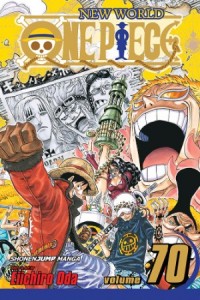
Sometimes you’re reading a manga and you get to one page, or even just one particular panel, that makes you grin so hard and flail around because it perfectly encapsulates everything about that series into one compressed image of fabulous. For One Piece 70, it was, believe it or not, Law giving his sandwich preferences. After everyone is setting sail again, Luffy demands food, which Sanji notes will be sandwiches today. The crew start giving their preferences, and Law briefly joins in, noting how he doesn’t want bread. He them stops and gasps, horrified. THEY’VE SUCKED HIM IN.
onepiece70

Once again we see in this volume how Luffy and his crew are different from the norm. They’re contrasted with the other pirates elsewhere in the world, particularly Donflamingo. They don’t want power as such (Luffy wants to beat the Four Kings, but it’s not so that he can take their domain away, it’s for the thrill). They don’t abuse, kill, or sexually assault anyone. They are the idealized kid version of a pirate, only actually making it happen. As the Marines note, they have to constantly belittle them and talk about how evil they are, as if they didn’t the Straw Hats would be far too easy to love.

This volume wraps up Punk Hazard, so as you’d expect there’s a lot of sections where the crew does awesome things. Usopp and Nami both get to show off (it’s even lampshaded, as Law talks about how they don’t have time to fool around, then later shows his grudging respect after they both do exactly what they bragged they would), Zoro gets to cut things, and of course Luffy gets to punch Caesar Clown into next week. As I sort of expected, the deadly poison gas is not quite as immediately deadly as it looks, so we were even able to rescue the marines who were hit by it. It calls for an arc-ending giant party, this time with Straw Hats and Marines, however grudgingly.

There’s a nice scene here where Tashigi begs Nami to be allowed to take care of the recovering children, and Nami agrees to it, noting she has a soft spot for ‘lady sailors’. I like that Bellemere and her upbringing is still very much a part of her life, and it helps to make sense of some of Nami’s maternal attitude during this arc – we’re not sure of all the details about her early childhood, but she and Nojiko were adopted, so seeing these kidnapped children probably spoke to her on that level.

So now we’re off to a new adventure, this time on the island of Dressrosa. Law and the captured Caesar are coming with the crew, however, and this is an island that Donflamingo already controls. We also get a harrowing shot of him beating Smoker nearly to death (hello, Aokiji cameo! Please arrive in the nick of time more) just to show how badass he is. Is the combination of Luffy and Law enough to stop Donflamingo? Well, yeah, probably. But can it stop… a TOURNAMENT ARC? (shudder)

Insufficient Direction

By Moyoco Anno. Released in Japan as “Kantoku Fuyuki Todoki” by Shodensha, serialized in the magazine Feel Young. Released in North America by Vertical.

The North American market has been enjoying Moyoco Anno’s manga for years now, be it Happy Mania, Sugar Sugar Rune, or Sakuran. Hideaki Anno has also been a favorite over here, mostly for Evangelion but also for cult classics like Gunbuster and Nadia: The Secret of Blue Water. (And also infamous for the Kare Kano anime… and, well, Evangelion.) As a result, a volume such as this one, which is a biographical look at their married life with an otaku slant, is one that can actually be released over here and gather some interest. The book itself is a lot of fun, though it did go in a direction I wasn’t quite expecting…

direction

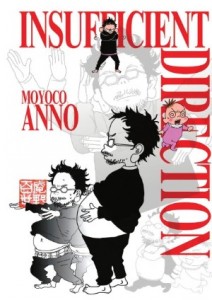
Of course, this is deliberate. Moyoco Anno frames the story to set up my expectations of a normal Japanese woman overwhelmed by her insane otaku husband. The first chapter shows her avatar, Rompers (so called as she draws herself as a baby in a sleeper outfit), stepping on Gigantor toys left around the house like they were a child’s Lego toys. And yet throughout this book, the message we get is somewhat different: Moyoco is a lot like him. It’s very easy for her to get drawn into the otaku lifestyle, and she’s a lot less ‘normal’ than she may pretend to be. As for Director-kun, his sense of self and peace with being a giant weirdo is so great that he ends up being the calm and collected one a lot of the time. It really reads like a great relationship.

A word of warning: there are a LOT of translator notes for this volume. The Anno life is cluttered with 60s Japanese TV series, be it familiar ones such as Ultraman and Star Blazers or untranslated works like A Karate-Crazy Life. And, like many obsessed fans (including myself), the couple tend to speak to each other in terms of the media consumed. Even an argument about proper use of Japanese is referencing Dragon Ball and Galaxy Express 999. This is not something that a casual reader should pick up, though if they do they can at least be reassured that there are lots of notes telling them the importance super sentai shows and George Akiyama.

I note that this series ran in the josei magazine Feel Young, and its presence there was not all that unusual. Most josei magazines (and many seinen ones as well) have these slice-of-life biographical “and here’s what my husband/child/cat did the other day” comics running through them, usually in short 5-6 page bursts in between the larger serialized stories. (And indeed, the chapters in Insufficient Direction are all about that length.) It’s a type of story we’ll almost never see over here, partly due to cultural translation issues but mostly because there’s not really a market for it – North American anime and manga fans tend to prefer their slice-of-life looking more like K-On!. As such, this title is not only an amusing look at the otaku lifestyle of the author and her husband, but also a glimpse into a genre that we are rarely privileged to witness. It’s a lot of fun.

Toradora, Vol. 6

By Yuyuko Takemiya and Zekkyo. Released in Japan by ASCII Media Works, serialization ongoing in the magazine Dengeki Daioh. Released in North America by Seven Seas.

Given how impossible it is for most mass media to avoid cliches and tropes, the question often becomes “how well does this work manage the cliche”? This volume of Toradora! handles this in both a comedic and serious fashion. The Culture Festival rears its ugly head, and though thoughts of a maid cafe drift through our male classmates’ heads, what we end up with is far sillier, particularly after it’s subverted midway through. It’s the more serious plotline that folks will take with them, however – Taiga’s father is back in her life again, and wants her to come live with him. Something which a projecting Ryuuji can’t help but assist with.

toradora6

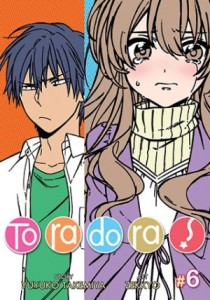
Ryuuji is not helped by the cover art for the volume, showing a tear-filled Taiga and Ryuuji looking askance. This clues the reader in that we are meant to be in her side in the matter. Things are not helped by the appearance of her father himself, who seems far too contrite and meek to be true. Of course he’s playing right into Ryuuji’s hands, though I don’t think that it’s deliberate on his part – her father isn’t genuinely evil, he’s just monumentally selfish. What he doesn’t know, but we do, is that Ryuuji’s lack of a father figure looms incredibly large in his life. And so naturally Ryuuji is going to move heaven and earth to see Taiga and her father reunite, just as he can never do.

On the other side we have Taiga and Minori, who have experience with her father doing all this before and know the truth. Crucially, however, neither of them tell Ryuuji that full truth. In meta terms, this is because the plot has to happen. In the story itself, though, Taiga is more understandable. She gets the reasons why Ryuuji wants this to happen, she’s in love with Ryuuji and doesn’t want to disappoint him, and she really does love her father despite everything, so she opens herself up to him one more time. Minori, though, I’m rather disappointed in, as you’d think she’d be the one to sit Ryuuji down and say ‘Hey, let me give you a timeline of the times this guy has tried this with Taiga before.’ Instead, she just gets angry, saying it’s obvious he’s being a selfish ass. And so they fight, which, Ryuuji still having lingering feelings for Minori, devastates him.

Luckily, Ami is there to be the voice of reason and get Ryuuji out of his funk. Unluckily, Taiga’s dad *is* everything they say he is, and therefore things come to a head at the culture festival with a devastating text sent to Ryuuji. And, once Ryuuji sees for himself what’s going on, he gets it all IMMEDIATELY – a sign of his maturity, even as he backslides here. Sadly, resolution will have to wait – this is the end of the volume, and so we get the horrible cliffhanger with Taiga’s appearance on stage waiting for parental acknowledgement that will never come. How is this going to be resolved? Well, Toradora! comes out about every year and a half in Japan, so we’ll likely have to wait till summer 2015 to find out. See, and folks wonder why publishers don’t want to catch up to Japan…