The Twin Knights

By Osamu Tezuka. Released in Japan as “Futago no Kishi” by Kodansha, serialized in the magazine Nakayoshi. Released in North America by Vertical, Inc.

In this sequel to Princess Knight (well, the original Princess Knight, that is – the rewrite we saw here is still 5 years away), Osamu Tezuka shows us very clearly right from the start that this is a fairy tale, a stage production, a full-blown melodrama. No, even more, a mellerdrammer. This is a cartoon straight out of Mickey Mouse. It has talking animals, it has villains that are so paper-thin it’s amazing they don’t blow away, it has truly ridiculous plot contrivances, it’s has somewhat questionable gypsies (who are straight out of the European Comics Book Of Stereotypes), two sets of twins, multiple breaks of the fourth wall, including an appearance by Tezuka as himself, and an ending that does not so much end as simply stop.

twinknights

I loved it. But it really does seem to have everything that folks find annoying in a Tezuka manga. More than anything, I think this is the style of manga Tezuka did that we haven’t really seen over here much. The quick, dashed-off adventure stories. Lots of animal characters. Glib protagonists with not much depth. This is a good chunk of his output, particularly at this point in his career. If you read Tezuka for titles such as Barbara or MW, I can see you finding this ridiculously cloying and silly. Which it is. But it’s also so much fun! I can’t tell you the number of times I was grinning like a maniac while reading this. Not just for the adventures of Daisy and Violetta – truth be told, Daisy is perhaps the weak point of the entire manga. No, for things like the evil Duchess simply having her henchmen back out a high window to their deaths for irritating her. Ridiculous, but fun.

As for the sexism or lack thereof, it’s not too bad given the era and country it was written in, and I think does slightly better than Princess Knight. Yes, Violetta is constantly yearning to be female and wear dresses, etc, and her relationship with Emerald is far more interesting than that of her with Prince White (if this plot were written today, Daisy would marry Prince White and pretend to be Violetta while she goes off with Emerald for more adventures). But there’s no denying that Violetta kicks ass throughout, and the last page does note “Well, she may dress up as a man and have adventures in the future.”

Even better, and my favorite scene in the entire book, is when she and her family are thrown into the tower by the evil Duke and Duchess. She and her mother are separated into one room, and Violetta starts to despair. Then her mother sees a couple of swords that were conveniently left on the wall (the duke and duchess are not exactly the smartest of villains… we’re talking Gargamel-level smarts here) and decides that Violetta needs to learn how to REALLY fence… and be taught by Princess Knight. Here we see that, despite choosing to be Queen and settle down to raise a family, Sapphire has never truly abandoned her upbringing as a boy (and in fact, clearly must keep in shape with the rapier, given that she kicks her daughter’s ass). I loved this bit of family bonding.

There’s a lot packed into the 240 pages we get here. I didn’t even mention the incredibly tragic deer, or the cartoon wolves (one of whom I swear is voiced by Billy Bletcher), or the truly weird art that we see in places (check out the duke on page 231… pure Tex Avery). It’s not deep… it is in fact the very opposite of deep. But it’s fun, and lively, and would make a great fairy tale for children. Which, of course, is what it was meant to be back in 1958. A great addition to the North American Tezuka canon.

SDCC License Roundup

Well, more of an ‘SDCC and Seven Seas’ roundup, as they announced several things right before the con. It wasn’t as big a weekend as I expected, as Yen had to cancel their panel at the last minute, but there were still a lot of great things to talk about. Let’s delve in.

doraemon

The biggest title licensed this week was no doubt Doraemon. The production studio announced that they were doing a digital release of the classic kids’ manga starting this fall, on Kindle and hopefully other platforms. AltJapan, who are handling Dorohedoro for Viz, are scheduled to be doing the translation; this fills me with happiness, as I love the job they’ve done there. In case you live in a cave, Dorawmon is one of the most popular icons of Japanese manga, sort of the equivalent of Mickey Mouse (well, given his screwups, perhaps Donald Duck). He is a robot cat from the future, there to help our hero, Nobita, through the use of futuristic technology. Of course, something always goes wrong. One of the most beloved classics of all time, you’d better believe I’ll be reviewing it here.

Viz had most of its Japanese manga licenses already announced at Anime Expo. They did note they’re doing a (Western) comic based on their Japanese novel title All You Need Is Kill. They’re also re-releasing the Battle Royale novel, and have a collection of essays coming out with it, as various writers talk about Battle Royale’s themes and meaning.

Kodansha had several new announcements they’d saved for SDCC, including two shoujo manga I’ve wanted to see over here for some time. My Little Monster (Tonari no Kaibutsu-kun) features a grumpy, somewhat grades-obsessed lead girl whose life is disrupted by the presence of a well-meaning but completely socially inept monster of a guy (yeah, sorry, no supernatural content here). The manga is 11 volumes long, and just ended in Japan. (By the way, get used to this. Due to the economy making long series difficult to license, expect Western folks to wait on licensing things till they have a guarantee it’s wrapping up with a reasonable number of volumes.)

Suki-tte_Ii_na_yo._manga_vol_1

The other shoujo title is Say “I Love You” (Suki tte Ii na yo), which runs in the same shoujo magazine as My Little Monster, Dessert. Dessert is an older-skewing shoujo magazine that is sort of the equivalent of Cheese! or Cookie, only a bit less racy. Kodansha noted they’d never licensed anything from it before, and are waiting to see how these series do. For those of you that complain Kodansha only licenses stuff from Shonen Magazine and Nakayoshi, now is your chance to show your appreciation. The premise to this may sound similar to several shoujo series, as the heroine is a quiet girl who is slow to trust people, and the hero is a popular guy who all the girls love. Of course, if you look at the bestselling shoujo manga over here, that premise sounds like the ringing of cash registers. It’s well-handled, though, and deserves its license. It’s also wrapping up in Japan soon, and is around 11-12 volumes.

Every series by Hiro Mashima has been licensed in the West bar one, so it’s no surprise to see that Kodansha has snatched up that one. Monster Soul ran in Kodansha’s Comic Bonbon, which is for kids around 7-10 years old; it’s basically what you give little kids when they want to read Shonen Magazine (which skews much older than Jump or Sunday do). A fantasy tale of humans vs. monsters, it’s classic Mashima, and only two volumes long.

Lastly, Kodansha announced they were picking up xxxHOLIC Rei, CLAMP’s new sequel/interqual/no one is quite sure what it is continuation of the original series. They’re also ‘rescuing’ Tsubasa and xxxHOLIC from Del Rey, and re-releasing it in omnibus format. (No word on digital yet; I imagine getting CLAMP digitally will be as hard as getting Sailor Moon is proving to be.) These titles are classic modern CLAMP, being entertaining, filled with great art, and highly frustrating on a very personal level. Recommended, even if you will bang your head against a wall at Tsubasa’s plot.

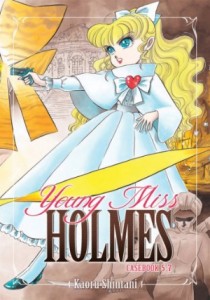
Seven Seas did not have a panel at SDCC, but they had a booth, and these days they tend to announce their titles as press releases rather than at cons anyway. The biggest news there was probably the agreement with Comixology to put out their titles digitally. And yes, this includes some Japanese titles, though the majority so far are their OEL titles such as Aoi House and Vampire Cheerleaders. Haganai, Dance in the Vampire Bund, and the Korean manwha Jack the Ripper: Hell Blade are now digital. I hope to see more Seven Seas licenses there in the future (in particular, I’d love to see Young Miss Holmes digitally).

As for new Seven Seas licenses, it’s a trio of titles that appeal to fans who like to see cute girls in battle. Strike Witches: Tenkou no Otometachi (Maidens of the Sky) is… well, it’s World War II if all the ace pilots were magical girl witches. I suppose if I can accept Hetalia, I can accept that. It first became famous in fandom for its constant panty shots, but I understand the manga also has a real plot and character development and stuff like that. It first ran in Kadokawa’s Comp Ace.

arpeggio1

I don’t know much about Arpeggio of Blue Steel (Aoki Hagane no Arpeggio) except that it runs in Young King OURS, home of Excel Saga, meaning I will absolutely give it a shot. The premise seems to involve an alternate future, submarines, and a mysterious alien fleet that is there to ensure humanity cannot use the seas. Naturally our heroes are there to stop them. This crew actually does feature some males, I believe.

Lastly, we have Girls Und Panzer, which I can sum up pretty well as: girls in tanks. The name might have given that away, to be fair. Like Strike Witches, it’s part of a large anime/manga/light novel multimedia blitz. The manga we get here ran in Media Factory’s Comic Flapper. Media Factory is getting to be a favorite of Seven Seas, and I like seeing more titles from Flapper and fewer from the slightly more pandering Comic Alive (not that Flapper doesn’t have its share of pander as well – see this series). The series actually sounds like a typical high school girls’ sports manga, only instead of kendo or softball, it’s operating tanks. Intriguing.

And I believe that wraps it up, at least until Otakon, where I’m sure some companies will have a tidbit or two. What excites you the most on this list?

Soul Eater, Vol. 15

By Atsushi Ohkubo. Released in Japan by Square Enix, serialization ongoing in the magazine Shonen Gangan. Released in North America by Yen Press.

Soul Eater is a series I love, but it’s also a series that’s very easy to put on my ‘I only have one paragraph worth of things to say’ list, which is why I’ve been reviewing it as a brief for the last two years. With this volume ending the Baba Yaga’s Castle arc, however, it’s a good time to take stock and remind ourselves just why this series works. It’s not just about the awesomely surreal art any more. (Though the art is great… in particular, the use of simple black scribbles to show everyone’s minds being taken over by “spiders” is absolutely horrific.)

souleater15

The last time I did a big review was Vol. 6, where our heroes ended up losing their battle to stop the resurrection of the big bad. They fare somewhat better here, but it’s still something of a Pyrrhic victory. Arachnae, for all her disturbing spider imagery, was always going to fall into the category of ‘not as interesting as Medusa’. And the astute reader has been waiting for Medusa’s ‘helping’ our heroes to eventually rebound back on them for about 4 volumes, now, so it’s not much of a surprise when it does. (I do wonder what happened to the little girl Medusa was possessing… I assume she lived, but we never do see her again. The anime implied she was returned to her parents and absolutely not mentally scarred by all this, which… seems unlikely.)

And of course our heroes have some casualties of their own, namely Kid, who is still trapped within the villains’ book. This means that Liz and Patty are now a duo like everyone else, rather than a threesome with Kid, and Patty is now the meister. This is dealt with mostly in a lighthearted way (Patty is shown to be hella strong, and also has no qualms whatsoever in fighting dirty when the need arises), but I am hoping that at some point we get an explanation of their backstory, as Liz and Patty just aren’t as developed as the rest of the cast (no pun intended).

The end of one arc means the start of another, though, and there are several things in this volume that point forward to what is coming soon. We discover who the killer of B.J. is, and while it wasn’t obvious, it wasn’t all that surprising either – the killer has always seemed a little fishy throughout the series, so seeing he’s really evil is not that much of a stretch. As for Kim Diehl, it’s a bit of an anticlimax, as the far-too-understanding Shinigami seems to be perfectly OK with “she’s a witch, but not evil, so forgive her”. I wonder if Soul Eater Not! will deal with any of this fallout… assuming it ever catches up to this point in the manga. (I also want to meet her sister, who will inevitably be called Kelly Diehl.) Lastly, Maka and Soul hunt down a serial killer who is an amusing Freddy/Sadako hybrid, and finally gain the Death Weapon status they almost had in Chapter 1 before Soul messed everything up.

Everyone has matured and seem stronger now, which is good, as things are only going to get more dangerous from now on, particularly if Maka is still intent on saving Crona. Soul Eater has rapidly become one of the best shonen series available today. Get it.

(Also, trigger warning for spiders, but honestly, Soul Eater has so many terrifying art things that it seems a bit pointless to just narrow it to one.)