Sabikui Bisco, Vol. 8

By Shinji Cobkubo and K Akagishi. Released in Japan by Dengeki Bunko. Released in North America by Yen On. Translated by Jake Humphrey.

OK, this is starting to irritate me. This is not the first time we’ve had a volume of Bisco that felt like the final volume except that there are clearly more coming, but it’s the first time I felt angry about it, because this really was a fantastic ending. It wrapped up most of the plots we’d had so far, it featured an epilogue that screamed “this is it, I have finished the series”, and it’s also one of the best books in the series. Sadly, after that ending you get the usual “movie trailer” preview that says Book 9 will be BISCOOOO… IN… SPAAAACCCEEE!. Now, this could be quite good, and I’ll definitely be reading it. But I’m getting kinda tired of this author wrapping everything up and then just continuing to roll along. Sometimes series can just END, y’know. In any case, back to Book 8 itself. If you’ve been annoyed by the heterosexuality in this book, particularly Bisco and Pawoo having a kid, boy do I have good news for you. It’s mpreg time, baby!
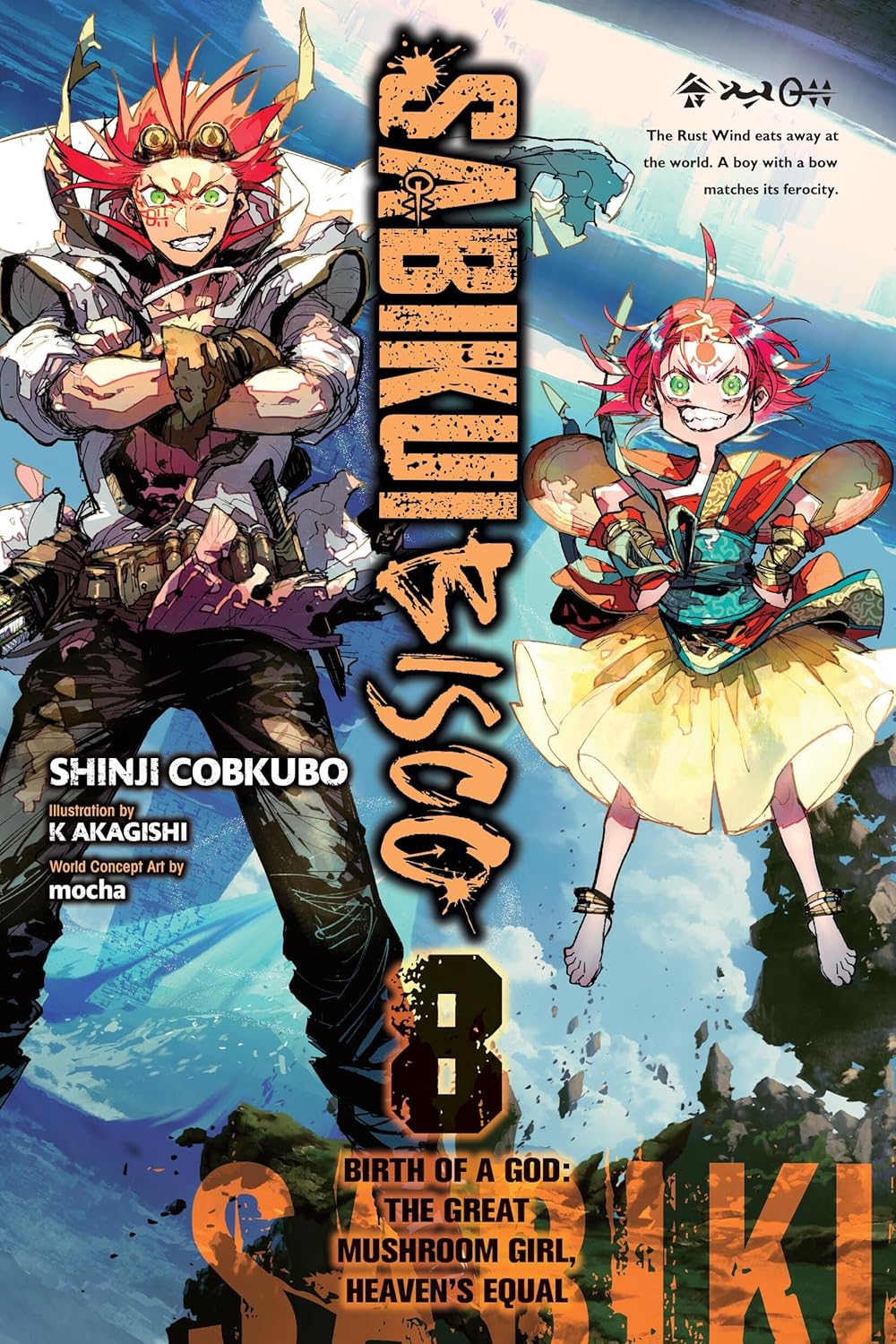
A mysterious ark, led by someone who looks and acts suspiciously like a United States President (not a specific one, honest, just… in general) is sucking up valuable specimens around the world, which ends up including most of our cast. Meanwhile, Milo has been trying to hide from Bisco that he’s been having mysterious morning sickness. That’s right, when they merged their powers earlier, it led to a magical daughter with Milo as the “mother” and Bisco as the “father”, who they name Sugar. Sugar rapidly grows to be a child from hell, especially when Milo and Bisco are taken in by the ark and made into specimens. Fortunately, she has a cat guardian to help… except she’s not really listening to them. More fortunately, Maria, Bisco’s mother, has shown up to help out… wait, WHAT?!? Wasn’t she dead? And is she really helping?

Maria is easily the best addition to this book, and she’s exactly what you’d imagine Bisco’s mother to be like. Her reasons for faking her death are… well, understandable is the wrong word, but they make sense for the character. I also really enjoyed her scenes with Pawoo, who still doesn’t get a lot to do here, but gets a lot more to do than she has in the last few Bisco books. This includes giving birth, which surprised me. The cover art made me think we’d get a time skip, but no, Sugar just grows up almost immediately. Then I thought we’d get one near the end, as Pawoo was only a couple months pregnant…but we live in magical mushroom country, and we’re also here to fight God, so babies need to be born when it suits them. I also really enjoyed the epilogue, which I don’t want to spoil too much, but I feel may have drawn from the author’s own experience… and also reminds us that, no matter how big a fantasy this is every time, it’s still Japan, not an isekai.

So yeah. Space Bisco. FINE, I guess. In the meantime, this was fantastic, and a great ending to the series.
My First Love’s Kiss, Vol. 1

By Hitoma Iruma and Fly. Released in Japan as “Watashi no Hatsukoi Aite ga Kiss Shiteta” by Dengeki Bunko. Released in North America by Yen Press. Translated by Kiki Piatkowska.

Tempted as I am to just write “Christ on a cracker” and let that be my review, I suppose I should get into the nuts and bolts of this thing. First of all, I feel retroactively annoyed with Adachi and Shimamura 11. I’ve mentioned many times before how this author has a cast of characters that are all part of the same “world”, and they flit in and out of each other’s series. That was the case with Adachi and Shimamura 11’s review as well. Little did I realize just how MUCH those characters took up all of Book 11, to the point where it now reads as nothing more than an ad for the author’s darker yuri series. (A&S 11 came out the same day as the final volume of this one.) The author also states in the afterword that this is a “romantic comedy”, then admits readers will get annoyed at them for saying it. Which is very true. This is a trawl through the sewers of love, and it will make you feel dirty.

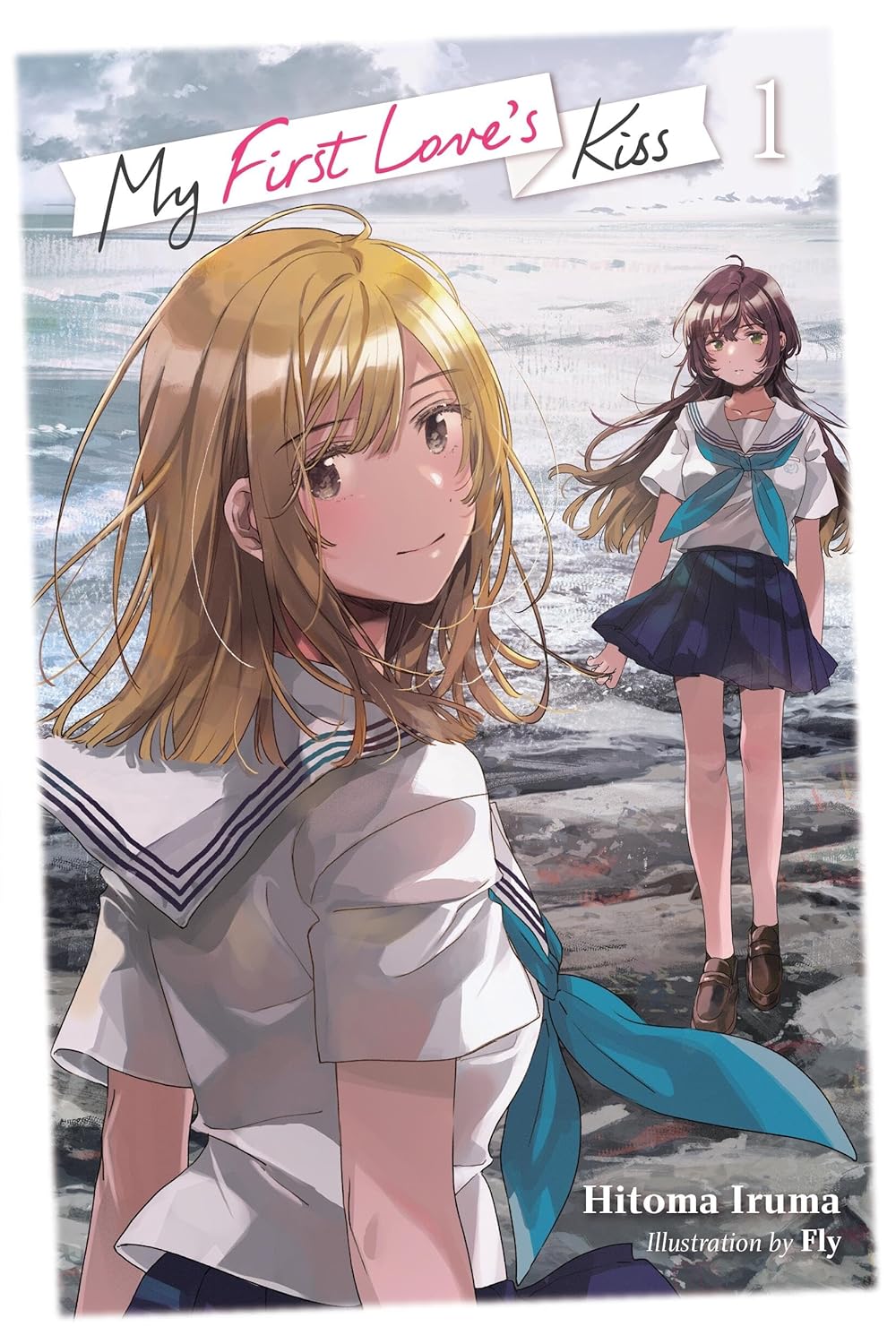
Takasora is very, very surprised when her mother one day brings home someone she knew when she was in school, along with the woman’s teenage daughter, and announces that they’re now living there. The other teen, Umi, is very pretty (a fact Takasora will mention over and over again throughout this book), but also doesn’t seem all there, and there’s clearly something going on behind the scenes that Takasora… really doesn’t want to get involved with. Unfortunately for her, not only does she slowly begin to get obsessed with Umi as the days go by, but she also notices Umi going out late at night and frequently staying out all night. And there are rumors that she’s doing compensated dating. Are the rumors correct? The other half of the book is Umi’s story, which tells us that a) yes, they are correct, and b) it’s far more desperately awful than we’d like.

So, first of all, the opening of this novel features physical abuse of one of the heroines. FYI. Secondly, the rest of the book features emotional manipulation of the same heroine. Takasora is the easier part of this book. She’s immediately very attracted to Umi, can’t really work out why, and spends the book realizing that she’;s in love. Umi has spent most of her life bouncing from house to house with her mother. The better households ignore her, the worse ones abuse her. Then six months ago, she meets a gorgeous older woman who wants to pay her lots of money to have sex with her. And Umi falls for this lady HARD. It’s the first caring and affection she’s ever really received, and even though she knows the woman is a creepy pervert, and that this is illegal, and that love is not involved, she still confesses and begs her to NOT pay her anymore and just date her normally. (Something which the other woman notably does NOT do.)

A brief extra note to talk about the connections to Adachi and Shimamura, for fans of that series who I know are curious. The first half of A&S 11 can pretty easily be understood after reading this volume. The “kimono lady” 15-year-old Shimamura meets, who acts creepy but states straight up that Shimamura is one year too young for her, is the lady who is involved with 17-year-old Umi in this series. The last half of the book might be more confusing, as I’m pretty sure the senpai that Shimamura meets on her vacation with Adachi in Takasora from this book, only their personality is literally NOTHING like this Takasora, so I may be wrong. Most ominously, Chiki (the kimono lady) at one point apologizes to Umi for being a) late and b) in an out-of-place yukata, as she was “visiting Hino”. Hino as in Hino and Nagafuji Hino?!?! It’s even implies she stays at their estate. Given everything about Chiki makes me recoil in horror, I kind of hate this.

I will probably read the other two books in this series, as I want to see what happens and how it ties in to a yuri series I do enjoy. But man, I cannot recommend this at all unless you revel in the most toxic yuri and do not mind feeling like your skin is crawling while reading most of this.

Alya Sometimes Hides Her Feelings in Russian, Vol. 5

By Sunsunsun and Momoco. Released in Japan as “Tokidoki Bosotto Russia-go de Dereru Tonari no Alya-san” by Kadokawa Sneaker Bunko. Released in North America by Yen On. Translated by Matthew Rutsohn.

It’s been about ten months since the last non-short story volume of Alya, and since then we’ve started the anime, which is doing a pretty good job, even if it’s also reminding us how hard it can be to watch Alya herself at times. It’s also facing stiff competition from Too Many Losing Heroines!, another anime that is very interested in light novel cliches. But while Makeine uses the tropes straight on occasion but for the most part wants to call attention to them and deconstruct them, Roshidere positively revels in the tropes. It will give you the fake incest, the boob measurements, the “I saw the girls I like changing” gags, walking in on a girl naked out of the shower is literally engineered here. Now, it’s not the point of the series. The point of the series is seeing Masachika and Alya both struggle to have any self-worth at all despite both being ludicrous geniuses. But it *is* why people obsess with this series.

We start by “resolving” the cliffhanger from the fourth volume. It’s not actually resolved at all, really – even if Masha isn’t already aware she’s the forgotten childhood friend, anyone in a light novel who confesses and then says you don’t have to give me an answer right away is already digging a massive hole it will be impossible to climb out of. In the meantime, it’s culture festival time, and the student council are stepping in where needed. In fact, they’re stepping even above and beyond – Hikaru’s band collapsed due to romantic drama, and they need three new band members… which might be a good opportunity to Alya to sing and show leadership skills. More importantly, there’s a quiz game where Yuki and Alya will be competing against each other. Supposedly a fun contest, you know it’s actually a proxy war in the election.

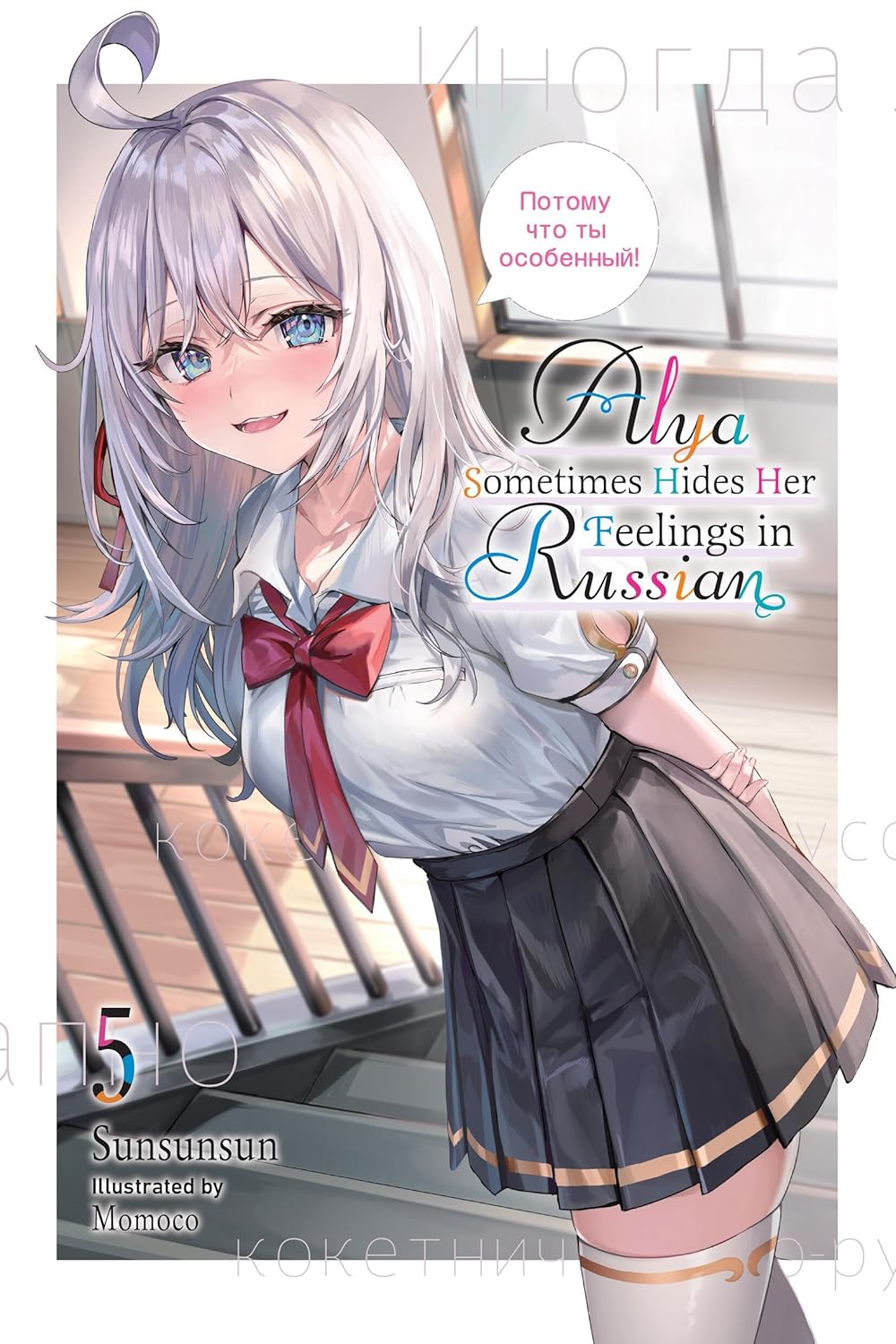
Alya is doubting herself. She wants to be able to stand on her own, to not have to depend upon Masachika as much as she has in previous books. (She also wants Masachika to ask her out on dates, but let’s leave that aside for the moment.) She does a great job in this book! Possibly too great a job. Masachika’s ridiculously huge self-hatred has driven everything he’s done in this series since the start, and we wallow in that in this book, whether it drives his cowardice in not actually asking Alya for that date, to his jealousy over seeing her get along with his other male friends, to his despair at realizing that she is growing and becoming able to stand on her feet… without him. His final words to her at the end of this volume imply that once she’s won, he’s going to quietly bury himself so that she can move forward without him holding her back. I do hope that before he finishes his self-loathing Samson act he at least crushes the asshole piano prodigy who’s trying to destroy Alya first, however.

If you enjoy seeing insecure and pessimistic kids avoid being in love with each other and lots of girls in underwear or even naked, this series is written just for you.