Too Many Losing Heroines!, Vol. 6

By Takibi Amamori and Imigimuru. Released in Japan as “Make Heroine ga Ōsugiru!” by Gagaga Bunko. Released in North America by Airship. Translated by Matthew Jackson. Adapted by Hayame.

I think these volumes have started to hit their stride, in that I’m no longer incredibly annoyed with the main characters quite as much anymore. It helps that, for the most part, when I want to roll my eyes at Nukumizu, someone is there to do it for me. The conceit of this series is that its male lead is very familiar with the concept of light novel harem romcoms, but he’s also a normal teenage boy, and so, like all normal teenage boys, too dim to understand flirting and attraction towards him (a healthy dose of self-loathing helps too). The girls, meanwhile, are all very aware that they’re in a harem romcom, and are trying their best, but… (waves vaguely at Nukumizu). There’s a running gag which comes up a few times here where the girls try to have a romantic, sweet moment, and Nukumizu just watches as it goes right over his head, and they say “that right there…” to him. He never gets it. That right there is why this series is ongoing.

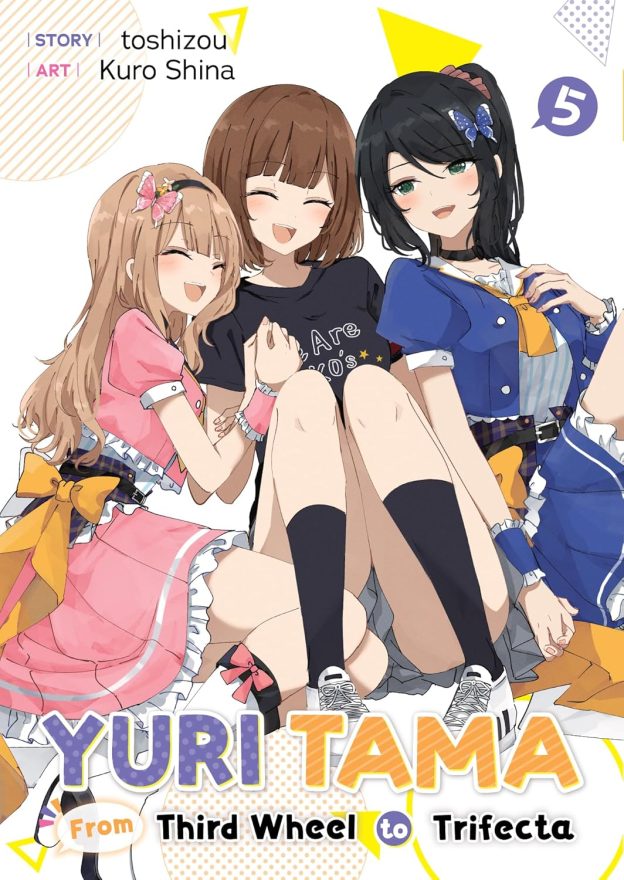
Yes, that’s Tsukinoki on the cover art, which means that for the first time we’re not seeing a Losing Heroine. That said, it’s the last time we’ll be able to see her, as graduation is here, and she and Tamaki are worrying about getting into university more than the current romcom plot. The current romcom plot is that Lemon has asked Nuzumiku out on a date, and after taking him to the aquarium and watching him be completely confused about why she would be doing this, she confesses she wants to quit her clubs. Plural. Both track and the lit club, which would be bad news for him and Komari. They end up making a bet – if he can beat her in a race, she’ll stay with both clubs. Of course, she’s an outstanding athlete who could compete in Nationals, and he’s a skinny, out-of-shape nerd. So she gives him a handicap… which likely still won’t be enough.

As noted above, this is not Tsukinoki’s book but Lemon’s, though the other girls all get a good scene or two. My favorite was Shikiya, who realizes that, like Araragi, Nukumizu is a guy who would “save anyone”, and she likes that a lot less than Senjougahara did. Lemon, meanwhile, is dealing with an issue she’s had before – she’s simply too good at track, and the coaches are understandably concentrating on her to get the school some notice and to get her into Nationals. She, however, is worried about all the other track girls, who are not as good as her and therefore not getting the attention. Of course, as it turns out none of the girls feel resentment towards her at all, mostly as Lemon is a sweetie pie who has not a single selfish bone in her body. Once he wins (sorry to spoil, but come on, this IS still a light novel), he solves the problem by telling her to be more selfish. The girls not being as good as she is is not her problem. Go for the gold. Too bad love isn’t like a track meet, no matter how much she tried to make it so.

So now our leads head into second year, and I bet that means a new character being introduced who’s a giant flaming loser of a girl. We wouldn’t have it any other way.

The Hero and the Sage, Reincarnated and Engaged, Vol. 6

By Washiro Fujiki and Heiro. Released in Japan as “Eiyū to Kenja no Tensei Kon: Katsute no Kōtekishu to Konyaku Shite Saikyō Fūfu ni Narimashita” by HJ Bunko. Released in North America by J-Novel Club. Translated by Joey Antonio.

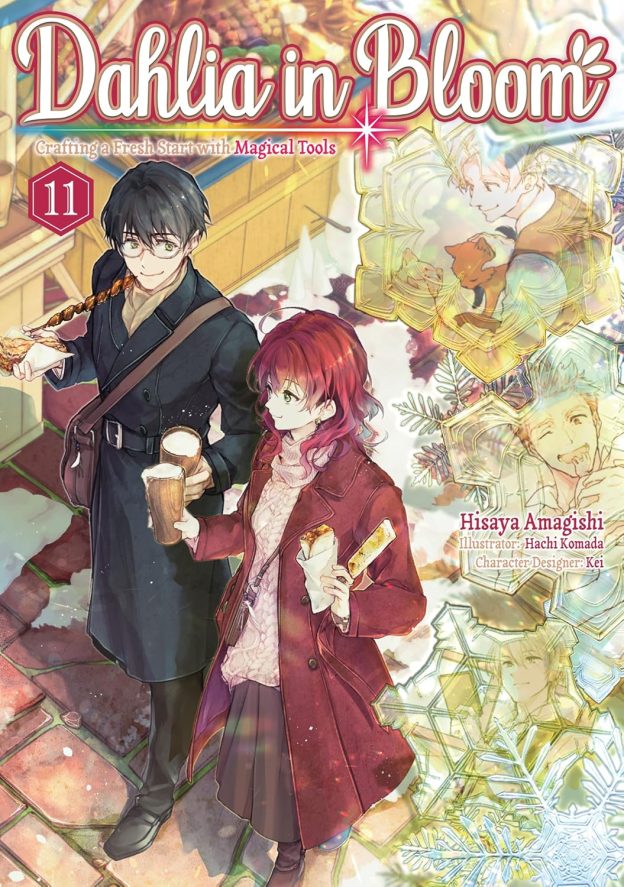
Still enjoy this series, still very hard to review without repeating myself. Boy, these two kids are overpowered and in love, and it’s not clear which is more important, though I will admit in this volume the OP outweighs the flirting. That’s because they spend a large chunk of the book apart – Raid heads back to the Second World to get help to save the First World, while Eluria stays behind to make sure that things don’t get any worse than they already are. But on the bright side, they’ve moved up to cheek kisses and forehead kisses, which means they may actually go all the way around Volume 62. Which we may actually get – the author says this was supposed to end with Book 4, but the manga took off, so now we have 6, and it’s still not done. Possibly as the author is still searching for anything that can make our two leads break a sweat – it doesn’t happen here, for sure.

After dealing with the “hero” Valtos, who like most jerks that run into Raid and Eluria has turned into comedy relief, our main characters are faced with a big issue – they just don’t have the people to fix everything. As such, Raid returns to his own world to enlist help from other nations. Unfortunately, when he gets there, he’s promptly arrested and accused of treason, because most everyone (including me) forgot about the plot of the first two books, which is that Raid has the skills to be a special-class magician, and the deeds, but a lot of people still really, really hate him and his non-magic using self. But that’s fine, Raid can use this to his advantage, with the help of a good old fashioned filibuster that offers the nations of this world that haven’t had war in a long, long time something they crave – new land in another world.

The author says they love to write Millis as she can lighten up any situation, and it’s true that she still gets the bulk of the comedy. Especially when she finally figures out what everyone else knew in Book 5, which is that supposedly she married Wisel – something that shocks and embarrasses her in equal measure. I did appreciate that Eluria took the time to sensibly talk with the freaking out Millis about what to do next, and guided her towards the right solution – put it on hold till she’s ready to deal with it and decides whether she really does like him romantically. Eluria can be a smart cookie when she’s not being used for comedy relief herself, as not only does she have her usual trouble waking up, but also her brilliant solution to the monsters attacking from across the sea is so brilliant it means she can’t go wild in combat… unlike Raid, who gets to terrify everyone by showing off.

This series is never going to get deep or tragic, but if you want more of the same, it is absolutely that.

The Do-Over Damsel Conquers the Dragon Emperor: The Official History of the Continent of Platy

By Sasara Nagase and Mitsuya Fuji. Released in Japan as “Yarinaoshi Reijō wa Ryūtei Heika o Kōryaku-chū” by Kadokawa Beans Bunko. Released in North America by Cross Infinite World. Translated by piyo.

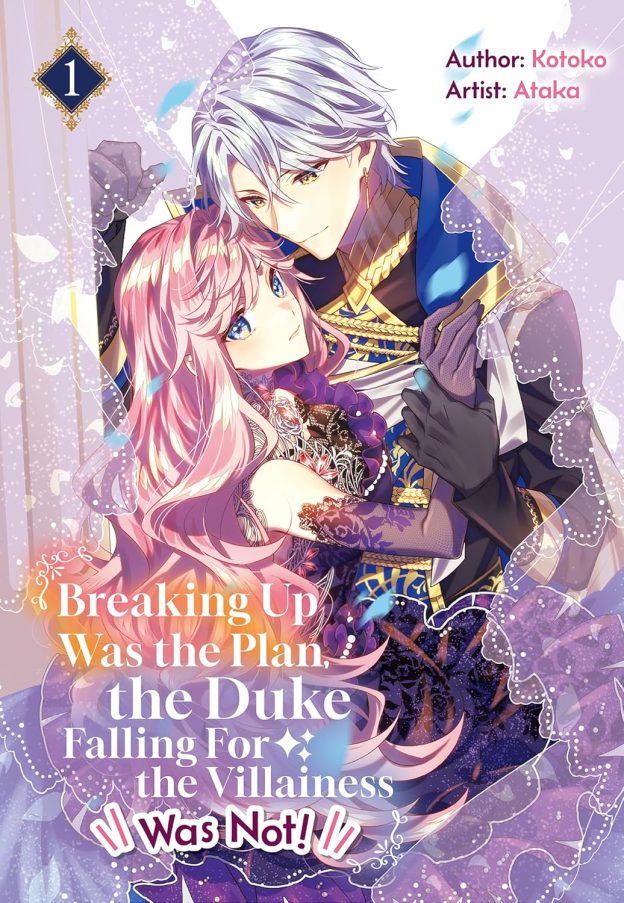
There’s no afterword in this book to confirm it, but I imagine writing this book must have been so cathartic for the author. They not only write this series but also I’m the Villainess, So I’m Taming the Final Boss, and both of those series rely on the basic fact that our heroine is one step away from everything falling apart, and that if she doesn’t save the day when a Bad End will ensue. This book, which is a short story volume but also serves as a prequel to the whole series, is that Bad End. The end of the book features a cast of characters page, and it’s a big cast. Almost everyone has a “Died Age xx” next to their name, with only three exceptions. This ends up being quite refreshing. You don’t need to worry about how they’ll get out of this one because you know everyone’s gonna die tragically. This is why Jill ended up back in time.

Speaking of Jill, she’s barely in this book, though she does feature more heavily near the end. The bulk of it is showing us one of the characters from the main series whose destiny Jill managed to change by punching things very hard, and then showing us that original destiny. We see how his relationship with Sphere was, how horrible the Goddess can be, and how most people simply assume he’s a pedophile. We see Risteard, desperately trying to make sure Hadis becomes a good ruler, end up being forced into a revolt and being unable to save his little sister from killing herself. We see what happens when Natalie goes through everything she went through in the main series but without Jill’s interference. (It goes much the same way, apart from her dying.) Minerd dies. The entire academy Jill taught at is slaughtered. Vissel’s misplaced love for his brother leads to Hadis finally snapping. And then we get the Kratos side of things. It doesn’t get any better.

For all that the book is filled with people dying full of regrets when they’re not possessed by evil, there are heartwarming moments in here where we see that, with the presence of a dragon consort, things can be different. Hadis’ family is capable of affection for each other when they’re not busy living in a Game of Thrones. The Cervel family are all battle lunatics but also love each other deeply. Rufus and Gerald are both seen as noble and good princes who want to find a way to break the whole “incest curse”, before the curse takes hold and they both turn to the dark side. Zeke and Camila remain exactly who they’ve always been no matter what the timeline. And then there’s Jill, who may be in love with Gerald here (somewhat to her detriment), but is otherwise exactly the same. She’s so great.

This is nearly 400 pages, so there’s a lot of Bad End here. Now that we’ve gotten it, though, much of the main storyline is recontextualized, and I hope we get back to the main series soon so we can stop a lot of this happening.