The Intuition of Haruhi Suzumiya

By Nagaru Tanigawa and Noizi Ito. Released in Japan as “Suzumiya Haruhi no Chokkan” by Dengeki Bunko. Released in North America by Yen On. Translated by Andrew Cunningham.

Been a long time, hasn’t it? In fact, this is my first time reviewing one of the novels, despite my Haruhi Suzumiya tag being filled with manga, 4-koma, and alternate universes. Not that this is a novel either. The first book to come out since 2011 is a collection of three short stories; one short, one medium, and one long. In terms of writing style and narrative voice, it’s a welcome return to form. Kyon sounds exactly like he always does, making arcane references to obscure topics in his metaphors while also professing to be the dumb one in the group. That said, I will note that anyone who is reading this wanting to see what happens after the Sasaki books, i.e. actual plot or character development, is going to find this quite lacking. There is a token mention of those books at the end of the final story, but for the most part that is not what Tanigawa is here to do. What is he here to do, you may ask? Tell us about Ellery Queen and John Dickson Carr.

The first short, Random Numbers, features the SOS Brigade visiting shrines, and has the only Kyon/Haruhi ship tease in the book. It’s cute. The second short story, Seven Wonders Overtime, is the weakest. The Mystery Club brings news that the school has no “seven mysteries”, aka Toilet Hanako, piano that plays by itself, etc. The Brigade tries to think of interesting but explainable mysteries before Haruhi can create more dangerous ones. The final story is the longest, taking up over 2/3 of the book. Tsuruya’s Challenge is, as I noted before, a love letter to the early 20th century mystery writers who loved to create mysteries that were essentially puzzle boxes, and Koizumi and T (a new character, member of the mystery club and owner of a very short nickname) spend ages extolling their virtues to the point that readers may grow tired. After this, though, they get a number of emails from Tsuruya which tell anecdotes from her trips with her rich father and also have a secret inside them.

The book works best if you’re a fan of Tsuruya, adding a lot of background to her character while also keeping it essentially the same. (No, we don’t learn her first name.) I was also fond of T, who is a great new character, and her calling Kyon “Kyam” makes me smile. Given the nature of the final story involves both the cast and the reader figuring things out, I will not go into too much detail, except to say that there is a LOT of Koizumi and Haruhi theorizes for pages and pages. One of the two afterwords in the book is a tribute to the Kyoto Animation creators for the Haruhi anime who perished in the fire. I suspect that (plus possibly Endless Eight) has led Tanigawa to write a story that would be very, very difficult to film in a way that a) makes things interesting, and b) does not give away its secrets. Kudos to Andrew Cunningham, by the way – this must have been an absolute bear to translate.

This is a hefty Haruhi book (not counting the 10-11 omnibus, only Book 7 is longer), so readers are getting good value for money. Whether they appreciate that value is another matter. As for me, I’m just happy to see the author writing again. The series is left open, so I hope it is not another nine years before the next in the series.

The World’s Strongest Rearguard: Labyrinth Country’s Novice Seeker, Vol. 4

By Tôwa and Huuka Kazabana. Released in Japan as “Sekai Saikyou no Kouei: Meikyuukoku no Shinjin Tansakusha” by Kadokawa Books. Released in North America by Yen On. Translated by Jordan Taylor.

Once again, I found this volume to be easy, peaceful reading, and once again I am at a loss to explain why as every time I try to describe it it sounds terrible. The same issues that plague previous books crop up here. The first half of the book features nothing happening. The main character has the personality of a herring, and yet has every single character in the series fawning over him. The battles are exciting, provided your idea of exciting is ‘reading other people’s transcripts of MMORPG fights”. Picking the proper stat is serious business. And, of course, everyone is horny on main for our hero but have generally agreed among themselves not to do anything (which is why when the married lady flirts with him they all team up to get upset). But again, there’s also nothing that immediately grates on me, nothing that says “OK, that did it, I now have an excuse to drop this”. It is serviceable wish-fulfillment of the highest order.

Arihito and company are still on the seventh floor, but have been making a bigger and bigger name for themselves. They’re still having trouble as the larger group on the floor, Beyond Liberty, are taking over the main hunting grounds and blocking others from going there. Oh yes, and they have a man whose skill is almost literally “pick up artist” who is a clear traitor. Something has to be done… after opening another cool treasure chest, choosing new skills, upgrading weapons, and getting a snazzy wool suit – and a gun, in case this wasn’t bad enough. They also need Beyond Liberty to go too far, which it does, and introduces yet another named Monster who is incredibly dangerous and who the main forces cannot remotely defeat. It’s up to our heroes, with the special guest Seraphina (again), to get the job done.

I know that we’d seen kids in this world before – indeed, Melissa is explicitly said to be the child of a human and demi-human – but I was still startled to see Daniella, a very pregnant adventurer, fighting on the front lines. Of course, it turns out that Beyond Liberty, like Elitia, has their own reasons for wanting to advance as fast as possible, but it does remind you that adventuring is the big thing here, and you either keep doing it constantly or you stagnate… which much of this floor has already decided to do. Ads for Arihito’s party, while everyone keeps praising him almost to the point of making one ill, the fact that his position is “rearguard” does mean that it’s the women in the party who get to do the really cool things. We are seeing some character development in Suzuna and Misaki, and they are very much becoming a family, albeit one that feels “warm” whenever their patriarch sleeps behind them.

So yeah, still not great. But it delivers what readers probably want, and if it tried to do something new and different it would likely be a disaster. Next time we see then going on a vacation, which means we should see even LESS happening. Fun times.

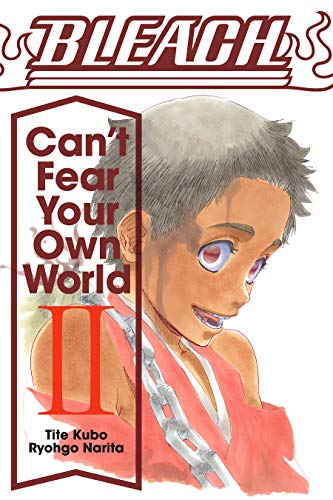
Bleach: Can’t Fear Your Own World, Vol. 2

By Ryohgo Narita and Tite Kubo. Released in Japan by Shueisha. Released in North America by Viz Media. Translated by Jan Mitsuko Cash.

There was a lot in the first volume of Can’t Fear Your Own World, Ryohgo Narita’s sequel to Bleach, which made me nostalgic for the good old days of the popular Bleach franchise. This second volume, on the other hand, kind of makes me nostalgic for the bad old days of the Bleach franchise. That’s not to say this book is not well written – it’s quite good at what it does. But there’s a very, very large chunk of the middle of the book that can be summed up as “some guys fight, and some more guys show up to interrupt the fight, then different guys fight while the first fighters watch, and then new people show up to interrupt THIS fight”, etc etc., until there are about 25 or so people all standing around watching a very small boy on top of a very large monster get excited. And, gotta admit, this is also the Bleach experience. Love it or hate it, Bleach would not be Bleach without epic fights that take forever with no real purpose.

The book can essentially be divided into two parts. Back in Karakura Town, Hisagi is interviewing Urahara for his ongoing news report about the events of the last few months, and also sort of trying to get some information out of him. Sadly, they are interrupted by Aura, a Fullbringer who seems to be connected to the Big Bad of this volume, and whose powers are not really like the other Fullbringers we’ve seen before. (Did you know Orihime was a Fullbringer? No? Never heard it mentioned before this book.) She’s taking advantage of the main cast of Bleach being out of town (they are rescuing Karin and Yuzu from some unnamed issue) to do what Tokinada wants. Back in Soul Society, as I noted before, everyone wants to fight everyone else. This ends up dragging together Soul Society captains (Shinji, Kenpachi, Shunsui), Arrancar (Tia, Nel, Grimmjow), Quincy (I can’t remember any of them), and Fullbringers (Tsukishima, Ginjo, etc.), and they all team up to go try to stop the Big Bad, if only as he’s unlikely to let them fight each other.

As you can see, a lot of this book relies on you remembering what happened in the Thousand Year Blood War arc, which I am not. I cannot tell any of these goombaws who Mayuri has resurrected and essentially made into his gofers from another, and honestly even if I did, the text would not read much differently. In Baccano and Durarara!!, Narita just barely manages to make his huge cast memorable – sadly, here he’s working from Kubo’s prior failure at it. On the bright side, every page or two has an amusing fun bit that will make you smile and keep you reading. Hiyori shows up, and is exactly as you’d expect her to be – she’d kick the reader in the shins if she could. Urahara manages to be very in character, and uses the same stupid written in blood message AGAIN (as I said, very in character). And take a shot every time someone wishes Ichigo were there, except no, do not do that.

This book is HUGE, twice the size of the first one, and absolutely did not need to be that long. But, well, if you’re writing something true to the Bleach experience, go big or go home. I expect next volume will mostly consist of one giant fight over the course of 290 pages. I also expect Grimmjow will STILL not get to fight Ichigo.