Arifureta Zero, Vol. 2

By Ryo Shirakome and Takaya-ki. Released in Japan as “Arifureta Shokugyou de Sekai Saikyou Rei” by Overlap. Released in North America digitally by J-Novel Club. Translated by Ningen.

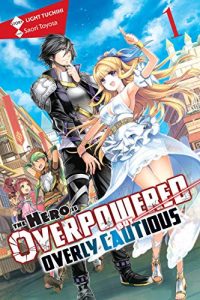
In my review of the first book in this prequel series, I said that it was Miledi’s book and Miledi’s series. Here I’ll go further: I think that Miledi is meant to compare directly with Hajime. Yes, in terms of personality, she reads more like a horrible fusion of Shea and Tio, but as we see a lot in this book, even more than the last one, she is wedded to her ideals and prepared to do anything in her power to preserve them, even if that means taking on the Church, a bunch of pirates, or even a giant seas monster with her ungodly gravity powers. (Ungodly would suit her fine, I think). As for Oscar, he has Hajime’s snark down pat, but after this book we really know who he’s meant to be. He’s Shinpachi from the Gintama series. No, really, the author even straight up ripped off the glasses joke. Oh yes, and we get a new Liberator as well. That’s her on the cover.

The author suggests that the seemingly sweet big sister type who’s really a sadistic tease is a surprise for this book, something which… isn’t true, but whatever. Meiru is a lot of fun, though, and is not only a big sister to her captured real sibling, but also to a huge pirate family that she heads up. Yes, it’s Arifureta does One Piece. Miledi and company are arriving at the city the pirates work out of to find the next Liberator, and after a host of misunderstandings that eventually get resolved, find she… doesn’t want to join them. Well, that’s fine, we went through this in the first book. Till then, there’s sea monsters that get attracted to Miledi’s magic, and casino capers, etc. Of course, eventually the Church is ordered to destroy these pirates once and for all, which leads to the last half of the book, which is one giant melee battle that is highly entertaining provided you love 120-130 pages of fights.

Honestly, I’m surprised there isn’t a much higher body count in this prequel. We already know it’s going to end badly, and it always seems like there’s going to be some dead innocents, but so far the author has done a pretty good job of having them saved at the last minute. (There are a couple of Oscar’s orphan kids who are in a coma from the last book, but Meiru may be able to save them too). In fact, despite the grim Church and the ever-present threat of death, this is a fun book – I would say of all the Arifureta books, this one balances the wacky humor and the thrilling serious plot the best. Miledi is annoying as hell, but not to the reader, just to the characters – an important development! Even the art is really good, showing off both the silly and dramatic (the picture of Miledi giving the finger to the villain may be my favorite).

This is a long book, like most of the Arifureta series, but for fans, it’s a must read. Even casual readers who are turned off by Hajime being Hajime in the main series may want to give the prequel a shot.

For the Kid I Saw in My Dreams, Vol. 1

By Kei Sanbe. Released in Japan as “Yume de Mita Ano Ko no Tame ni” by Kadokawa Shoten, serialization ongoing in the magazine Young Ace. Released in North America by Yen Press. Translated by Sheldon Drzka.

This author has previously written the mystery thriller Erased, a series which I could see was very well done and I could also see was probably not for me. This feels like the same sort of thing – even without a hardcover-style release to make it fancier, this manga just seems “important” as you read it. The art is compelling, the characters are, if not likeable, at least someone you want to follow. Senri is our “hero”, a young man who in his childhood had his parents brutally murdered. He also had an older twin, who hid him from this (in fact, the father was abusive, and the twin was hiding him from the abuse – the murder was incidental). Senri always had a connection with his twin, in a “psychic powers” sort of way, but shortly after this he gets a vision of his brother being killed, and that’s it for psychic connections. So how does he grow up? Consumed with vengeance, of course.

There’s a common trope in manga where you see the hero, supposedly a bad guy, who beats up other, scummier villains to show off that he’s really good deep down. The manga fakes us out by making it seem that grown up Senri is the same… but no, he’s actually in league with the bullies, and is extorting money. I mean, he needs SOMETHING else to do beyond trying to track down his parents’ and brother’s killer. (They may not, in fact, be the same killer, but I’m guessing.) He runs on suppressed rage, and is fascinating to read but also somewhat exhausting. He also seems to have little regard for human life, unsurprisingly, and there are a couple points in the book where he’s driven to almost murder in his efforts to find out what happened back then. He also gets beat up a lot. He’s a very grim protagonists, in all senses of the word.

Fortunately, we also have Enan, the saving grace in this book. She’s Senri’s childhood friend, as they were in the same orphanage after his parents were murdered. She’s from a tragic home as well, as her dad was a murderer and her mother killed herself because of the harassment – which she gets as well, because we all know that children are their parents. Senri does not believe this, and says so, possibly the one nice thing he does in the entire book. As a result, Enan is his best (and it seems only) friend, and yeah, probably likes him romantically, though that doesn’t really come up. She’s there to prevent him from turning evil, and has a ways to go, frankly. I liked her a lot. Usually these sorts of characters are fresh-faced innocent types, but Enan is a jaded “gal” sort, though she’s good with kids in her daycare job. I hope nothing horrible happens to her.

As I said, this may not be the sort of title I want to keep reading. But it’s good, and I am interested in seeing what happens next, assuming Senri doesn’t die from the skull fracture he seems to get at the end of the volume and the rest of the series is just light music played over blank pages. Fans of dark thrillers will absolutely want to check it out.

Log Horizon: Krusty, Tycoon Lord

By Mamare Touno and Kazuhiro Hara. Released in Japan by Enterbrain. Released in North America by Yen On. Translated by Taylor Engel.

It’s been a long time since the last volume of Log Horizon – almost a year. It may be even longer till the next volume as well, as there’s no sign of it in Japan. That said, this is a big volume for fans of the series, as it’s the first volume that has not actually been animated. As such, it will prove to be entirely new material. Appropriately, it focuses to a large degree on Kanami’s party, who were the subject of the 9th book (which was adapted the least by the anime), and have now reached the equivalent of Mongolia. But as you may have guessed by the title, the other major participant in this volume is Krusty, who is having memory issues but is not letting that stop him from living the easy life, as he’s essentially in the game equivalent of heaven being waited on by cute animal person servants. The book’s main thrust has a scheming villainess try to pit the two parties against each other.

The book mostly succeeds, but it is worth noting, once again, that there is a truly ridiculous amount of gaming chatter and discussion in these volumes, and that it can quickly get tedious, especially when you’re in the middle of a large battle. Classes, levels, aggro… I don’t really care. But someone cares, and that someone is Elias, who we get to know a lot more about in this book. From the last book, we know that he labors under a curse that means he never gets the last hit in – he can’t be the one to kill the monsters. Of course, since Log Horizon was a game, and he was one of the bigger NPCs, it makes sense. The players make the big kill. But here we see how this weighs heavily on him, and also how his party seems to have been broken, and possibly killed, simply by hinting at their very nature – Elias, throughout the book, seems to be shying away from thinking that he’s just an NPC in a game.

So it’s pretty easy to get him to go all out against Krusty, who’s perfectly happy to have people think he’s a villain if it gets him a good fight. We get a lot of Krusty’s own background from Earth here too, and it fits with his personality to a T. Krusty really can’t stop Elias, especially given he’s dealing with his own curse. Kanami is there to be Haruhi Suzumiya and not much else. I like her, but she’s completely at peace with everything about herself, so is terrible at this sort of thing. And Coppelia is still pretty much monotone. That leaves Leonardo, still a frog and not a turtle, to deliver the big verbal cooldown speech to Elias. I won’t spoil it, as it’s easily the best part of the book, and made me smile quite a bit. When Log Horizon isn’t pouring verbiage into its worldbuilding, it can be pretty heartwarming.

We’re almost entirely in ‘the China server’ this volume, with only one chapter back in Akiba to show us that Raynesia’s noble friends are all getting engaged, which I suspect means that an arranged marriage is in her future. Her noble friends also think she’s in a relationship with Krusty, which she’s not. In the next volume, whenever that may be, I suspect we’ll be headed back to Shiroe and company. Till then, enjoy this look at what it means to be “cursed”, and how to resolve it.