Day 2! Though first, I missed an announcement from Day 1: Mangagamer has finished Golden Fantasia Cross, and it will be out in December. This is an Umineko fighting game with what I believe is a significant amount of plot thrown in, and it even has a slightly different ending from the visual novel. The bad news is it’s a fighting game, which means you need a certain level of skill. We’ll see how far I advance.
Day 2 began for me with the Kodansha Comics panel, featuring the audible and personable Ben Applegate and the inaudible and thus anonymous narrator, who really needs to learn to project to the back of the house. In terms of new new titles, there was one print and a pile of digital.
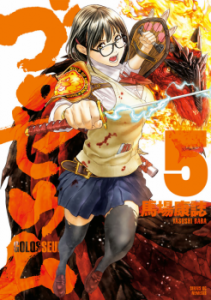
The print title is Golosseum, apparently spelled with the G. It’s from the author of the long and never licensed Karate Fighter Minoru manga, and runs in Kodansha’s Nemesis magazine. It’s apparently a political martial arts title, and reminded me a lot of The Legend of Koizumi – real life political figures caricatured for fun. So we have Rasputin (Russia’s greatest love machine), Vladimir Putin, Hillary Clinton, etc. It looks like a lot of fun.
Digital debuts, arriving as soon as next week. Lovesick Ellie is a Dessert title about a girl who likes to tweet about a made-up boyfriend. That won’t end well. My Brother Is a Shut-In is from Morning Two, something I always approve of. It seems to be about a girl whose brother, as you may have guessed, is a shut-in, but that may change soon.
Pitch-Black Ten is from Shonen Magazine R, and looks like an action fantasy; the author also did Buster Keel!. Drifting Dragons is from good! Afternoon, and seems to be the Dragon equivalent of Delicious in Dungeon – we hope you enjoy eating dragons.
Living-Room Matsunaga-san is also a Dessert title, and seems to involve a younger girl moving into a boarding house her uncle runs and meeting the college-aged residents. Lastly, we have The Prince’s Black Poison, a Betsufure title about a girl who’s taken care of her “helpless” childhood friend, but when she tries to do things away from him, he reveals himself to be far more manipulative than she guessed.
They also discussed the upcoming print release of Tokyo Tarareba Girls, as well as Sailor Moon Eternal, a re-release which looks fantastic. Lots of things coming from Kodansha, who are still putting out more digital than you can possibly keep up with.
The next panel was Yen Press, and they too had a pile of stuff to announce. They also had someone translating in sign language, which was very cool. They showed off the Pandora Box, which is one of the most impressive box sets I have ever seen. It’s simply breathtaking. And then new announcements, including one I’ve been waiting on for about a year…
Sword Art Online Alternative: Gun Gale Online will have the light novels out next year. These are by the Kino’s Journey author, and do not have Kirito or the main cast in them. I reviewed the first manga recently… dammit, that means my URL will have a (2) again. I hate that.
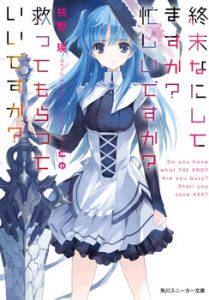
Other light novels announcements are Defeating the Demon Lord Is a Cinch (If You Have a Ringer), which I think may be a Fantasia Bunko series and is very much in the ‘fantasy world, kill monsters’ sort of genre. The best thing about it is that the artist is named ‘bob’. We also have the much-anticipated SukaMoka series, aka (deep breath) World End: What Will You Do At the End of the World? Will You Save Us?. This is apparently an emotional tearjerker of a series, and it already has a sequel in Japan.
A big surprise (to the panelists as well – apparently the license was finalized this morning) was Final Fantasy VII: On the Way to a Smile, the first in a series of Final Fantasy novels. It’s actually a short story book that has various stories taking place around the time of VII and Advent Children.
On the manga front, we see The Strange Creature at Kuroyuri Apartments, a Young Gangan title about a demon summoner’s young daughter who is ordered to entertain the landlord of an apartment complex. Tsuno no Gakuen is about boys with horns on their heads who can do magic, and our hero is self-conscious his horns are too small. Which is not a metaphor for anything, I’m sure. It runs in Young Ace Up!.
Catterpillar Girl and Bad Texter Boy is a done-in-one title from Gene Pixiv. A fantastic girl is rejected by the boy she loves, and hen vanishes… only to return as a caterpillar! It looks really cute. Teasing Master Tagaki-san was a series I’d heard of before, and I highly approve of its license. A boy is determined to tease the girl he’s friends with… but this is easier said than done, as he’s easily teased and she loves to tease him. It runs in Shogakukan’s Gessan.
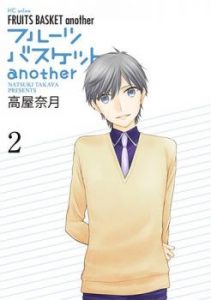
Shibuya Goldfish is a horror title from Gangan Joker, and is soooooooo not my thing, but horror fans should like it. Fruits Basket Another is also licensed, and will be three volumes total. I… have mixed feelings about this, but we’ll talk about that when it comes out. There’s also a Little Witch Academia manga coming out in their new JY line for younger readers. It looks really cute and fun.
After this, I ate lunch and wandered around a bit. My final panel of the day was a panel on Japanese feminism, run by Anne Lee, who runs the shojopower.com website. Her goal was to show us that yes, Japanese feminism does, and did, actually exist, and I think she did a good job. She focused on four different women who made their presence known.
Raichi Hiratsuka was described as sort of the Japanese Susan B. Anthony. She started a highly influential (and controversial) literary magazine in 1911 called Saito (Bluestocking), which featured essays, poetry and short stories about “the new women”. The authors were known to (gasp!) smoke and drink, so it was not well liked by men of the time. She then tried to help get women the vote, which came close to happening in 1921, but one comment by an influential guy killed it, and she went into seclusion due to this.
Then along came Beate Sirota Gordon, an Austrian woman who grew up in Japan, went to an American college right around the time of WWII, and then got a job with the US government so she could return to Japan and find her parents. She ended up helping to rewrite the Japanese constitution… which was controversial enough, as the Americans were “helping” them write it the way that they wanted.
She researched the hell out of this, though, impressing the Americans, and added a lot of things that gave women more rights. A lot of them were cut, but some weren’t, and the Constitution passed despite the vehement objections of Japanese men. As for Raichi, she was shocked and conflicted – having this granted to her by Americans rather than fought for and won in a political victory seemed a bit hollow.
We also discussed Machiko Hasegawa, creator of Sazae-san, possibly the most famous Japanese manga ever – at least in Japan. The manga ran from 1946-1974. The anime began in 1969 and is still running, meaning it crushes the Simpsons record. Sazae-san was pretty slice of life comic strip gags, but as the series went on Sazae-san herself got involved in feminism, and the strips sometimes delved into that.
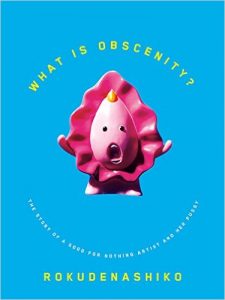
Lastly we discussed Rokudenashiko and her vagina kayak, which I was already very familiar with, as I’d seen the author’s panel at TCAF and reviewed her book here. It got into a discussion about how Japan is OK with penis festivals but gets upset with vaginas, whether this was politically motivated (she has a friend who was criticizing the government), and how the vagueness of the obscenity laws may not have helped. It was a well-researched and enjoyable panel.
And that was all I had on tap for today. I wanted to see the Fate/GO panel, but that looked to be difficult to get into. Tomorrow I only have one panel, which is Vertical. I therefore plan to take a look at Artist’s Alley in the morning, hit up the panel, and then head home. This was a great second day of the con.


