Category Archives: reviews

Sweet Rein, Vol. 1

By Sakura Tsubasa. Released in Japan as “Yoroshiku Master” by Hakusensha, serialized in the magazine LaLa DX. Released in North America by Viz.

It’s rare to find a manga series with so many things I’m wary of and so many things that I love in the same package. Sweet Rein manages to hit all my buttons, both the good and bad ones. It’s fortunate that it’s only a 3-volume series, as I suspect this isn’t sustainable in the long-term, but as a short romantic comedy, it’s quite readable. Even the unrelated short story at the end manages to be deeper than I thought while also briefly appalling me. Sweet Rein pulls in about ten different directions.

sweetrein1

The first thing that surprised me is the degree to which this is a magical girl series. Animal companion (who is also the romantic lead, but let’s save that for another paragraph) finds a somewhat melancholic girl dissatisfied with her life and shows her that she can bring happiness to the world. In this case, the animal companion is a reindeer who is actually a young man named Kaito. His entire family is reindeer (on his mother’s side), and when he meets our heroine, Kurumi, it’s love at first sight. In fact, it’s more than that. The Japanese title of this series translates as “Hello, Master!”, and it becomes clear that Kaito is bound to Kurumi, both physically and emotionally. This doesn’t bother him at all, but gives her some difficulties. What part of his feelings are his own heart, and what is the magic “making” him love her?

Because this is a magical girl series deep down, I was a bit more forgiving of some of the more ridiculous plot contrivances, though the Spirit of Christmas curing cancer was a bit much even for me. It’s far more fun to focus on Kurumi, who is a more down-to-earth and practical person than many shoujo heroines, and doesn’t even crack a smile till towards the end of the first chapter. Her background will be familiar to readers of this genre – mother long dead, father works long hours to support them so he’s never home, all her friends out with guys for Christmas. The Japanese reading of Christmas as being “Love + Santa” really comes into play here, with little to no religious subtext. (And thank God for that.) As for the reindeer thing, it would seem that Kaito’s body is ‘default human’, so I can deal. They do make a cute couple.

The side story is unrelated to the main action, being a one-shot about an immortal vampire (who looks like a cute young man) being saddled with a daughter from a woman that he had bedded some time ago. Most of the chapter is actually decent, with a good look at what it’s like to be an immortal and watch everyone you love die, and a nice vampire mythology that basically makes “turning” someone pot luck – either they die or they become vampires, they usually die, and it’s not controllable. Unfortunately, the entire thing is nearly upended by a very unfortunate choice at the end, where the art and storyline dovetail in exactly the way I was hoping they wouldn’t the moment this little girl showed up. Bleah.

Overall, though, I think the good parts of this manga outweighed the bad. It’s the sort of series that I suspect you shouldn’t think too deeply about, which makes it a bad fit for me but a great choice for anyone looking for some Christmas escapism.

The Mysterious Underground Men

By Osamu Tezuka. Released in Japan initially by Fujishobo; this edition was licensed from Tezuka Pro. Released in North America by PictureBox.

(Note: I spoil the ending in the review, be warned.)

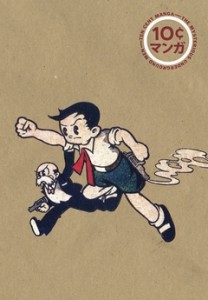
I’m not sure that this manga, one of the first ones produced by the legendary Tezuka, can quite match the surreal heights of Picturebox’s first release, The Last of the Mohicans. It’s just as influential, but its style is more generic and the author’s early flaws show through a bit more. I think this actually works best as sort of a scholarly or critical edition, with the helpful essays by Ryan Holmberg providing a context that gives depth to what feels first time around like a pulpish adventure story. It will likely fare very well with rereads.

osamu-tezuka-the-mysterious-underground-men-3

The entire plot feels like an old Republic serial, and the accompanying essay does mention Flash Gordon as one of Tezuka’s big influences. The main thing you won’t see in a live-action adventure serial, though, is Mimio, the intelligent rabbit who is modified (in a quite disturbing sequence showing the horrors of science for science’s sake) into a humanoid rabbit with feelings and emotions, but in a world where that sort of creature is going to be a pariah. In a later work, this might be the bulk of the story’s premise, but here we also follow John, the young scientist who is trying to follow in the footsteps of his late father and build a tunnel through the Earth (because flying is dangerous), with the help of his rich uncle and the Snidely Whiplash-esque Ham Egg, who many Tezuka fans will know is the villain the moment they see him.

What made this manga so influential to other Japanese artists and writers, of course, was the ending. I’ll admit, I found it rather curt and over the top melodramatic, but killing off one of the main characters and ending on a depressing note was a big sea change in the world of manga right then. Indeed, Tezsuka would come back to this basic storyline both in the 60s and 70s, revising and expanding, something he was known to do with several works (see also Princess Knight). I found it rather sad, given that Mimio not only wasn’t on the cover but didn’t make the cast of characters page. His death is the tragic ending, yet the book’s very design designates him to the forgotten extra pile. (Though this may be to avoid pointing out his disguises later on.)

The one thing this does have in common with its earlier Picturebox neighbor is seeing how the artists worked Western influences into the artwork of the title. Again, Holmberg’s essay is vital here, as the first time through you may simply read the story and characterization and miss the designs. I’d mentioned Flash Gordon, but there’s a lot of Disney here as well, as you’d expect from Tezuka. I also spotted the Popeye faces right off the bat. What I wasn’t expecting was Chic Young’s Blondie to be such a huge influence. Not only is John’s house and several poses reminiscent of Dagwood Bumstead, but the physician who watches over Mimio’s end is none other than Mr. Dithers! I’m not sure you could get away with that these days.

I definitely enjoyed this book, but I enjoyed it more from an academic, historical standpoint. If you’re the sort that loves to look at panels so see which issue of Bucky Bug this corresponds to, or to find out how this title resonates in a larger historical context, than this is the book for you. Well-researched, in a nice small size, and a good example of how, even when his writing is somewhat unformed and amateurish, Tezuka can still fascinate.

Oh My Goddess!, Vol. 45

By Kosuke Fujishima. Released in Japan by Kodansha, serialization ongoing in the magazine Afternoon. Released in North America by Dark Horse.

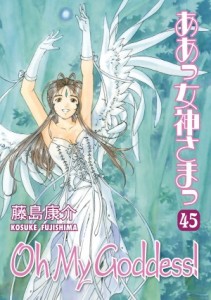
Sometimes there’s just too much to say for a Bookshelf Brief, and that’s certainly the case with this volume of Oh My Goddess. Since my last full review 2 years ago, we’ve been going through hell like a video game, with various mini-bosses being taken down. In the midst of this, Keiichi and Belldandy had to break their contract in order to get past one obstacle. Once they reconnect it, Keiichi notices that his feelings for Belldandy, while just as strong, seem more… arousing than normal. And there’s a reason for that, one that set fandom alight when this chapter first came out about a year and a half ago.

omg45

Like most everyone who has now read this series for 45 volumes – indeed, hardcore fans may have read the series THREE TIMES by now, in 32-page floppies, then the flipped volumes, then the unflipped volumes – and I had always assumed that the total lack of sexual desire between Keiichi and Belldandy was a function of Japanese fandom and the “we must keep our idols pure and virginal” mentality, as well as a strong dose of “if they actually do get it on, the manga will end, and this is a GIANT CASH COW, so nothing can happen.” Now Fujishima is saying this has all been deliberate on the part of heaven, who have locked up Keiichi’s libido magically so that he and Belldandy won’t procreate – because of the past past experiences with demigods.

That wasn’t the thing that made fandom upset. It was that Belldandy and Urd were aware of this all the time, and said nothing. It’s worth noting that for those who remember the very early days of the series, this retcon is very awkward. Keiichi spent most of the first volume or so trying to get into Belldandy’s pants, and this vanished around the same time that his eyebrows stopped being huge and 80s-shaped. What’s more, Urd’s constant attempts at aphrodisiacs and love potions now make a whole lot of no sense. That said, for a manga that is looking forward and not backward, it’s a fascinating twist, and Belldandy clearly feels horrible and self-doubting about it.

There’s not really much to worry about, as K1 is pretty much the perfect boyfriend, so even when Bell and Skuld’s mother suggests they may have lost the trust between them (oh yeah, she showed up as well, forgot to mention that) he’s quick to smile and show that if anything, he loves her even more. Keiichi and Belldandy can be sickeningly sweet even when they aren’t stressing about whether they truly deserve each other, and I have to assume that if you’re still reading the series you’ve just resolved yourself to that happening. It can be adorable in the right mood.

I note Hild’s plotline is resolved here, which was meant to be the main goal of this arc. Instead, it’s turned into a combination of Dante’s Inferno and Orpheus, with Keiichi and Belldandy having everything that they know and trust about their relationship torn apart and destroyed so that (presumably) it can be rebuilt even stronger and with more sweet smiles. Plus hey, Keiichi can now see her and get aroused, which is a big step forward for the wrong type of fan. :) We end up with a cliffhanger that looks as f it may involve past lives, and I suspect won’t work out nearly as well as K1 and Bell have. But we’ll have to wait a long time for that, as the volume likely won’t arrive till August 2014.

(By the way, there is an excellent tribute to the late Toren Smith by Carl Horn at the end of this volume, well worth reading even if you’d dropped the series long ago. This is one of the series that everyone things of when they think of Toren, so it was lovely to see.)