Category Archives: reviews

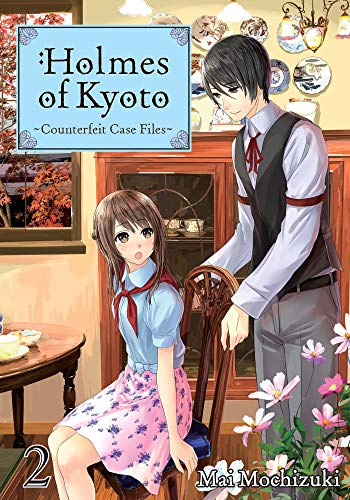
Holmes of Kyoto, Vol. 2

By Mai Mochizuki and Shizu Yamauchi. Released in Japan by Futabasha. Released in North America by J-Novel Club. Translated by Minna Lin.

I think the thing I find most amusing about Holmes of Kyoto is how it can’t seem to settle down in one particular genre. It’s supposed to be in the ‘light mystery’ genre, mostly involving forged antiques, and it definitely is that for a good deal of the book. The SOLUTION to said mysteries, though, is rarely the point and often an afterthought – at one point the book sets up an elaborate locked room mystery, complete with witnesses giving testimony that the reader is supposed to use to deduce the truth… and then solves the mystery immediately. There’s also the “let’s tour Kyoto and talk about how awesome it is” parts of the book, which are just as important as the mystery, and at times this seems like one of those travelogue style books where each chapter has the heroes at a new landmark. And of course it’s also a simmering slow-burn romance, one that actually seems to be on both sides this time, if still not going anywhere. The fact that the book balances all these sides perfectly is what makes it so fun.
These books are less novels and more collections of short stories, as we see Aoi and Holmes attend his grandfather’s birthday party (and deal with a smashed priceless antique); help a former art forger trying to make things right with his former victim; go to a temple where someone has theoretically stolen something precious… but they’re not sure what; tour a seemingly haunted house; and finally attend another party where they judge a series of paintings and antiques to show off their appraisal skills, only to find that the best among them may be our talented young heroine. The latter half of the book also introduces a new character who appears to be an ongoing antagonist to our hero… and while he’s not named Moriarty he’s certainly aware of the connection, and just as crafty as Holmes is.

I spoke last time that Aoi’s crush on Holmes was fairly one-sided, and that’s starting to change, and not just because everything they do together reminds people of a married couple. Aoi’s innocent and strong conviction is something that the usually too cynical Holmes needs in his life, and you get the sense that he might have told her so at the end of this book were it not for the presence of Akihito. I suspect Akihito’s appearances in this book might frustrate some readers. He is there to be comic relief, to be another person to have things explained to by Holmes, and to make sure that Holmes and Aoi don’t actually get closer than they already are – the author is well aware of the fact that Aoi is still in high school, and even has Holmes warn her when she’s forced to attend a mixer with university students. Still… man, they do make a REALLY good couple. It’s also nice to see Aoi’s instinctual brilliance at spotting “real” from “fake” coming to the fore so quickly.

So the main cast is expanding, and now we have a recurring villain. The series remains episodic, though, and I’m sure will continue to mostly concentrate on its light mysteries and the bond between Aoi and Holmes. And that’s a fine enough reason to read it.
The Hero Is Overpowered But Overly Cautious, Vol. 5

By Light Tuchihi and Saori Toyota. Released in Japan as “Kono Yuusha Ga Ore TUEEE Kuse Ni Shinchou Sugiru” by Kadokawa Books. Released in North America by Yen On. Translated by Matt Rutsohn.

This is the end of an arc, and given the way the LAST arc ended, I think that fans of the series were going to be a little suspicious. The element of surprise is gone. Likewise, it’s hard to top “I was responsible for the end of the world and also my wife and unborn child were eaten in front of me before I died” for tragedy. That said, this is a relatively serious volume by Cautious Hero standards. There’s still a lot of the usual silly comedy we’ve come to expect, of course. Rista overreacts to things, helped along here by Jonde as tsukkomi #2. Seiya’s actions always seem, at first, to be completely ludicrous (at least until later in the book, when you see he was absolutely right to be crazy prepared). But the book actually has two depressing and tragic parts, one midway and one near the end, and both are handled pretty well. The author is learning to balance.

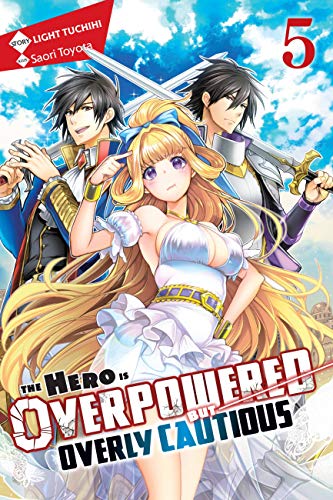
The cover shows off the first half of the book. Seiya, Rista, Jonde and Kiriko arrive at a desert wasteland that is the home of End Boss #4… only to find there’s a thriving village there, everyone knows who Seiya is, and he defeated the Demon Lord a year before. Its clearly a trap, and even Rista knows it’s a trap, but it’s hard not to find a happy, monster-free village likeable, especially when the OTHER Seiya shows up. You know, the reckless one. This version had ONE moment of caution when, after his wife begged him, they go see an oracle who pointed out the Demon Lord’s ability to resurrect himself. After this trap is sprung, Seiya and company go back to the God’s world to train. And train. And train. Why does Seiya seem to be avoiding the final battle? And why is he telling Rista to play with literal toys?

I will try not to get too into spoil territory here, but both tragedies that I mentioned before are pulled off very well, especially the second, which leaves Rista once again devastated and also explains how Seiya’s seemingly annoying and callous actions were once again him trying to be thoughtful and nice without actually being so. It’s notable that this volume has the least amount of abuse towards Rista of the five, though I’m not sure if Seiya is laying off or if it’s just due to the book’s more serious tone. There’s also a suggestion of where things are going to go from here, and it’s not a pretty one, as we’re led to question everything about the current world that the deities have for themselves. Are we headed for Cautious Hero: Civil War? And is the relationship between Seiya and Rista going to go anywhere?

I suspect the answer to the last is “no”, at least not till the final book. But as for next time, we’re starting a new plot, so I expect a lot more wacky gags. Till then, enjoy a series that manages to pull off “why am I crying about a slapstick comedy character – AGAIN?”.

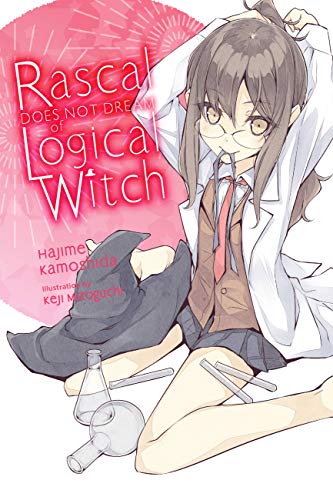
Rascal Does Not Dream of Logical Witch

By Hajime Kamoshida and Keji Mizoguchi. Released in Japan as “Seishun Buta Yarou wa Logical Witch no Yume wo Minai” by Dengeki Bunko. Released in North America by Yen On. Translated by Andrew Cunningham.

The first two books in this series were not exactly loud and obnoxious, but they were fairly action-packed and things happened in them. By contrast, the third book, focusing on Sakuta’s friend Rio, is a quiet, muted affair, which fits well with the nature of her Adolescence Syndrome. Indeed, hers is the most relatable one that we’ve seen to date, dealing with issues that would affect a number of other girls her age. It also makes a lot of sense that, despite literally being split into two, both Rios are not all that far apart – this is not an example of an evil twin here, and even the things that the non-glasses wearing Rio do are something Rio started before the split. As such, Sakuta’s role here is mostly to listen, and occasionally yell, because Rio has possibly read too much science fiction and thinks the only way that this can end is if one of her two selves dies.

There are, of course, other things going on in Sakuta’s life besides Rio’s cloning blues. Mai is back to work with a vengeance, meaning that she is not really available to date him all that much – and when the two of them are spotted, she’s reminded by her agency that the fans would go ballistic if they heard she was dating a guy, which… well, yes, is true. What’s more, the girl he fell in love with from the past is still in the present, only she’s 12, and we’re STILL not sure what’s going on there. We do find out that she has a heart condition, which I expect will be fairly important and/or tragic later on. His sister is still a shut-in and acting much younger than her age. His best friend’s girlfriend still despises him, though she also proves to be a major help here as well. And what’s this idol group that we hear about?

But yes, for the most part curing Rio merely involves being there for Rio, learning about her past as an early bloomer, and her somewhat alarming present posting salacious selfies to an Instagram-ish site. There’s a somewhat awkward explanation for this from Sakuta’s annoying reporter friend, but the cycle of elation and loathing is one that feels a bit TOO real for a series that tends to rely on supernatural phenomenon that are secretly psychological damage. And of course there’s also her crush on Yuuma, which is awkward, as I suspect nearly everyone reading this or watching the anime would rather that Yuuma be dating Rio. But… Yuuma is not in love with Rio, even though they’re best friends. We don’t hear it (i.e. Sakuta doesn’t), but it’s implied she confessed to him at the end and was rejected. And, fortunately, no Rios were killed in the making of this book. It is a nice, bittersweet and calm ending.

Well, aside from the cliffhanger, which seems to imply that a bodyswap is the next crisis we’ll face. Till then, this is one of the better written light novels I’ve seen for some time, assuming you can put up with Sakuta’s personality. Well, he is a rascal, after all.