Category Archives: reviews

Saint Young Men, Vol. 1

By Hikaru Nakamura. Released in Japan as “Saint Onii-san” by Kodansha, serialization ongoing in the magazine Morning Two. Released in North America digitally by Kodansha Comics. Translated by Alethea and Athena Nibley.

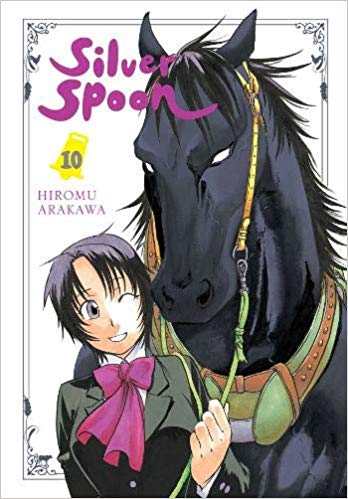
Over the past few years, there have been fewer and fewer series that you can point to and say “It’s fantastic, but will never be licensed”. The manga market right now is such that risk-taking can be rewarded, and we’ve been very happy to get things like Captain Harlock, Silver Spoon, and (theoretically) Rose of Versailles. That said, Saint Young Men is a special case. Immensely popular both in Japan and here since its debut in 2006, its basic premise made it seemingly radioactive for a long time, and it was assumed that either the author or the publisher had indicated that it was not the right time for it. But times have changed, and even if it’s only digitally for now, we can all now enjoy the adventures of Jesus Christ and Gautama Buddha living in a small apartment in modern-day Japan and having the time of their afterlives. Having finished the first volume, it’s as fun as advertised.

There’s no real plot to speak of. Each chapter shows us the two leads experiencing something new, be it going to a local pool/sauna, a festival, or (of course) a Buddhist temple. They can both take turns as the boke and tsukkomi, though over the course of the volume Boke Jesus tends to move to the foreground – he’s the more happy go lucky of the two, and doesn’t worry about actual expenses and rent as much as the tighter-wound Buddha. They’re experiencing modern-day Japan, and how they take to it depends very much on what the gag needs to be – sometimes it’s clear they’re fairly new to everything, but then there are the chapters showing us Jesus’ blog, where he reviews all manner of things. Throughout, of course, their character is also informed by their own pasts – we hear about how they both died, and various religious miracles they’ve performed. And the Virgin Mary gets a mention as well. She apparently loves to buy T-shirts.

As you might imagine, there are a lot of obscure references in this volume. The translation is good, but you will find yourself flipping to the endnotes in the back quite a bit. There’s a lot of them – I don’t think I’ve seen so many notes since the days of Sayonara, Zetsubou-sensei. I do hope that this book does eventually get a print edition, because flipping to the back of the book in a digital version can be a pain – on first read, I just let the references wash over me, and read the notes afterwards. Which is fine when it’s discussing sutras and stigmata, but less so when Jesus starts talking about Leah Dizon. That said, one of the first references, which is that Jesus looks a lot like Johnny Depp, works well in both Japanese and English.

This is probably not a series I’m going to be doing full reviews for every time – it’s a slice-of-life comedy with no plot to speak of. But it’s fun, and funny, and you actually do learn quite a bit about Jesus and Buddha – over half the notes are religion-based. If you’ve been waiting forever to read this officially, now is the time to go get it.

Didn’t I Say to Make My Abilities Average in the Next Life?!, Vol. 6

By FUNA and Itsuki Akata. Released in Japan as “Watashi, Nouryoku wa Heikinchi de tte Itta yo ne!” by Earth Star Entertainment. Released in North America by Seven Seas. Translated by Diana Taylor. Adapted by Maggie Cooper.

By the time this volume came out from Earth Star Entertainment, the author already had two other series coming out at the same time via a larger publisher – I Shall Survive Using Potions! and Saving 80,000 Gold in Another World for My Retirement are both Kodansha books. Despite that, this is obviously the “flagship” series. I mention it because in my review of the first Potions book I mentioned that Kaoru was a lot more selfish and morally ambiguous than our sweet, lovable Mile. Which is still… mostly true? I have to say, at times it feels like Mile has sort of lost any of the few restraints that she may have had in the series previously. It’s hard to tell, mostly because Mile had so few restraints, but the chapter with the fairies especially almost features Mile in villain mode. It’s weird. I like Mile sort of sweet and cartoonishly overpowered.

Having featured Adele on the cover of the first book, and Mile on the 4th, we now get Misato on the 6th. She’s the subject of one of the short extras after the main storyline, where we meet her family and learn what she was like before her death that sent her to the world we know. It’s a very interesting chapter, and pretty much distracted me from the rest of the book. Misato’s parents are such old-school otaku that they have a reinforced house to hold the weight of all their manga/VHS tapes/games. And Misato takes after them 100% in terms of her media consumption. That said, Misato is also socially awkward to the nth degree – if it weren’t for her little sister she’d have trouble functioning. The description of her (perfect in school, perfect in athletics, no one wants to get close to her) reminds me a lot of Ran the Peerless Beauty, a shoujo manga I recently reviewed. The text also mentioned Misato has partial face blindness, which I really liked seeing as you rarely see that come up in any fiction. The story shows us that it’s the “Adele” part of Mile that has the extroverted personality, and the “Misato” part is the one with the otaku leanings and the brains.

Speaking of which, one of the stories in this book features a pun so bad that Mile has to lampshade it immediately lest the reader not realize just how bad it is. (You have to know your old robot shows.) The Crimson Vow run rampant through this book, defeating a party of demons, exploring ancient factories, curing a princess of her terminal illness (which turns out to be “she’s a picky eater” and also involves my 2nd favorite moment, when Mile’s overenthusiastic nanomachines invent multivitamins), and running into another all-female hunter team who are rather annoyed that their marriage prospects have suddenly plummeted now that the better-in-every-way Vow have come along. This series is very episodic, so for every clunker of a chapter (one chapter seems to involve Mile being the only one who realizes incest is wrong) there’s another fun one down the road (the other three Vow members trying to live for a few days without Mile, and realizing just how dependent on her they are).

I hear this is getting an anime soon, and you can see why. Each volume reminds you how much fun this is, and also how ridiculously overpowered Mile is. I hope the series survives cranky anime fans yelling about her. It should.

Restaurant to Another World, Vol. 1

By Junpei Inuzuka and Katsumi Enami. Released in Japan as “Isekai Shokudou” by Shufunotomosha. Released in North America by Seven Seas. Translated by Elliot Ryouga. Adapted by Nino Cipri.

By now we have had enough of these “foodie” titles out here in the West that it’s not a surprise anymore. Indeed, the light novel was the last one to get a license here, as we’ve already seen Restaurant in Another World’s manga (on the Crunchyroll site) and anime over here. And there are any number of other titles doing very similar things, including Othewrworldly Izakaya Nobu, Cooking with Wild Game, Campfire Cooking in Another World, etc. That said, Restaurant in Another World seems the purest of the titles we’ve seen here. If you’re not fond of descriptions of people eating delicious food, this is absolutely not the book for you, because that’s all it is. Well, OK, that’s not ALL it is. There’s actually a very interesting and varied fantasy world being slowly laid out here. But there’s no plot beyond “fantasy people eat delicious food” until the very, very end.

If you’ve read the manga, or seen the anime, or hell, even looked at the cover art, you may be surprised at who isn’t in this book. Aletta does not show up until the very last chapter, and I believe the other adaptations wrote her into the earlier chapters specially. Instead we get a very simple premise, repeated over and over. Someone comes across a door with a cat picture on it, in the middle of a cave,. or a forest, or a basement, etc, goes through it, and finds themselves in a modern Japanese restaurant that specializes in “Western” cuisine, although how much that specialty is enforced is something of a running gag. There they discover that the food served there is much, MUCH more delicious than the food they get back in their world. The gimmick is that their world is a standard fantasy one, with elves, dwarves, magic users, and adventurers. Once every seven days… they can eat good food.

The chapters are self-contained to a degree. New person, new favorite food, new descriptions of how that food is the absolute best. But they stack on top of each other, so you see the regulars coming back and eating and arguing with each other about food, not necessarily in that order. Another running gag is that they’re known to each other only by their standard meal, so the adventurer girl is “minced meat cutlet”, and the knight is “fried shrimp”, etc. The cast, as I said, run the gamut. There’s dragons who arrive at the very end of the day for beef stew (don’t worry, she can assume human form). There’s vampires in a Romeo and Juliet-style runaway, only they get away with it. There’s Lilliputians who go as an entire village to eat pancakes. And there’s human kids living there too, who get what most human kids in a restaurant want… burgers and fries. And there’s the unnamed chef throughout, smiling and making their food, and occasionally enforcing the peace.

This light novel series is 5+ in Japan, and I’m not sure how long it can sustain its basic premise without adding SOME plot. That may be why Alette was added in the last chapter, so there’s some more regular regulars. But if you enjoyed the manga and anime, or just like food, you should enjoy this. Also, terrific illustrations by Enami, who also illustrates Baccano!.