So AX 2015 has come and gone, and everyone remembers it as the con where everyone’s dreams came true. Each company had a title that made everyone’s jaw drop, down the line. The ‘impossible’ titles. And there were lots of others as well. Particularly from Yen Press, who dropped 22 titles on us.
I will start with Tokyopop, who had a panel to announce they were back, sort of, and might be getting back into manga, sort of, but had no titles to actually announce. As for its attempting to get creators to sign up with them again, see this.
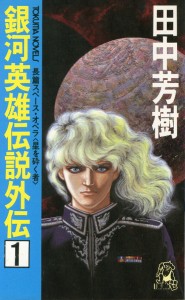
Let’s move on to Viz Media. The big, BIG announcement here was from Haikasoru, Viz’s science-fiction novel imprint, who announced the acquisition of the first three Legend of Galactic Heroes novels, with more coming if sales are good. It’s possible that this may be too old a property for many readers, but for anime fans of a certain age, this is HUGE. One of the most famous space operas out of Japan. Oh yes, and the anime was licensed as well.
Viz’s Shojo Beat imprint also had two licenses, by some of its more famous mangaka. Bisco Hatori’s Urakata!! is her newest LaLa series, about a drama club. And Matsuri Hino has Shuriken to Pleats, about a young ninja girl who has to start over as a normal high school student, also running in LaLa. Neither of these is particularly surprising, but both are welcome returns for best-selling authors.
Seven Seas was not at AX, but took the weekend to announce a new title of their own. Angel Beats: Heaven’s Door is a prequel to the anime series, and is apparently by the folks behind Air, Kanon, and Clannad, so I expect it might be depressing. It runs in Dengeki G’s magazine, and is ongoing with 8 volumes in Japan.
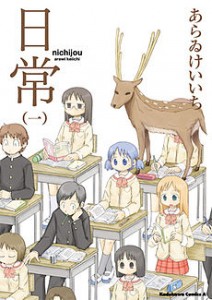
Vertical was next, and I will admit that their big surprise was possibly the least shocking of the big con surprises. But still made me very happy. Nichijou is a gag manga famous for being wonderfully strange, and inspired an equally strange yet adorable anime. It runs in various Kadokawa magazines, including Shonen Ace, and is 9+ volumes. It is worth the purchase, especially if you enjoy My Neighbor Seki.
There’s also Fuku Fuku Nya~n, which is the latest in a series of Nya~n titles about an old woman and her cat that technically is a josei title, but really is more of a cat lover’s title. It’s by the author of Chi’s Sweet Home. Lastly, Vertical announced a new Attack on Titan novel, Lost girls, which has short stories focusing on, among others, Mikasa and Annie, who also get the cover.
Mangagamer is not a manga company, but I would feel remiss if I did not mention that they have licensed the Umineko When They Cry visual novels, which will be released arc by arc on Steam. They’re working with Witch Hunt, the Umineko fan translators, to refine and improve translation, and will, again, have an option of updated sprites. No release date set yet that I saw. Umineko is more cynical and difficult to read than Higurashi, but also has more depth and better writing.
Kodansha Comics had three announcements. In the non-earth-shattering ones, Real Account is a Weekly Shonen Magazine series combining the increasingly popular survival game genre with social media. Maga-Tsuki is a harem comedy from shonen Sirius that will likely fulfill every fan’s fanservice needs. And oh yes, one more thing, Kuragehime.
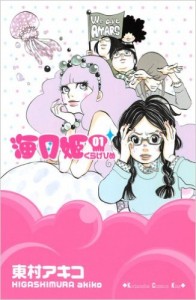
Kuragehime, aka Princess Jellyfish, has been one of THE most demanded josei series of the last few years. It runs in Kodansha’s KISS magazine, and involves a shy girl who loves jellyfish and her meeting with a beautiful young… woman? It inspired a popular anime, and everyone assumed it would not be licensed here as a) it’s josei and b) it’s 15 volumes and counting. Kodansha is doing it in 2-in-1 omnibuses, with a larger trim size. And Crunchyroll Manga also announced it will have it digitally, starting July 15.
That’s a lot of stuff. What could be left? Oh right, Yen. Let’s break this down into three waves.
First, digital-only series. There’s supernatural/horror titles (Aphorism, Corpse Princess, Renaissance Eve), another survival game series (Seishun x Kikanjuu), harem comedies (the popular yet polarizing Sekirei), straight-up mysteries (Black Detective), and even gambling manga (Kakegurui). There’s also series where I have no idea at all: Ore no Kanojo ni Nani ka Youkai is by the Working! author, and Manzen Maou Shoujo Ena-sama… I don’t even know. The big one here, though, even if it is only in digital format, is Saki. This long-running mahjong manga with yuri subtext has been an underground favorite ever since the anime came out, and it’s nice to see it getting a NA release.
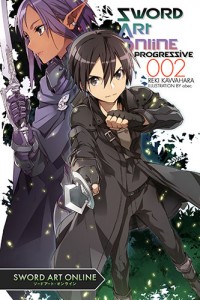
In actual print, we’ll start with Handa-kun, the prequel to Barakamon. It had been previously announced as digital only, but I guess is popular enough that it’s now getting a regular release. For Log Horizon fans, the popular spinoff West Wind Brigade has been licensed. Sword Art Online’s manga continuations have been licensed – both Phantom Bullet and Mother’s Rosario, which run concurrently in Japan. Phantom Bullet’s artist also does Sacred Blacksmith.
There are a few Dragon Age titles, which usually are a bit more fanservicey than most. Kamigoroshihime Zilch seems to be about a teen who’s told he’s secretly incredibly powerful. And Saenai Heroine no Sodatekata, better known as Saekano, is based on a light novel, though Yen have only announced the manga, which is an odd combination of harem manga and visual novel creation. Fans of Genshiken might like this. Lastly, as it wouldn’t be a con without something from Comic Alive being licensed, Taboo-Tattoo seems to be a manga with lots of girls fighting – indeed, I can’t really find much else about it except that.
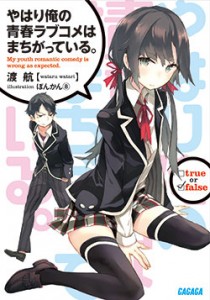
But Sean, you’re thinking, where is the jaw-dropping Yen Press title? Well, for that, let’s turn to the light nvoel imprint, Yen On. First, there’s a sequel to the horror novel Another, called Episode S. The second one, Yahari Ore no Seishun Rabu Kome wa Machigatteiru, is very surprising for two reasons. First, it’s owned by Shogakukan, who usually do not let their books fall outside Viz’s purview, even if Viz isn’t actually doing novels at the moment. Secondly, it’s the first Yen On title to be announced that does not involve some element of fantasy or supernatural – it’s a straight up romantic comedy. It also sells like hotcakes in Japan, and has a very popular anime, which likely explains why Yen moved past 1 and 2 above. They’ve also licensed the manga.
But there is also Baccano!. From the author of Durarara!!, this is actually Narita’s first series, about a group of mobsters in 1930s New York who get caught up with a group of immortals. Baccano! is one of those series whose anime was FAR more popular in the West than in Japan, where it bombed. It has a huge online fandom in areas such as Tumblr, and fans had been begging Yen for the novels. I was not expecting this at all – I love Baccano!, particularly the characters of Isaac and Miria, who are very… themselves. Everyone is flipping out over this, and I really hope it sells incredibly well.
Lastly, there is Crunchyroll manga. In addition to the Princess Jellyfish release I mentioned above, we have Fukigen na Mononokean (another supernatural title), Takahashi-san ga Kiite Iru (a gag comedy about an eavesdropping girl), Kuzu no Honkai (a romantic drama seinen series about pretend lovers), and Amaama to Inazuma (a child-rearing manga which should interest those who enjoyed Bunny Drop but disliked the road it went down). I like the variety of series they’re getting, and will definitely be checking these out.
There’s also SDCC next week, but I expect, while there will certainly be some titles announced there, it will be quieter than this week. AX has let everyone exhausted but happy, even those who didn’t attend it.