How a Realist Hero Rebuilt the Kingdom, Vol. 20

By Dojyomaru and Fuyuyuki. Released in Japan as “Genjitsu Shugi Yuusha no Oukoku Saikenki” by Overlap Bunko. Released in North America by J-Novel Club. Translated by Sean McCann.

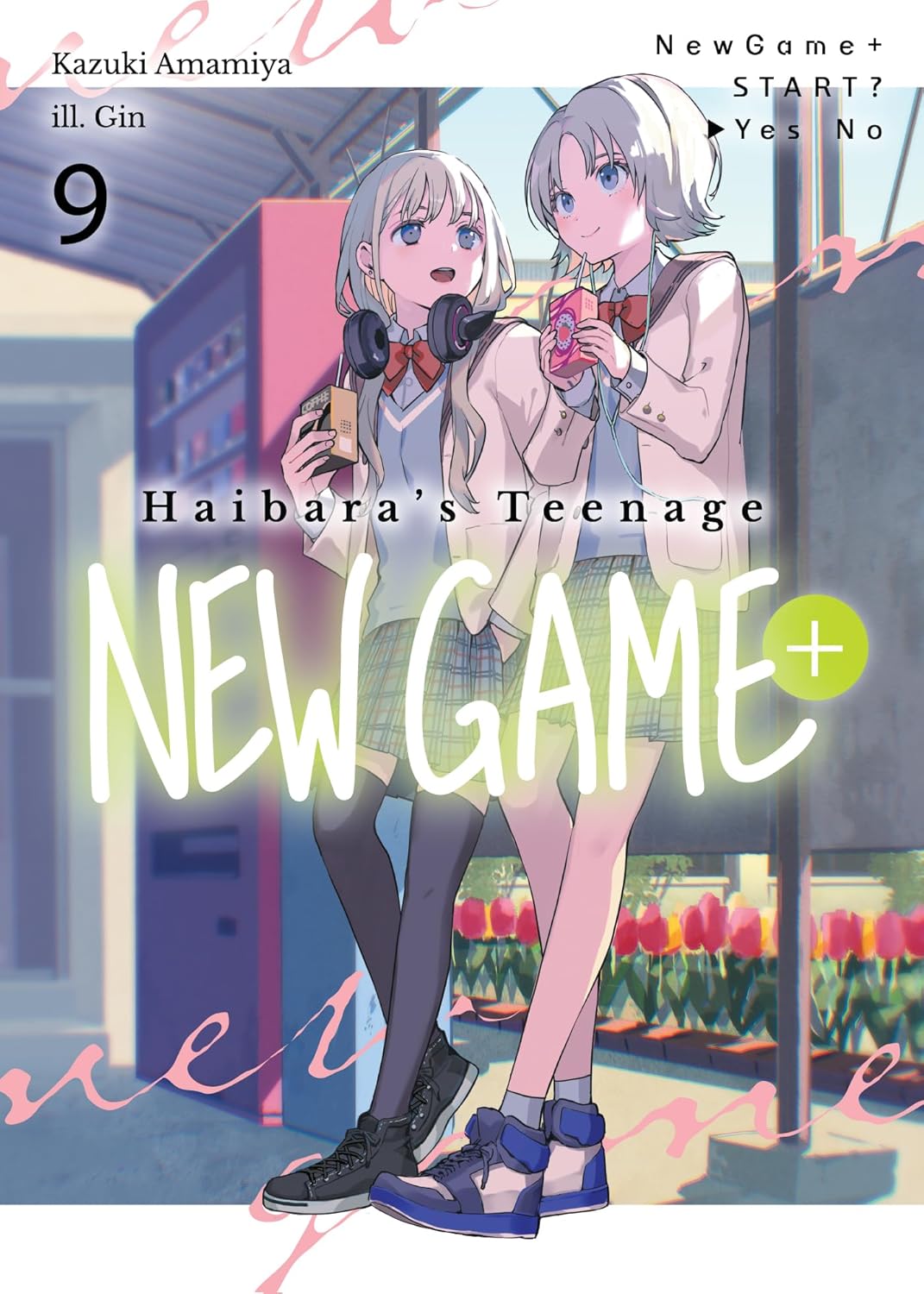
Yes, I know, I jinxed it. I was looking forward to this being the final Realist Hero volume, and lo and behold, there’s a short story collection still to go. Still, for the most part, this does serve as the “epilogue” to the series the author wanted, for better or worse. For worse is laid out right there on the cover, which might be the most bizarre choice of cover art for a final volume ever. (The short story volume, realizing this, will have Souma and his wives instead.) Of all the plot points I wanted this series to resolve, “who does Souma’s son marry?” was pretty low on the list, and the fact that the answer is Carla does not fill me with glee. To her credit, Carla brings up all the reasons I hate this pairing, but Souma essentially shoots them all down by telling her “Face it, Carla, it’s Chinatown”, and she ends up going through with it anyway. Sigh. What else do we have here?

In addition to the Carla subplot, we see the rumor that Souma has a secret love child (who turns out to be Souma’s actual child and not secret at all); Souma and the other nations open an airline service using dragon knights; Lombard struggles with ruling the new Kingdom of Remus, broken apart from Fuuga Haan’s old empire; Lucy runs a wedding planner service, and brings the reader up to date with more couples getting married; Merula goes back to the spirit kingdom, no longer exiled, but finds herself homesick fairly quickly; Julius and Tia deal with their carved-out bit of the former empire; Jeanne and Lumiere try to discuss politics, but their old friendship and Lumiere’s lingering guilt gets in the way; the rumors that Souma has a secret eighth wife turn out… wait, they’re true?; the former king and queen pay a visit to Georg’s widow and greet her “new” mysterious masked husband; and Anne, the former Saint and Fuuga’s abandoned ally, imprisoned for her own safety, is having post-war trauma and nightmares, and needs therapy.

As you can imagine for an epilogue that’s essentially a short story collection of its own, the contents are highly variable; made more difficult that I didn’t keep a spreadsheet when I read this series, so once again tend to forget anyone who isn’t Souma or his wives. I did enjoy the resolution of Juno’s plotline. The last of the women in love with Souma, marrying her off to someone else would have felt cheap. At the same time, it makes sense that she’d want to be a “secret” wife out of the royal limelight. Plus it allows Souma to use the mascot costume on a regular basis. I also liked how Anne’s story was handled. Her plotline is frankly horrific, and we’re reminded that she was 12 years old, manipulated by everyone around her, and forced to watch all her allies executed or slaughtered. Moreover, the fact that she’s never seen herself as anything but a tool now means she sees herself as nothing. The idea of animal therapy as a start is a great one.

We even get a “lady or the tiger” ending, where we’re told Souma eventually died of old age surrounded by his family… OR DID HE? This final volume of Realist Hero tried to dot i’s and cross t’s, and succeeds about half the time.

Promised to a Dragon, Vol. 1

By Selena Pigoni and Minori Aritani. Released in North America by J-Novel Club.

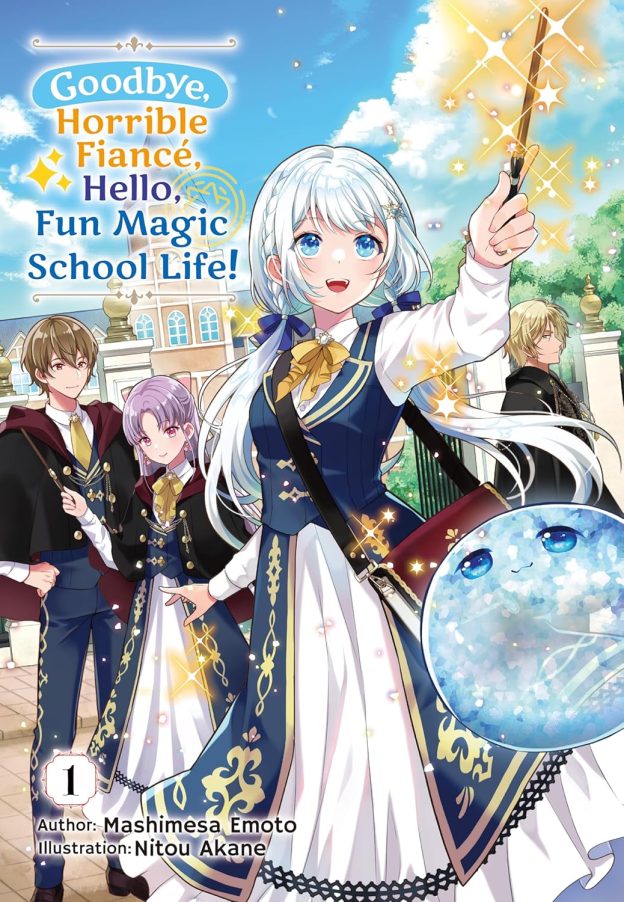
Another of the J-Novel Club contest winners, this one feels the most like a standard light novel, in both good and bad ways. If I hadn’t been told it was a contest entry, there are only a few places where I might guess that it’s not translated from the Japanese. This is a shoujo light novel in the “escaping my horrible fiance and hooking up with a much better guy” genre, which usually intersects with the villainess or Cinderella genres but here doesn’t really have aspects of either of those. That said, this has something most of the Japanese versions lack. Japan’s wish fantasy books tend to have the ex-fiance/boyfriend by rather pathetic, shouty but completely ineffectual and easily humiliated. We do not remotely get that here. Brodrick is terrifying, and it is clear from Page 1 why Rhiannon wants to be as far away from him as possible and it’s clear on page 194 that he’s gotten even worse. I spent the entire book worrying he would show up again. He does, indeed, show up again. Still, there is a sweet romance at the core of the book.

Princess Rhiannon is not having a great birthday party, mostly as she’s horrified to find that she’s been engaged to her childhood “friend” Brodrick, who has carefully made sure no one else gets close to her, driven off almost all servants who support her, and is also casually screwing a lot of other maidens around the palace. Clearly it’s time to run away, which she does by the skin of her teeth, but Brodrick finds out and is in hot pursuit. She does have a plan, though. Her father the king made a promise to a witch that she would be engaged to a dragon when she came of age, and she fears what will happen if that promise is broken. So, with the help of a passing handsome, clever, and charismatic bard, she sets off on a journey to go and meet the dragon and escape a horribly marriage.

If you’re familiar with this genre, there are no prizes for guessing who the bard really is. The relationship between him and Rhiannon is the highlight of the book, as she falls for him relatively quickly, while he’s reluctant for some reason we don’t find out till much later. Everyone who meets them on the journey assumes they’re already married, of course. Unfortunately, as I said before, Brodrick keeps showing up looking for Rhiannon, and once he works out that she’s with her promised dragon, he demands her back in exchange for murdering him. This tension between terror and sweet romance is what makes the book work, but can be exhausting. The book also ends very abruptly, as if it were being written to a page count. As with most books in the contest, it could be stand alone but could also have another volume if there is an audience.

If you like fantastic romances but wish the ex were less of a cardboard villain, this is a solid option.

Buying You on the Day You Were to Die

By Shiki Narito and Yamimaru Enjin. Released in Japan as “Kimi ga Shinitakatta Hi ni, Boku wa Kimi wo Kau Koto ni Shita” by Media Works Bunko. Released in North America by J-Novel Knight. Translated by Aleksandra Jankowska.

This is the first title I’ve read from J-Novel Club’s new Knight imprint, devoted to BL light novels. Which this technically is, I suppose. There are two men in it, and they are in love with each other. That said, I’d hesitate to call it a romance. More accurately this falls into that subcategory of books that can be summed up as “I am depressed and suicidal and someone gradually helps me cope and move forward”, and that sort of novel is very much up my alley. It’s also relatively short, and complete in one volume. There is, of course, that tricky premise to the book. Can we really root for a couple if one of them is paying the other one a substantial sum of money to hang out with him and be his friend? The answer is eventually yes, but getting there helps us to realize this book is also a mystery.

Sakuta begins the book in a very bad place. His mother has died after a long illness with extensive medical treatment. His father has abandoned them. He’s currently not going to school, working all the odd jobs he can find so that he can earn enough for a funeral for his mother and to pay off the medical debt. Then one day, a handsome young man walks up to him on the job site and says he wants to buy his services. Kadzuki offers Sakuta a large down-payment – enough to pay for the funeral – and a substantial monthly salary if he will be his friend, go to college with him, and stay there for four years. After the five years (high school and college) are up, Sakuta is free. Sakuta regards all this as tremendously suspicious, but he metes Kadzuki’s family and servants, and they all vouch for him. Just what’s going on here?

This book can be roughly divided into two halves. The first is Kadzuki slowly getting Sakuta to actually want to live again. Sakuta never attempts suicide in this volume, but he’s clearly planning it, and it’s only due to the efforts of Kadzuki and his family and staff talking with Sakuta and showing him that there are reasons to go on that makes him avoid it. Then we get the second half, where we learn why Kadzuki is so devoted to Sakuta, why the contract is for only five years, and why he keeps having unavoidable piano lessons. This is a lot sadder, but it tries to avoid becoming mawkish, and mostly succeeds. I also liked the subplot sprinkled throughout of Sakuta’s friend from high school escaping from an abusive situation, and the occasional updates we got. It was a nice reminder that there was a world outside this doomed romance.

If you’re looking for a quick tearjerker, and don’t mind that there isn’t even a kiss in terms of romantic content, this is a very good read about someone touched by tragedy who manages to live on and grow to adulthood with the help of… well, a large influx of cash, so OK, there is still that niggle, as without the cash he would not be able to get out from under. But also the love of friends and family.