Manga the week of 6/22

The big news this week is that a few Tokyopop titles seem to be straggling in… my guess is that they were already printed and there’s no point in not letting them get released to earn a little more cash for Stu’s vanity projects. So we have the final volume of Hanako and the Terror of Allegory to add to TP’s ‘completed’ category. There’s also new volumes of Deadman Wonderland and Fate/Stay Night, which will remain incomplete, as well as the shoujo Happy Cafe, likewise. And the seinen Maids and Service comedy Maid Shokun gets Vol. 1 of 4 coming out this month, but that’s all you get.

In other weird news, Midtown Comics has decided to catch up on Vertical’s releases by getting about 10 of them in at once. The last 2 volumes of Seven Billion Needles, 3 volumes of Twin Spica, Chi’s Sweet Home 5, and the 2-volume split of Apollo’s Song. All very worthy of purchase if you haven’t already. Also, Apollo’s Song ran in Shonen King, a now-defunct Shonen Gahosha magazine that is where the Young King OURS magazine got its King from.

Now for normal releases. Dark Horse has the final volume of Neon Genesis Evangelion: Campus Apocalypse, which tried to ramp up the Shinji/Kaworu ambiguous love, but apparently also had some good Asuka stuff as well. Seven Seas is releasing a new omnibus of Venus Versus Virus, so those of you who weren’t bored out of your skulls by the mindlessness can pick it up and see what all the fuss wasn’t about.

Viz has a new Afterschool Charisma, which more hot clone action. There’s Vol. 15 of 20th Century Boys, which must be on its 3rd end of days by now. And Viz debuts the re-release of Tenjo Tenge in handy two-volume omnibuses, now uncensored for whiny otaku who never bought it when CMX put it out. (Note: the same ones will not buy it now for some other invented reason.)

Kodansha has the first volume of the Phoenix Wright tie-in manga, this time a genuine serialized manga story rather than a doujinshi collection. It ran in Kodansha’s Monthly Young Magazine, which targets college-age men.

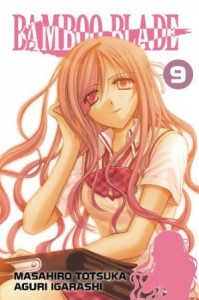
And Yen has a pile of stuff. The 9th volume of Bamboo Blade has the entire cast being AWESOME, I have it on good authority. Even Dan-kun fans will get to see him do things here. Higurashi has Shion continue her roaring rampage of revenge in the 3rd volume of the Eye-Opening Arc. Soul Eater gives us more pop art. Sunshine Sketch gives us more 4-koma sweetness and sort-of-yuri. Sasameke drags to a close with its second omnibus, which can’t possibly be as bad as the first was. We get a 2nd volume of Tales of the Waning Moon only 21 months after the first volume (it comes out just as slowly in Japan). And a new debut, The Betrayal Knows my Name from Kadokawa’s shoujo oddity collection Asuka.

That’s a whole lot of stuff. What are you getting?

One Piece Volume 57

By Eiichiro Oda. Released in Japan by Shueisha, serialization ongoing in the magazine Weekly Shonen Jump. Released in North America by Viz.

Given that this is one of those One Piece volumes where the whole thing is one giant melee fight, I think it’s time to return to the bulleted list of observations.

– Just as Garp revealed Luffy’s parentage and then reminded himself it’s a secret, so Luffy here shows he already knew the identity of Ace’s dad, and just hadn’t said anything. Naturally, he’s the only one to treat it so casually.
– Ace’s flashback is awesome, only serving to show us the bond that the Whitebeard pirates have with each other. I was reminded of the anime Straw Hat Pirates song ‘Family!’, which applies just as well here. Also, Ace fought Jinbei for 5 days? Badass.
– The second chapter of the volume manages to introduce so many new characters that it can be confusing (likely deliberately so on Oda’s part, who’s just throwing in various badasses to remind you that it’s not just the Straw Hats who get all the cool shit). Marco is the only one you need to remember.
– So sad to see Oars, Jr. here, but if you’re going to go out, what a way to go. The flashback scenes with Ace just made it all the more poignant. Also, Oars, Jr. reminds you how much Oda loves to connect every tiny detail in One Piece to every other tiny little detail.
– While we’ve had Aokiji (somewhat goofy yet apparently conflicted about duty deep down) and Kizaru (mostly goofy, and less conflicted), Akainu is not goofy at all, and merely terrifying. His first few scenes here, and the use of his magma powers, showcase his badassery. The scene where he slaughters a Marine Captain trying to run away, who notes he has a family, showcases his evil. This man is one of the biggest villains in One Piece, Marine or no, and we’ll be coming back to him soon.
– Donflamingo may be an insane lunatic, but he does get the best and most accurate monologue in the volume. History is indeed written by the winners.
– The entrance of Luffy & company to the battle, on the other hand, was pure fun.
– I love the cast reactions to seeing Luffy, scattered over three pages, and taking in even the minor characters like Jango and Tashigi. Naturally, it ends with Akainu, merely seeing Luffy as a new thing to kill.
– And Luffy and Whitebeard meeting is everything I hoped for – it’s wonderful to see then standing side by side to save Ace.
– So Luffy’s parentage is no longer secret. Well, given Garp’s big mouth, it may not have been as secret as folks thought. But now the whole world knows.
– Buggy being manipulated by Whitebeard = priceless, but not as priceless as Buggy vs. Mihawk. I’ll say it again, when he’s not actually THINKING, but merely reacting, Buggy can be as badass as anyone. The running gag of his crew’s reaction gets better with each new confrontation. Also I love his manipulation of the media there at the end. He’d make a great politician.
– Likewise, I was highly amused by Hancock vs. Smoker, where we see her show some real rage. As well as, of course, her undying love for Luffy. Poor Hancock, that’s going nowhere fast…
– Luffy is not merely running on pure instinct here, which is good. I loved the bit where we think we see him launch an attack against Mihawk, then realize as he gets his hand chopped off that it was just Luffy thinking in his head.
– The fate of Kuma is both sad and somewhat horrific, even if we don’t quite know all the details yet.
– And then there’s that cliffhanger, as Whitebeard is betrayed. I can’t believe we have to wait for October to resolve this. (Yes, having ‘caught up’, Viz is now falling behind again, with 3 volumes a year to Japan’s four.)

To sum up, it’s a great volume of One Piece, showing the battle to save Ace is one that will change the fate of the entire series. You should be reading this.

Walt Disney’s Mickey Mouse: Race to Death Valley

By Floyd Gottfredson (with Walt Disney, Ub Iwerks, and countless others). Originally serialized in various newspapers from January 13, 1930 – January 9, 1932. Edited by David Gerstein and Gary Groth. Released by Fantagraphics.

This has been another one of those long-awaited collections of comic strips. Perhaps not as long as Pogo (still tapping my fingers there, Fantagraphics), but nevertheless many folks have been clamoring for years to see Gottfredson’s work in sequence, especially those who feel he was unfairly forgotten in comparison to Carl Barks, the most famous Disney comic book artist. (The two aren’t all that similar, but we’ll get to that when Fantagraphics puts out the Barks books later this year.) And now we have it, and one could not have asked for a better presentation, with the reproduction about as good as it gets for 80-year-old comic strips, and a veritable plethora of extras.

I’m a big fan of early cartoons. Not just the classic Disney and Warners cartoons we all grew up on television with, but the ones that were rarely shown, the black and white ‘let’s all sing and dance and bounce around for 7 minutes’ type of cartoon. Leaving aside my love of music, I feel there’s a wonderful simplicity to these types of cartoons, where you don’t have to worry too hard about realism or motivations, you can just sit back and watch the fun. And that’s sort of the cartoons Disney was making about 1930 – Mickey was only 2 years old, and though Disney’s shorts were miles ahead of everyone else, he was still singing songs, getting into scrapes, that sort of thing. Goofy was a good 2 years away, Donald 4. It was just Mickey and Minnie (and sometimes Pluto later on), having fun, getting into misunderstandings, and sometimes battling evil villains like Pegleg Pete.

It’s rather startling, therefore, to see the amount of depth we get in these comic strips presented here. Oh, it’s not huge – no need to worry about Mickey on paper being like Apartment 3-G – but you actually do see the characters worry about things like the economy, or trying to figure out their futures. Mickey’s fire chief is overworked (as he’s also the chief of police, justice of the peace, postmaster, etc.) and trying to get folks married, so it can get him some extra cash (justices of the peace are paid more!). Mickey tries to hook up Horace Horsecollar and Clarabelle Cow, and amongst his reasoning is the idea of combining their income. These Mickey Mouse comics never forget what year they’re set in.

Speaking of Horace and Clarabelle, the lack of Goofy and Donald means that they’re still major characters at this point, even more so than in the cartoons, and they’re an absolute stitch, albeit a cliched one. The comic strips rely very much on stereotypes and vaudevillian-type gags for their humor, and so Clarabelle is a prissy gossip who is easily flattered (and duped), while Horace is as stubborn as a mule, and tends to regard women in the classic “Dames. Go figure.” mode. And yes, they’re all the human-size talking animal types, excepting Pluto. Generally this isn’t noticeable, except in one bit where Mickey has to imitate a cat, and gets a bunch of cats surrounding him when he does – the sight of his large form with these small cats is very odd indeed.

I also found the language in these strips extraordinary. Leaving aside the fact that people eighty years ago spoke differently than we do today, the sheer metaphor used by Mickey, especially in the beginning strips, boggles the mind. “Wow. She must have been vaccinated with a phonograph needle.” “Every time he takes off his hat, the woodpeckers chase him!” I think it reflect a sort of odd fusion of Walt’s midwestern slang and Floyd Gottfredson’s own Utah-style – as well as the current slang of Los Angeles, no doubt. Given that in these comic strips, these characters tend to be far more talkative than their on-screen counterparts (no doubt because they didn’t have to be animated and dubbed), there is a sheer volubility in the strips that almost overwhelms you. I felt the urge several times to read the dialogue aloud.

There’s a huge PILE of extras presented here. In addition to the expected biographical detail on Gottfredson, which is fantastic, we get pictures of comic book covers used in European reprints of the cartoons, brief bios of the other inkers and writers involved in the strip, examinations of Mickey, Minnie, and Pluto, and even a 1932 interview with Mickey Mouse that was written up as publicity, along with one in 1931 for Pluto! David Gerstein is already well known for his painstaking detail, but he really goes above and beyond here.

One of the extras presented is the first 2 months of Mickey strips, which were done by Walt and Ub Iwerks. Presented separately here partly as the book is much better off for starting with the high-paced and exciting Race to Death Valley, and partly as it has Mickey battling a bunch of stock cannibals. As the book notes, 1930 is not 2011, and stereotypical racist humor was just something everyone did then, one of the bags of stock gags that writers reached into. So, along with Clarabelle getting the standard ‘female’ gags, and Horace the ‘male’ ones, we also see “uggle biggle boogle” South Seas Island natives. In the main strips, we also get some gypsies, along with Clarabelle and Horace discussing the dichotomy between “They’re just evil and want your money” vs. “Oh, the romantic life they all lead!” that was present in the United States at the time. Naturally, since Mickey needs to battle stock villains, they turn out to be the former in this book. The volume takes pains to note when the strip is getting “politically incorrect”, but does not censor, for which I am grateful, as I would rather experience the prejudices of a different time then simply cover them over.

To sum up, anyone who likes Disney, cartoons, or comic strips will find tons of things to love about this. The comics are exciting adventure strips for the most part, though there’s a lot of standard “gag” stuff as well. Heck, at one point Minnie almost gets ground into paste by a giant pestle thing, something I found far more terrifying than the standard ‘tied to a log headed for a saw” fate of most plucky heroines. A terrific book, highly recommended.