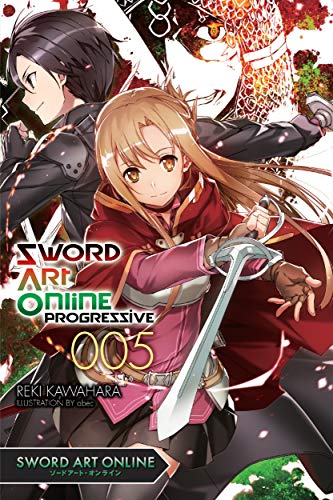
My Hero Academia: Vigilantes, Vol. 1

By Hideyuki Furuhashi and Betten Court, based on the story by Kohei Horikoshi. Released in Japan as “Vigilante: Boku no Hero Academia Illegals” by Shueisha, serialization ongoing in the magazine Weekly Shonen Jump +. Released in North America by Viz.

My Hero Academia, the main series, is very explicitly based on the American concept of superheroes. And, despite the occasional foray into “yes, heroes really do die” and an examination of loss, for the most part it remains a very idealistic series that wears its heart on its sleeve. Therefore, there was absolutely room for a “grim and gritty” take on the Academia universe, though it won’t be featuring any of the main students. If Horikoshi read a lot of Superman, then (as he explicitly states in the author’s notes) Furuhashi is modeling this spinoff after Batman. And, given the design of the “let’s punch everything” vigilante Knuckleduster, it’s pretty clear we’re talking the Frank Miller Batman. That said, this is still My Hero Academia, so I don’t expect things to get completely hopeless. Mostly as, if the “mentor” figure is Batman, the “hero” is… well, Deku. Something the authors also explicitly admit.

Our hero is Koichi, who is in college and trying to hold down a part-time job. Unlike Izuku at the start of MHA, he DOES have a quirk – he can glide along the ground. Slowly. Most people think he resembles a cockroach. He spends his off time doing nice things like picking up litter, to the point where the neighborhood gives him the hero name “Nice Guy”. He also has run ins with a group of bullies… wait, he’s out of high school, so they get to be thugs – as well as a self-styled wannabe pop idol. And, thanks to a variety of circumstances, he also ends up trying to stop an underground drug trade, which makes people’s powers go out of control, turning them into villains, also also seems, very disturbingly, to be controlled by bees. But it’s OK. He can glide. The wannabe idol can jump really high, and then there’s Knuckleduster, who has no quirk, but is GOOD AT PUNCHING.

As I said, we’re dealing here with mostly original characters. Eraser Head shows up at one point to help compare and contrast the difference between licensed heroes and vigilantes, but the core of the series is our three “illegal” heroes. Of the three, Pop Step is the most problematic. My Hero Academia has been criticized a bit for having the female characters get less focus than the guys, and their costumes overly sexualizing them, and that’s not wrong. But over the course of the first volume, Pop Step is captured multiple times, threatened with rape, and the sadly very popular “covered from head to toe in gloop which probably reminds the reader of something”. Knuckle Duster fares better – he’s in the Frank Miller style, but it’s taking the good bits of Miller and leaving out all the claptrap. As for Koichi, he’s a nice kid, but so far is defined personality-wise as “Deku, only less shiny because this is a “grim and gritty” spinoff. He needs more oomph.

On the good side, the action sequences are very well handled here, and there are some nice creepy horror images with the bees. Vigilantes is a decent enough start for a MHA spinoff, and I hope it gives better development to its leads in future volumes. And stops having Pop Step get captured all the time.

Accel World: Archangel of Savage Light

By Reki Kawahara and Hima. Released in Japan by ASCII Mediaworks. Released in North America by Yen On. Translated by Jocelyne Allen.

The author jokes in the afterword about how once again he said that an arc would wrap up in the next volume… and once again it did not, with this volume ending on yet another cliffhanger. It could be a sign that the author has difficulty bringing things together, but honestly with Accel World you don’t really mind. The main plot is interwoven into the individual arcs, so we know that solving the ISS Kits and rescuing Ash Roller is not going to stop the Acceleration Research Society anytime soon, just as we know that eventually Haruyuki is going to have to meet Kuroyukihime’s sister, even though we still haven’t seen her either. For now we have this volume, which is mostly in two chunks. The first involves rescuing Aqua Current by taking on another of the Four Gods guarding the Accel World equivalent of the Imperial Palace. The other involves taking on Metatron, who has the laser that Haruyuki thinks he can now repel. Sadly, before that they have to take on Magenta Scissor – again.

The cover features Blood Leopard and Aqua Current, who turn out to have a closer relationship than previously expected. The role of ‘parent’ and ‘child’ is an interesting one in the AW universe, as all it involves is getting another person into the same game you’re playing. That said, in the AW universe there’s good parents and bad parents, and we get an example here with Avocado Avoider. He was invited into the game, then the other players saw his power wasn’t really “useful” and proceeded to essentially kill him right there. You’re never allowed to forget that Accel World is actually a game, and that means that it invites the worst of gamer mentalities. Haruyuki’s playing for the fun of it, the curiosity of winning and the bonds he forms is contrasted with the agenda of Magenta Scissor, who wants everyone to be equal in abilities, point, and everything else – it’s fair, but is it really any fun? That said, her behavior at the end of the volume here suggests she may not be as hardcore about it as she sounds.

The other big revelation here involves the “villain” of the piece, Metatron. We see our heroes going after her laser and coming up with a very clever plan… which then goes to hell when Metatron decides to come down to the ground to attack them right there. It’s always wise to not assume what your enemy plans to do. That said, Metatron appears to be fighting a battle herself, and with Haruyuki’s help is able to get past it… only to reveal that she seems to be EVEN MORE POWERFUL now. I’m interested in seeing where she goes from here, especially as she’s now apparently providing Haruyuki with power in order to rescue Niko (oh dear, please tell me she’s not going to be part of the harem). The cliffhanger was rather abrupt, but plausible – you knew these goons were not just going to let Nega Nebulus waltz in and destroy them. And the harem antics were there but minimal.

Kawahara, with this series, has succeeded in making it one where you want to get the next book immediately after reading the last one. Sadly, we have to wait for September now. Will he finish the arc this time? Mmmmmmmaybe?

Tokyo Alice, Vol. 1

By Toriko Chiya. Released in Japan by Kodansha, serialized in the magazine Kiss. Released in North America by Kodansha Comics. Production by amimaru.

(Note: Tokyo Alice has no translator credit, but also has a “production” credit I rarely see, so I’m considering them equivalent for now.)

The number of times I’ve started a review by saying “I’ve never seen _______” is starting to number in the hundreds, but it has to be said. No, not the Tokyo Alice live-action drama that went out last year. Something a bit more relevant: I’ve never seen Sex and the City. As such, I’m not entirely sure how similar this series, about a group of four friends who live in the big city, whose lives we occasionally follow, and who are (mostly) living together by the end of the first boo9k should remind me of said series, except it does by sheer cultural osmosis. The sex so far is on the light side (one of the lead women has a different guy in her bed every night, and says she’s never had an orgasm, but we don’t see this beyond guys coming and going), but the bond between the four friends is strong, and if the series can keep it up I’ll be pleased to follow along.

Of course, some heroines are more equal than others. The lead here is clearly Fu, a 26-year-old woman who works for a design company and loves shopping. Somewhat surprisingly, at least at the start, men don’t really apply to her, something that bothers her when she dwells on it. She is otherwise the classic ‘ditzy’ shoujo lead, only this is josei so she’s all grown up. I imagine the reader may find her a bit frustrating, which is something of the point. Her friends include Mizuho, a shoujo manga artist with a loser boyfriend who finds that she has trouble drawing real love; Rio, a stylish doctor who has lots of suitors but rejects them as she’s got a crush on… well, the answer surprised me; and Sayuri, who I mentioned above, who will one day have to marry who her parents want her to but in the meantime plans to fool around and have fun.

When I mentioned Fu loves shopping, it’s possible that I wasn’t emphatic enough. shopping consumes Fu, and much of the first volume deals with her buying things and then living to regret it when she sees her bank balance. (I wonder how long she’ll last living with her friends before she’s thrown out for missing rent.) This feels very much like a josei manga catering to its readers, who are also likely twenty-somethings living in a big city and wondering what to do next. We get the occasional flashback to the friends when they were in junior high, talking about the type of guy they want to end up marrying. Reality has ensued for most of them (and Fu is rather startled to realized the sweetest, most idealistic one of them became the somewhat hedonistic Sayuri), and Fu in particular needs to be more aware of the situations (and men) around her. But if you don’t mind that, then Tokyo Alice is a good start.