Spirits & Cat Ears, Vol. 1

By Miyuki Nakayama. Released in Japan “Kudamimi no Neko” by Media Factory, serialization ongoing in the magazine Comic Alive. Released in North America by Yen Press. Translated by Leighann Harvey.

Sometimes, when you read a series, you are inevitably reminded of another earlier series, to the point where you can’t escape thinking about the similarities. Early volumes of Fairy Tail scream “this is One Piece, but at Kodansha”, for example. returning the favor, Black Clover’s early volumes have a very Fairy Tail quality to them. And this new series from Yen, Spirits & Cat Ears, has the same problem, as it’s hard to start reading it without thinking of another, recently completed series that Yen put out, Inu x Boku SS. In fact, given the really obvious similarities and the fate that the late Cocoa Fujiwara even has fanart at the end of the volume, I wonder if Nakayama-san is a former assistant of Fujiwara-san. That said, while there are obvious similarities, Spirits & Cat ears runs in Comic Alive, not Gangan Joker. And you know what that means: fanservice.

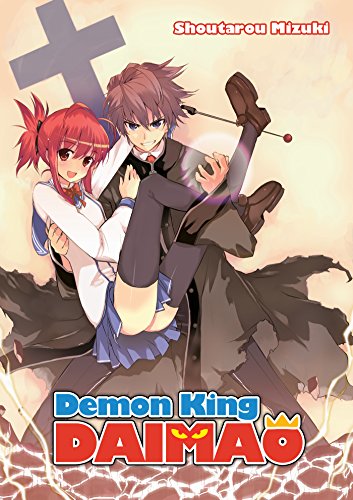
It’s actually rather surreal in many ways. Inu x Boku SS, like a lot of Gangan titles, had a large crossover female audience, and you can tell the series would not seem out of place in, say, Zero-Sum or Asuka. Spirits & Cat Ears has a similar premise – young people with powers paired up with attractive older men – but Comic Alive is decidedly a male-oriented magazine, and so… well, take a look at that cover. Neneko is also the “shy, constantly apologizing” sort of heroine, which unfortunately means she’s a pushover when she tries to stand up to her familiar, Shichikage. Ririchiyo could also be manipulated by her own lover/bodyguard, but at least she could not be described as a pushover. A lot of the plot to Spirits & Cat Ears revolves around “bring Neneko out of her shell”, which involves enforced socialization and annoying “punishment outfits”.

This is a ghosts and exorcism manga, and so you get the occasional tale of possession and the like, but the focus is firmly on Neneko rather than the situations she gets herself into. She’s joined by a seemingly sullen but really just shy fellow exorcist, and after the predictable misunderstanding the two become close fast. As for Shichikage, he too feels very much like the sort of guy you’d meet in a shoujo manga. Unfortunately, it’s more the Black Bird sort of shoujo manga hero. He’s right to think that Neneko firming her resolve and stating clearly what she needs him to do will increase her power (and his strength), but his sexualization and fetishization of her is just distasteful, especially as, thanks to the art style, she’s another girl who looks about nine but has a large bust and is really in high school.

This wasn’t completely terrible, but unfortunately the parts of it that were good are the sort of things I get in other, better manga series, and the parts that were bad seemed to stand out more. I’d recommend it to those who like nekomimis or series with a teasing sort-of boyfriend who likes dressing his girl in sexy outfits.

Kase-san and Morning Glories

By Hiromi Takashima. Released in Japan “Asagao to Kase-san” by Shinshokan, serialization ongoing in the magazine Hirari. Released in North America by Seven Seas. Translated by Jocelyne Allen, Adapted by Jenn Grunigen.

I’ve always said (perhaps a bit too often) that as long as something is well-written and enjoyable, it doesn’t matter that it’s a hoary old cliche. And likewise, with the yuri genre, just because something is as Story A as it gets does not mean its sweetness and cuteness are in any way diminished. This series is no exception, being light as air but ever so tasty. The girls are nice, their incipient romance is nice, and there is a shot of someone silhouetted against the setting sun, because if you’re going to throw in romantic tropes, you may as well use the kitchen sink as well. All of this adds up to a fun series that will make you smile.

As the author notes in the afterword, the magazine this series runs in is generally about yuri one-shots, and its very easy to tell this is a series of shorts about the same two people. (In fact, future volumes will be “Kase-san and _______” rather than a Vol. 2 or 3.) Kase-san is the tall sporty girl on the cover, a track star and school idol who also has some odd rumors hanging around her. The other girl is Yamada, who is shy and fretful and has a very low self-opinion of herself. You know the sort – there’s no way they could ever be interested in little old me. They bond over flowers, which Yamada is planting at the school, and then there are bike rides and shopping for shoes and blushing. So much blushing. Because, of course, these two girls are really into each other.

Most of the drama, such as it is, revolves around Yamada’s low self-esteem and how it leads her to almost sabotage her own friendship. Luckily, Kase-san is not as clueless as some of these archetypes can get, and so is able to, if not realize what is going on, at least rescue Yamada from being desperately sad. I liked the idea of the marathon, as it allows Yamada to work to improve herself, even though that gets torpedoed by a bunch of jerks running over first her flowers and then her. The volume is done from Yamada’s perspective, though I’m hoping a future volume may have a flasghback showing Kase’s own thoughts on their relationship. It all builts up to a confession and kiss in the nurse’s office, with Kase uncharacteristically unapologetic and Yamada crying in relief.

It’s safe to say that not much happens here – honestly, I’m having trouble filling out my word count. But I’m just so pleased to see Seven Seas putting out stories like these and Kindred Spirits on the Roof rather than “yuri for guys” like Netsuzou Trap. Cute girls meet and like each other. In the end, they kiss. Thankfully, this is not the end, as we’ll see Kase-san and Bento soon. for now, just revel in the adorable.

Bakemonogatari: Monster Tale, Part 2

By NISIOISIN. Released in Japan by Kodansha. Released in North America by Vertical, Inc. Translated by Ko Ransom.

One of the things I enjoy about the first few volumes of the Monogatari books is that each new story begins with the girl from the previous story having a long conversation with Araragi where they basically take on the role they’ll play in the books from this point forward. In the previous volume’s Mayoi Snail, Senjogahara showers Araragi with abuse and teasing affection. And here we have Suruga Money, in which Mayoi reappears and begins to function as Araragi’s sounding board and life advice coach, and Nadeko Snake, in which Kanbaru shows off that she was actually holding back in her own story, and becomes the only person in the cast who can be more perverse than he can. (This works in Japanese publication order, by the way, and continues at least through Nekomonogatari Black, which starts with a long scene with Araragi and his sister Tsukihi.) The first two books introduced Araragi and began to give him a “harem”, so to speak – this second book expands on that.

The stories in Bakemonogatari were originally written as short stories for a magazine, and it shows – each story has the introduction at some point of Araragi, Shinobu and Meme Oshino and explains his nature, for readers who had not read the previous stories. Not that Shinobu plays a part in this book – she’s still silent, apparently sulking as Oshino is stealing her Mister Donuts stash, and functions mostly as a maguffin to power up Araragi so he can battle oddities. For the most part, each story in this is devoted to showing us the new girl. This works quite well in Kanbaru’s case. Her overly solicitous politeness is perfectly translated, and you also see the frustration and rage she normally keeps well-hidden. She’s a good kid. She’s also a “pervert”, i.e. happy to talk about sexual matters with Araragi till she’s blue in the face. And she’s a lesbian, something she admits herself, though the text goes on to use the alternate term “sapphist”, which, as Araragi points out, is the same thing. (One could argue she flirts incessantly with Araragi in the following story, but I maintain that she mostly does this for appearance – much like many other characters in Monogatari, especially Araragi himself.) Her story is the strongest, flagging only when we have to read a very long battle scene from Araragi’s narrative POV – it gets tedious, and makes you realize why Nisioisin does so much dialogue – he’s better at it.

As for Nadeko… without spoiling anything about future volumes, we’re left with an okay story that works best when Nadeko isn’t in it. Araragi and Kanbaru’s banter at the start is probably the high point of the book. Nadeko herself is painted entirely as a shy, innocent victim, forever looking down or away from the two of them. Her “monster” problem is quite sexualized, which is uncomfortable given she’s only in junior high, but if that really makes you uncomfortable you’d better jump off now before we get to Nisemonogatari, as it will only get worse. In the context of future volumes, there’s lots of subtle clues and hints in here, a few of which I think are deliberate. But without that context, this story sometimes just lies there. It’s the weak link of the five.

The third volume will contain only one story, Tsubasa Cat, and you can probably guess who stars, though if you read these two volumes and think we’re finally getting a flashback to what happened during Golden Week, you’d be wrong. It also doesn’t have quite as much Kanbaru, which is a relief even though I love her. The translation is, on the whole, excellent throughout, but Vertical has decided not to have honorifics, and as such Kanbaru’s constant “Araragi-sempai” is turned into “My senior Araragi”, which is fine initially, but after the first hundred or so times you realize how OFTEN she uses his name, and it begins to wear. (Mayoi’s “Mister Araragi” works better.) I understand why they chose not to have the honorifics, but I suspect I might find it a bit more comfortable if Kanbaru’s use of -sempai was removed rather than adapted, even if that affected the politeness level. Other than that, though, this is good volume of Monogatari, if not quite as good as the other two.