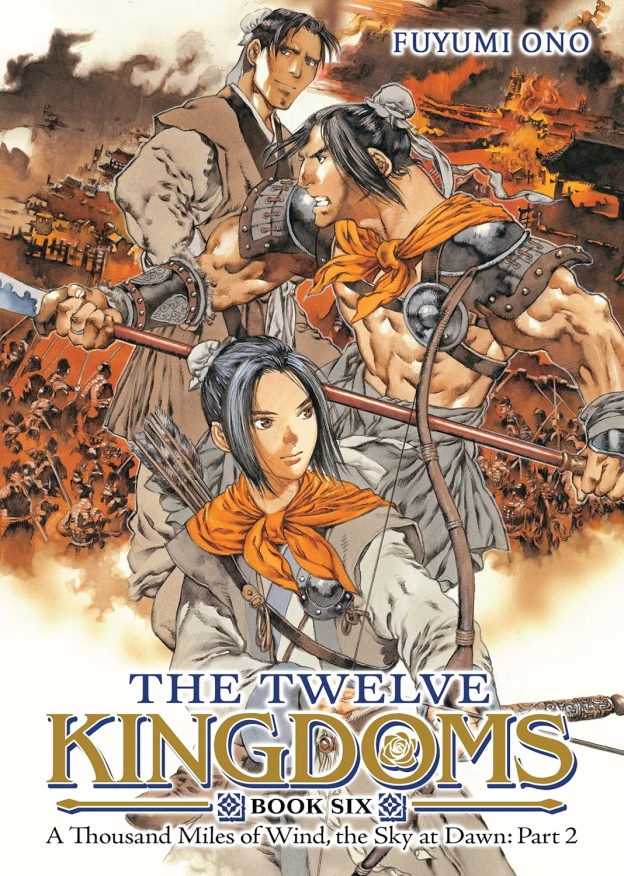
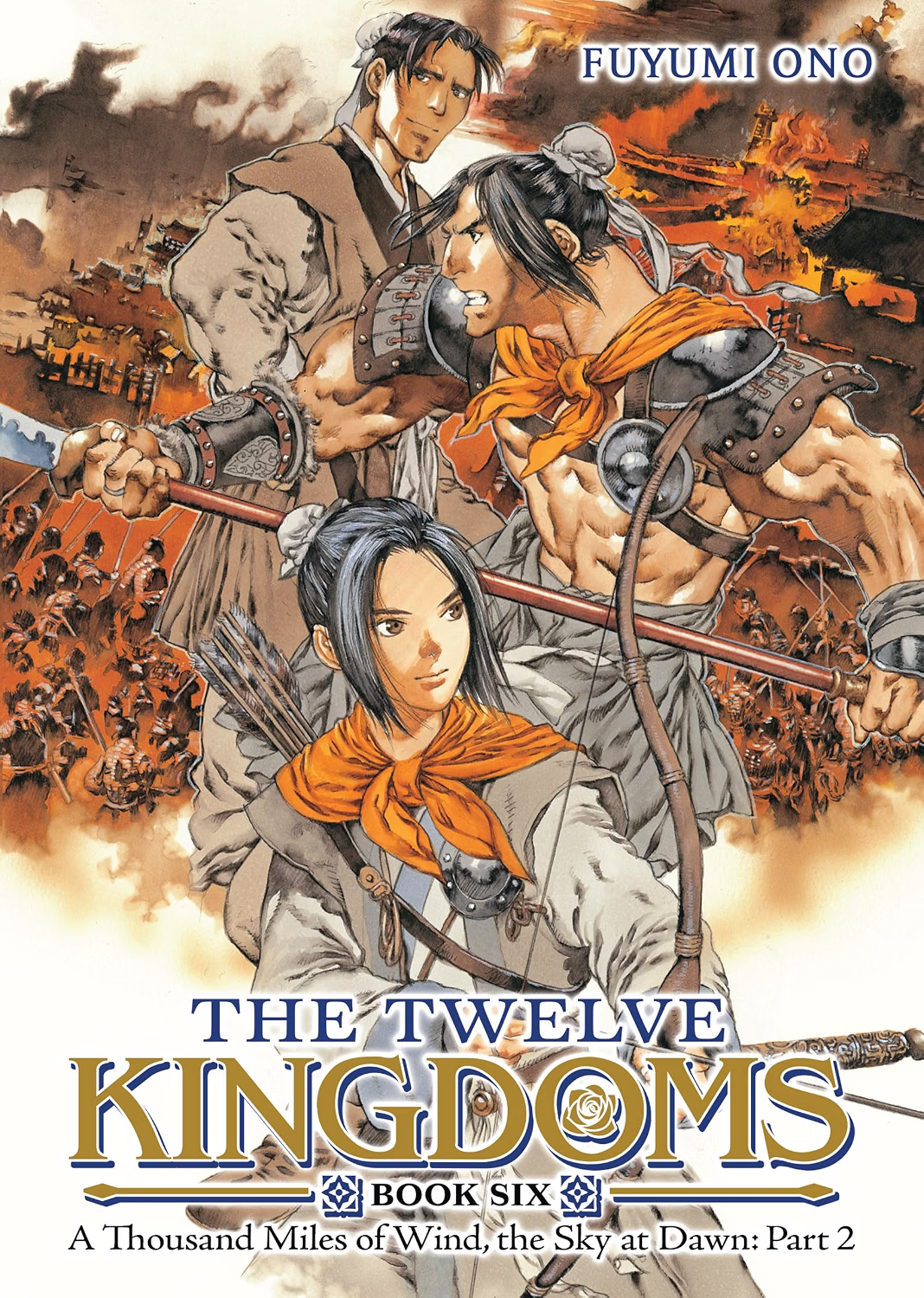
By Fuyumi Ono and Akihiro Yamada. Released in Japan as “Kaze no Banri, Reimei no Sora” by X Bunko White Heart. Released in North America by Seven Seas Entertainment. Translated by Kim Morrissy. Adapted by Monica Sullivan.
This is a book – well, the whole series is, but especially this book – with a message. This whole volume shows us what life is like in a city, and indeed a county, that is so used to corruption and venality that it doesn’t even matter that the new queen is supposed to be better than the old one, things will still continue. We see, over and over in this book, the normal law-abiding folks turning away whenever there’s something horrible going on – or worse, cheering it on – because they’re scared that if they speak up, it will happen to them and their loved ones. The trouble is… sometimes that happens anyway. Youko’s friend in the village, whose name I couldn’t remember from Book Five so I just called her “tragic girl who’s going to die”, lives up to her name. Fortunately, things do get better by the end of the book, as Youko finally comes to terms with that fact that, advisers or no, in the end, she’s the Queen.
Our three heroines continue along their journey of self-discovery. 1) Youko goes touring around the land of Wa in disguise, occasionally helping people out, and discovers that things are much, much worse than she expected… then goes back to the village where she’s staying to find death and disappearance; 2) Suzu decides, after the death of her friend by the evil guy in charge of the city, that murder is okay, but fortunately before she can put her poorly thought-out plan into action she hooks up with the local resistance group, who are here to tell you “murder is okay but only if you have a plan for post-murder”; 3) Shoukei, having finished being shown the life of an abused commoner and also having finished being educated about life in other countries by Rakushun, manages to hook up with the OTHER local resistance group. Eventually the three women meet each other, and they all agree that while murder may be OK, revolution is the way to go here.
The bulk of the character development here goes to Suzu, who got the least last time. She spends most of the first half of the book in a rage, snapping and deciding that murdering Shoukou will solve all her problems, then realizing that in fact it doesn’t solve the most important part, which is that she blames herself for Seishuu’s death, and then realizing that her entire life here to date was built around passively accepting abuse without doing anything, and that changing that is what she needs to do. Youko, meanwhile, simply needs to be galvanized into being proactive, and once she gets past “I don’t know enough about this world” by going on the road and finding out, she quickly cleans house and starts what will hopefully be a prosperous reign. As for Shoukei, she’s not only had recent experience as an abused commoner, but also years as a pampered princess. I admit her character arc here was a bit too “I’m suddenly mature now”, but hey, talking with Rakushun for weeks on end can do that to a person. I’m not sure we’ll see those two again (Youko I’m sure will turn up), but it was nice to follow their journey.
Next up… short story collection? Short story collection. Till then, please read this lovely series that reminds you that overthrowing the state can be a good thing… though admittedly it helps when the leader of the state is on your side.