Once again, I was not at San Diego Comic Con this year, but I have access to The Internet, so can offer my unsolicited opinions anyway. :) SDCC over the last few years has been more ‘media’ oriented than ever, so it’s no surprise that the manga news was relatively quiet, though there were a couple of ‘big news’ items.
Viz was the first panel, and didn’t have any major print manga announcements. However, they did debut their Android VizManga app at last. I downloaded it to my phone. There were initial hiccups with zooming and availability, but as I look at the site this morning, both are fixed, though the zoom seems to be very fussy – I had to go forward and back a bit to get to the size I wanted. I didn’t initially have my Excel Saga volumes available for download, but that seems to have resolved itself as I type this. No doubt there will be improvements and upgrades, but this is a good first step for Viz in stepping away from the iMarket. The other big news of interest for manga fans was the Nausicaa boxset, which looks impressive, and apparently will have a poster.
Kodansha came next. Obviously, their big push was for Sailor Moon, which has done very well for them. I was a bit disappointed that they did not announce the two ‘short story’ volumes that come after the 12-volume re-release – I hope there isn’t a hold-up with Takeuchi. (The rumor is she asked them not to put the extras in the NA versions, though that is of course merely a rumor.) They discussed previously revealed releases: Genshiken: 2nd Season in September; Missions of Love (aka Watashi ni xx Shinasai!) in November, and Battle Angel Alita: Last Order 16 in December, which moved companies in North America just as it did in Japan. Alita also gets an omnibus so folks can catch up on what they missed – I presume the omnibus is only of Last Order, rather than the original series.

The new announcement was that of Negiho!, a spinoff/alternate universe of the original Negima series that was not written or drawn by Akamatsu but apparently had his consent. The premise is that the majority of the female students in Negi’s class are kindergartners, and Negi is their 15-year-old teacher that they all get crushes on. It started in one of Kodansha’s magazines for kids, but rapidly moved to a shonen spinoff Bessatsu Shonen Magazine as everyone realized it was more otaku-oriented. It’s meant to hit all the moe and cute buttons at once, so if you like cute little moe girls, you should enjoy it. Further, deponent sayeth not. >_>
JManga was the big news of last year’s SDCC, and they did their best to make this year the same. They are close to finally getting the iOS and Android apps for their site, and those should be going live in October – and that includes Android tablets.

They announced a few new titles coming out in the next couple of weeks, the big surprise of which to me was Sun-Ken Rock, a martial arts yakuza manga set in Korea that runs in Shonen Gahosha’s Young King. It’s… a very, very Young King title, let me tell you, and I would definitely expect to hit that ‘yes, I am over 18’ button if you plan on reading any of it.

There’s also a much-anticipated BL title: Dousei Ai (Same-Sex Love), from the author of After School Nightmare. It’s an old Biblos title from the 1990s, so I’m going to guess it ran in Be x Boy. It apparently has a complex plot with multiple protagonists.
JManga also announced at the last minute (literally: they got the OK to announce it minutes before the panel) that they will be working with Kodansha to rescue some of the old North American titles that were coming out via Tokyopop and Del Rey but are now either out of print or were killed for low sales. They can’t say what they are, but there are several I’d love to see. Love Attack? Kindaichi Case Files? Moyashimon? School Rumble? The possibilities are limitless! Speaking of Kodansha, they’re joining with Shueisha and Futabasha to sponsor a translation contest for JManga, the grand prize being a trip to Japan. Contestants get either a shoujo Shueisha title, a seinen Kodansha title, or a seinen Futabasha title. No word on whether the winners end up on the site – if so, it would mean Shueisha would join Kodansha in finally letting some of their works on the JManga site. Which can only be great. All in all, a very good panel for JManga, and I’m pleased to still see them doing well 1 year on.
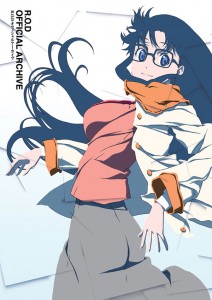
Normally, Udon’s video-game based manga is not one I pay attention to all that much. (We can basically guess Silent Mobius was cancelled by now, right?) But this time around they announced the start of an artbook line, with Evangelion’s Chronicle: Illustrations leading the way. The intriguing one for me is the Read Or Die archive, which apparently takes in both the OAVs and TV, and a Haruhi Suzumiya book as well. Most artbooks are 75% pictures and 25% text at the back, so get imported a lot by fans who don’t care they can’t read 1/4 of it. If there are some cool interviews or the like with these, it would definitely justify a purchase.

Yen Press also had a few goodies to tell us about. The big one was leaked a little early by Amazon.uk (really, Amazon takes all the fun out of company panels these days), but that’s OK. It’s BTOOOM!, a survival game title for the video game fan from Shinchosha, running in their Comic Bunch line. The covers, at least in Japan, are parodies of real-life ‘game covers’ you’d see for the X-Box, Playstation, etc. – let’s hope those can stay. It should do quite well for action fans.

Another intriguing title for Yen was Momoiro Shoten e Youkoso, aka Welcome to the Erotic Bookstore. This is a comic essay series from Media Factory (did it run in Flapper?) about, well, a bookstore that decides to add a few toys to their line. It’s going to be digital only, possibly both to avoid bookstore issues with the content and also as it would cost less than printing it out. I’m definitely intrigued, though – these sort of titles almost never get licensed over here.

Lastly, there is Another, a 5 volume (4 + prequel) manga based on a horror light novel, which Yen has also licensed. Yen says it hopes to put out more novels in the future, which hopefully shows that Book Girl is at least not selling poorly. The manga ran in Kadokawa Shoten’s Young Ace, and is about a classroom that features a girl that everyone seems to ignore, and who looks like Abiru Kobushi from Zetsubou-sensei. Between Higurashi/Umineko and this, Yen seems to be dipping its toes more and more into the horror market. Hopefully it sells scarily well! (slap) I’m sorry, that pun was uncalled for.
Shonen Jump Alpha had one new announcement, with a series so new I don’t have a picture of it. From what I have seen of Takama-Ga-Hara, though, it seems the sort of manga that is very much in line with all the other Jump manga that currently run in Alpha. It’s ‘that Jump sort of manga’, if you know what I mean. They’re also speeding up Blue Exorcist a bit in order to catch up with Japan; it will be appearing 2 chapters a week for a month, then will be every month, 2 weeks after Japan (as with the other Weekly Jump titles).
There was some disappointment on Twitter that the popular mid-level Jump series were once again ignored by Viz. Sket Dance, Kuroko no Basket, Beelzebub, Medaka Box, and Nisekoi. All but the last even have anime series that could be tied in. Though, notably, none of them have anime series with a dub. The reason that we’re seeing Takama-Ga-Hara and Barrage, I expect, is that they’re low-risk high-reward investments. They’re the type of title casual Jump readers like. If they sell well, great. If they bomb in Japan and end after 3 volumes, well, a new series can replace it that is also low-risk. On the other hand, licensing, say, Sket Dance would require releasing 24 volumes in a hurry to catch up with Japan. Same goes with all the others I listed. Nisekoi is popular in Japan, and only has a few volumes to its name, but it has a different problem; it’s a romantic comedy with no supernatural content. I can’t even recall the last Jump manga Viz licensed without some type of fantasy element. Was it Strawberry 100%? In any case, I’d love to see all these titles, but sadly can understand why they were once again not mentioned at Jump’s panel.
And so that’s a wrap; I don’t think today has any major manga content, at least not of the ‘new licenses’ variety. Any thoughts or opinions? For a slumping market, I thought this was a pretty good SDCC; certainly we’re seeing more evidence that digital is the wave of the future.


