When Supernatural Battles Became Commonplace, Vol. 2

By Kota Nozomi and 029. Released in Japan as “Inou Battle wa Nichijoukei no Nakade” by GA Bunko. Released in North America by J-Novel Club. Translated by Tristan K. Hill.

So this was a nice improvement on the first volume, though I will continue to say that I hate it whenever this book has a real plot that it wants is to care about. It’s at its best when it’s just shooting the shit and riffing on Japanese media cliches. Unfortunately, when we run into Chuuni and the Chuutones towards the end, I groaned and wished that Hatoko would simply vanish and reappear back at school. Fortunately, this is precisely what happened. I suppose I’ll have to deal with them more later, but I seriously do not care, whereas I do care about the main cast. Even Andou – I can’t tell if he was far less annoying in this book or if I just got used to his antics, but he worked far better in this book, especially when we get to the relationship between him and Hatoko. Because yes, THIS is the book with “that scene”, and it’s pretty damn epic. Worth the read, definitely, especially given the stress buildup we see all book.
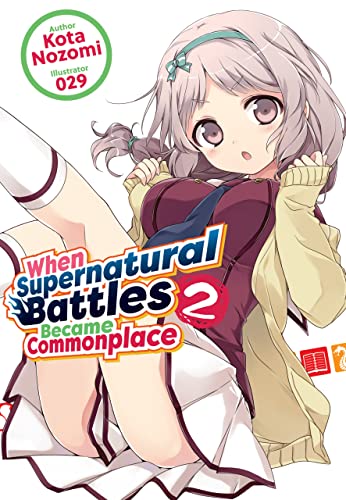
Stop me if you’ve heard this one before, but this is a book of two halves. In the front half we feature once again Kudou, the student council president and vague antagonist from the previous book, who has taken a letter of challenge as a love letter thanks to Andou’s over the top verbiage. Needless to say, she’s the sort to immediately go over the top herself, and Andou has to struggle to find a way to break things to her gently before he breaks her. That said, the confession comes as a shock to the rest of the club, especially two girls who we know have feelings for him. Given her presence on the cover, and the fact that most of the chapters begin with her narration before switching to Andou’s, you can assume Hatoko is especially confused by all this. But, whatever. She wouldn’t understand it anyway.

The book threatens to be drowned out by Hatoko’s rant, which is beautiful, but it also highlights the gulf between them. That said, we see in the flashbacks that this is not for want of trying from Andou – he was attempting for years to get her to understand his way of thinking. But sometimes people just don’t vibe the same way, and the best part of the book is when both of them are told that, in fact, they don’t HAVE to understand each other deeply – they can just be friends because they are friends. The other highlight of the book is the short story competition, which is absolutely hilarious – Hatoko’s grimdark romance, Chifuyu’s incoherent foreign mess, Andou’s summary and character descriptions with no actual text, and Sayumi simply dragging Andou out behind the shed and shooting him in the head. Glorious.

Again, there’s a plot here somewhere, but I plan to ignore it, just as I ignore Andou’s friend Sagami, who is the absolute worst in a way that is clearly deliberate but also I don’t care that it is. Recommended if you use the word “weeb” as a term of honor.
My Stepmom’s Daughter Is My Ex: “Even If We Aren’t Dating…”

By Kyosuke Kamishiro and TakayaKi. Released in Japan as “Mamahaha no Tsurego ga Motokano datta” by Kadokawa Sneaker Bunko. Released in North America by J-Novel Club. Translated by Gierrlon Dunn.

This is very much a book of two halves. The first half is essentially more of the same stuff that we saw in the initial volume, with our two leads bitterly grousing at each other while also showing that eventually, when they get their heads out of their asses, they will once more be a terrific couple. The second half introduces a new girl to the mix, set up to be a rival love interest. That said, the author knows what the genre is. This is not the old school genre of “guy and the 100 girls who really, really etc. love him”, it’s part of the more recent “we are cute couples who flirt adorably” genre, with the twist that they aren’t a couple anymore and their flirting is bickering. As such, sympathy in the book stays solely with Yume, though the new girl is very nice and sweet, which is a plus, and possibly makes up for the fact that Akatsuki is still in this.

Mizuto and Yume continue to stubbornly not get along, despite the fact that their entire life is a series of light novel romcom moments (as is literally pointed out later). There’s seat changes in class, which brings back awkward memories; a Mother’s Day event which brings back sad awkward memories; a sleepover with their mutual friends which turns hideously awkward when it turns out that said friends live next door to each other; and a battle over best grades in the school that goes beyond awkward and into painful. We are then introduced to Isana Hagashira, who hangs out in the library, loves light novels, is socially inept, and has really large breasts (something she will point out, as she regards it as one of her few interesting features). She and Mizuto bond immediately, leaving Yume forced to confront her own repressed feelings.

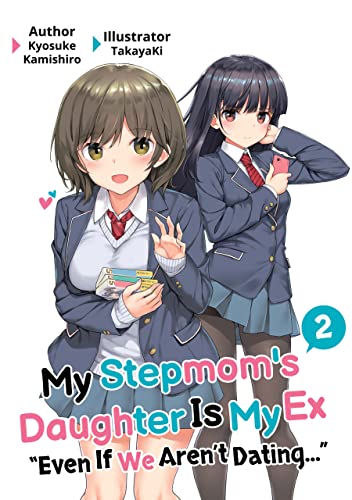
Isana reminded me not a little of Kotomi Ichinose from Clannad, and the smile she gives on the cover art doesn’t really match her in this book, where she’s mostly rather expressionless, as part of her social difficulties. She’s really sweet, and I enjoyed seeing Akatsuki and Yume slowly force her to realize that she’s fallen in love with Mizuto. Unfortunately, framing her character as having crippling self-esteem issues and then having to have her forcibly rejected due to… well, due to the plot of the series… seems a bit mean. That said, it’s not nearly as mean as forcing us to spend time around Kagure and Akatsuki, who are there to remind us what a really toxic couple are like. Not that they’re dating, but this certainly is not the “if we just admitted we still love each other everything would be solved” of our two leads, there’s some real hatred here. I fear we will learn more about it later.

So yeah, this series still works best when it’s about the main couple. Fortunately, they’re the stars of the book. Recommended with reservations.

Kuma Kuma Kuma Bear, Vol. 10

By Kumanano and 029. Released in Japan by PASH! Books. Released in North America by Seven Seas. Translated by Jan Cash & Vincent Castaneda. Adapted by M.B. Hare.

This is a lighter volume of Kuma Bear, despite the threat of the destruction of an ancient sacred tree. You know Yuna’s got this, though the fight is difficult enough that she has to switch from black bear onesie to white bear onesie, and she ends up fairly exhausted. Speaking of that switch… Kuma Bear is, I think, mostly written for a male audience, but I also think we’re supposed to go “aww” at the antics more than “Cor!”. Yuna has to strip to change her costume, and there’s a shot of her in her underwear. But it’s not particularly sexy, and the narrative is far more concerned with Yuna’s childish bear panties and her reaction to anyone who finds out about them. Yuna has an image that she wants to keep up of her as a cool lone wolf (or rather lone bear) sort, but it’s constantly undone by the reality of her being the big sister to 11 million kids and also having older than she looks issues. Is embarrassment fanservice?

Arriving at the elf village allows the author to bring out a whole mess of fantasy novel elf tropes to make fun of, from their supposed perfect hidden tracking skills (which Yuna spots immediately) to the fact that even “grandfather” looks, at most, about 40 years old. The barrier nis weakening, however, and it turns out the problem is that the elves’ sacred tree has been infested by a parasite, who is slowly killing it and weakening said barrier. So it’s up to the elves to fix things… along with Yuna, who can enter the protective ward that no one but elves can, because, you know, OP bear. There’s also other dangerous monsters to fight, some of which might actually kill off an elf or two… but probably not, as this is not one of the dark Kuma Bear books. The worst we’ll see is Yuna worrying about her secrets.

Yuna has, for the most part, remained quiet on her origins and the basis of her awesome powers, not even telling Fina, the one person she’s closest to. I had wondered briefly if she might open up a bit to the elves here, given that they sign a contract that tortures them with unstoppable laughter if they reveal her secret, but no, it turns out she’s just telling them about her bear gates so she can set one up here, and her bear phone so that the village can communicate with Sanya and Yuna when they want to. It doesn’t feel like she’s revealing much here, but I get it. Yuna hates making ties with other people, but does it anyway, and she also hates it when people praise her because she doesn’t think of any of it as HER. The Bear Suit is the OP heroine. She’s just the girl inside it. Which is an interesting psychological trauma to dig into, but I doubt we’re going there soon.

If you read Kuma Bear, you’ll enjoy this. If you don’t, we;ll, cute but OP bear girl slice-of-life again.