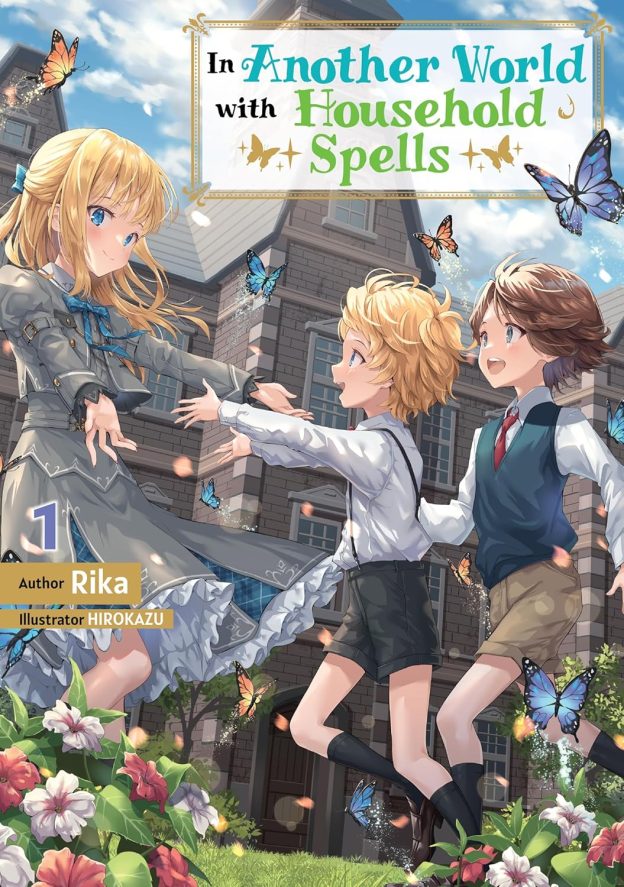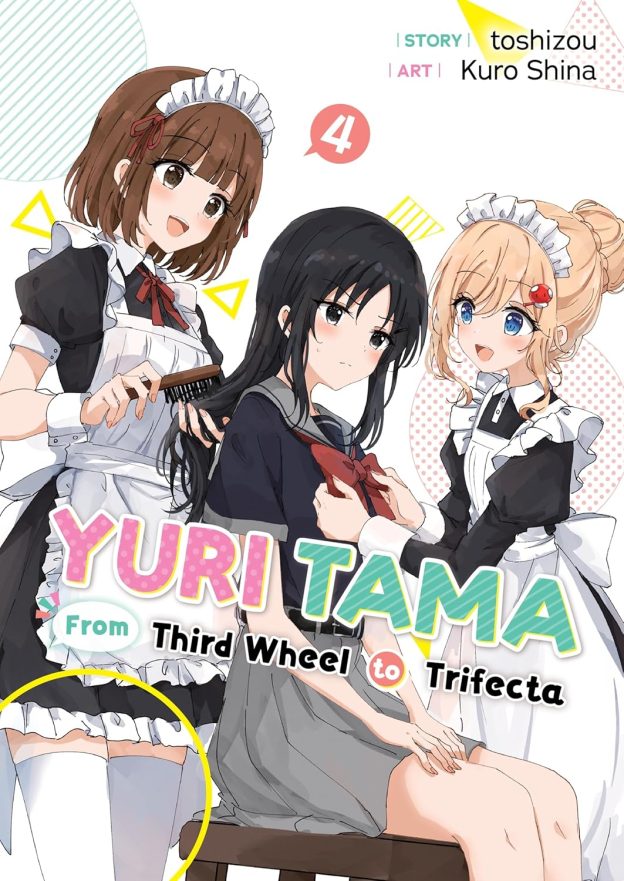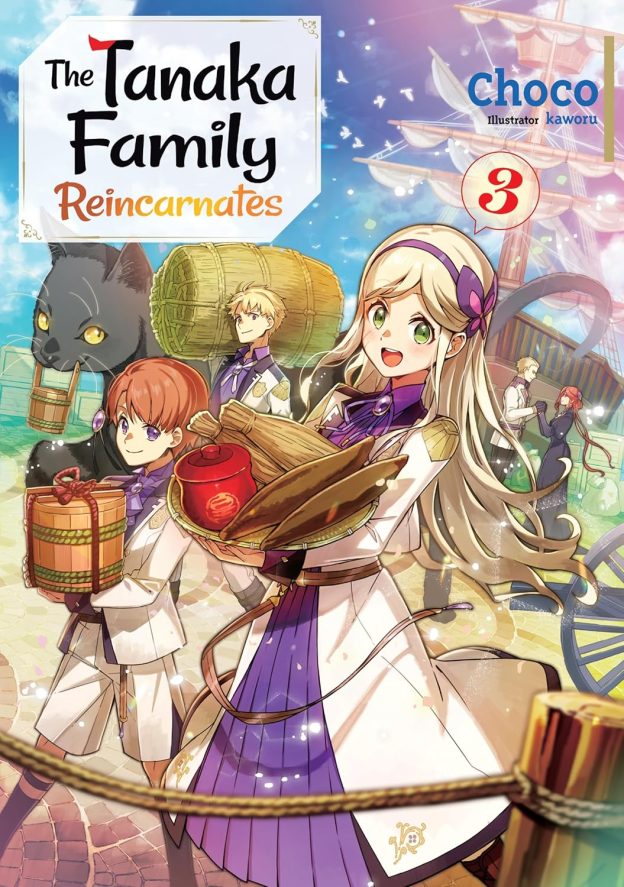
The Tiny Witch from the Deep Woods, Vol. 1

By Yanagi and Yoh Hihara. Released in Japan as “Mori no Hashikko no Chibi Majo-san” by TO Books. Released in North America by J-Novel Club. Translated by Nathan Macklem.

This is an excellent book, which tends to wander around genres, but about a third of the way through I reasoned that it’s a disgraced noble book in disguise. Which the first half almost is, but then once she sets off on her journey to another country that has requested her (also very disgraced noble), it suddenly becomes a slow life feel good sort of book. At its heart is Misha, who is the tiny witch on the cover, and her journey from innocent child to grieving, stricken child (it’s not a spoiler, one of the chapter titles is literally “Sudden Tragedy”) and gradually trying to come to terms with that grief and live on. That said, all of that has to war with the insatiable curiosity that permates everything Misha does, which makes her a great apothecary, but like so many other fictional heroines also makes her prone to stumbling on the mystery of the week, which is the genre this eventually settles on.

Misha is a young girl who lives, as the title might suspect, deep in the woods, where she learns medicine from her mother, who is from a people who specialize in medicine. Her father visits every month or so, and they seem happy, till after a couple of months of no visiting it turns out her father was in a war and is on the verge of death… and is also a duke. So her mother takes Misha and rushes to the castle (where, years earlier, her mother had been severely injured by the duke’s wife) to try to save his life. She does this, but, alas, the wife is still around, so you can probably guess what happens. Worst of all, now that Misha is here she’s bound to get involved in… sigh… politics. Fortunately, she’s not only a terrific apothecary but has the ability to charm anyone who spends more than ten seconds around her.

This is a fantasy, sort of. Misha’s mother comes from a people who really, really made me think of elves but are not actually elves. Late in the book there’s also a dragon god, who acts exactly like you’d expect a dragon god to act in a light novel written for women. But it’s also grounded in the reality of Misha’s entire life being upended and her never really being allowed to stand still. She leaves the woods via horse (she’s never been on one before), has to treat all the wounded soldiers (she has very little hands-on experience), and then she’s sent as a student (she avoids concubine when people figure out who her relatives are) to another country, where she comes across attempted murders, attempted sacrifices, and wolf puppies who she heals through the power of goodness and niceness. No, really, it’s hinted that she literally has some sort of magical calm healing powers. The reason this works is that Misha is written terrifically, never getting too cloying, and remembering the grief that she’s still processing all book.

So, to sum up: this is a winner, and you should go get it.

The Angel Next Door Spoils Me Rotten, Vol. 8.5

By Saekisan and Hanekoto. Released in Japan as “Otonari no Tenshi-sama ni Itsu no Ma ni ka Dame Ningen ni Sareteita Ken” by GA Bunko. Released in North America by Yen On. Translated by Nicole Wilder.

There’s a real difference between a short story volume made up of stories that were given away as free stories to those who bought the volume at a certain store, and short stories that have been specially crafted for a short story volume. This definitely feels like the latter, and the author, in the afterword, says they tried to make it different from the 5.5 volume by shifting the focus away from the two best friends and over to Amane’s parents and Yuuta. But the real focus of the entire volume is on Mahiru, on what she used to be like and how she became the young woman she is today. Which means, at last, we finally get a glimpse of Koyuki, the maid who acted as Mahiru’s de facto parent in the absence of any love from her actual parents. And yes, that means that this book can get quite dark, because any time from before Mahiru met Amane is really depressing.

The wraparound for this is that Amane sees Mahiru writing in her diary, which she says she keeps to save important memories – good and bad – in her life. The stories: Mahiru and Yuuta have a polite but awkward lunch; Mahiru and Amane discuss the value of hard work; Mahiru is a Very Good Girl and asks Koyuki if she can learn how to cook; Amane’s parents discuss what to do about the boy who caused Amane to become the self-loathing young man he is now; Mahiru deals with the aftermath of Amane meeting her father; Mahiru and Amane discuss skin care; Mahiru and Amane buy matching flatware; Amane asks why Mahiri always speaks formally with everyone; We get Mahiru and Amane’s night in bed together from her POV; Amane takes care of Mahiru when she’s having her period; a 10-year-old Mahiru has to deal with the jealousy of other girls.

As you can see, a majority of these stories sound light and fluffy, and they are. The ones set in Mahiru’s past mostly are there to emphasize why she is the way she is, just as the volume where they return to Amane’s hometown does that for him. (His parents are awesome here, and we see how violently protective Shuuto is of his son.) She was a profoundly lonely girl who had tremendous difficulty – still does – opening up to anyone. As a result, she has Amane on a huge pedestal, and we realize the title The Angel Next Door Spoils Me Rotten applies to both of them equally. They’re living together for the most part already, picking out furniture as if they’re married, and while they haven’t gone all the way yet, the lead up to the sexy times indicates that certain bases were achieved.

People read this series for the warm fuzzies, and this book gives them to you in spades. Just be ready for some heart-rending stuff whenever we see Mahiru as a younger girl.

High School DxD: Extracurricular Daywalker

By Ichiei Ishibumi and Miyama-Zero. Released in Japan by Fujimi Fantasia Bunko. Released in North America by Yen On. Translated by Haydn Trowell.

Generally speaking, when I write my reviews of this series, they tend to either talk about the sheer depths of boob-obsessed sleaze that Issei possesses, or I talk about how it really hammers the shonen beats in 4-4 time to the point where it’s an ur-example of the genre. That said, we’ve now reached the point where the two are deeply intertwined with each other and cannot be separated. The book opens with a follow up to the silliest story in the previous volume, as Xenovia, Irina and Asia strip naked and force Issei to play the eroge they bought for him. Asia’s familiar requests that it be allowed to eat her school swimsuit before it helps our heroes. And the entire plot revolves around the fact that Issei’s obsession with breasts has allowed the villains to realize they can invade other worlds, because his Breast Goddess clearly was not an angel, fallen angel, demon, or anything else from the DxD universe. Even the dragons are going along with Issei’s perversion now. The boobs are the genre.

This is essentially a continuation from Book 14, as there’s been a coup in vampire society, so now our heroes have to go and rescue Rias and Kiba, who are now essentially under house arrest. As it turns out, the coup is being engineered by the Khaos Brigade (no surprise), but also involves Gaspar’s childhood friend Valerie, who is the new puppet queen and has a grail inside her, meaning she can now hear the voices of the dead. Oh, and one of the strongest dragons is also here as hired muscle. The vampires end up being taken care of fairly quickly, mostly as they’re easily manipulable and don’t know what “deal with the devil” really means. Unfortunately, the devil is Vali’s grandfather, who had been missing for ages, and he’s now back… because he heard about what happened to Issei, and now he wants to run wild in other dimensions.

This is Gaspar’s book, and he gets the big (and somewhat terrifying) power up, but he doesn’t get as much focus as the girls (for some strange reason, coughcough). Gaspar’s birth and upbringing are garden variety abusive for this type of series, as is his rampage of revenge after Valerie suffers a horrible fate (don’t worry, she’s not dead – DxD is not the sort of series that is ready to kill off a girl who is basically Vampire Asia – but she’s comatose). Issei also gets a power up that was fun to see him play around with, but we’re used to that from him. No, the biggest moment of the book for me was the finale, when all the groups team up to go after their new, far greater enemy, and decide they need a team name. Koneko suggests “DxD”, and I could swear you hear triumphant music. It’s a title drop!

Surely next time it’s Irina’s time to shine!… no, sorry, it’s Rossweisse next time. Ah well. For fans of the series only, but this was pretty good.