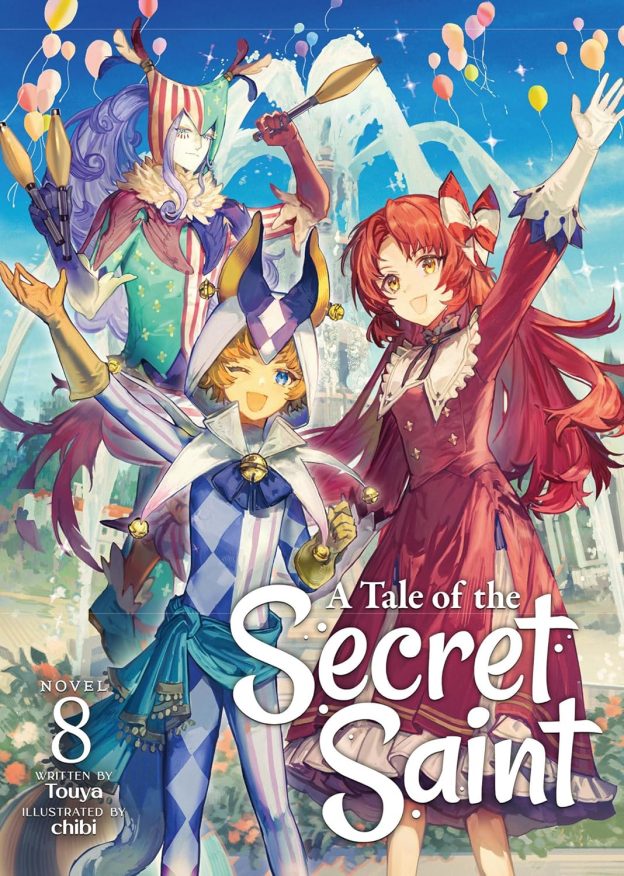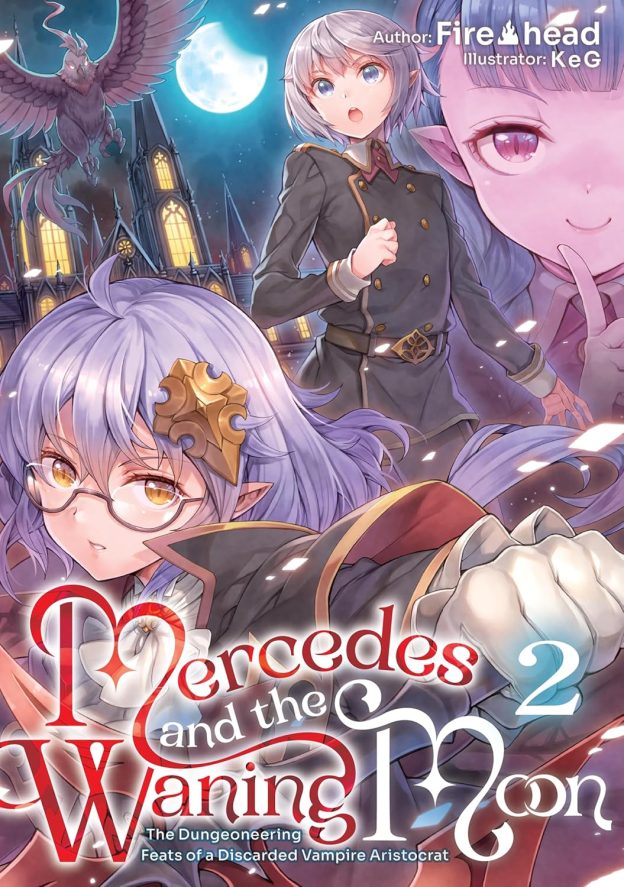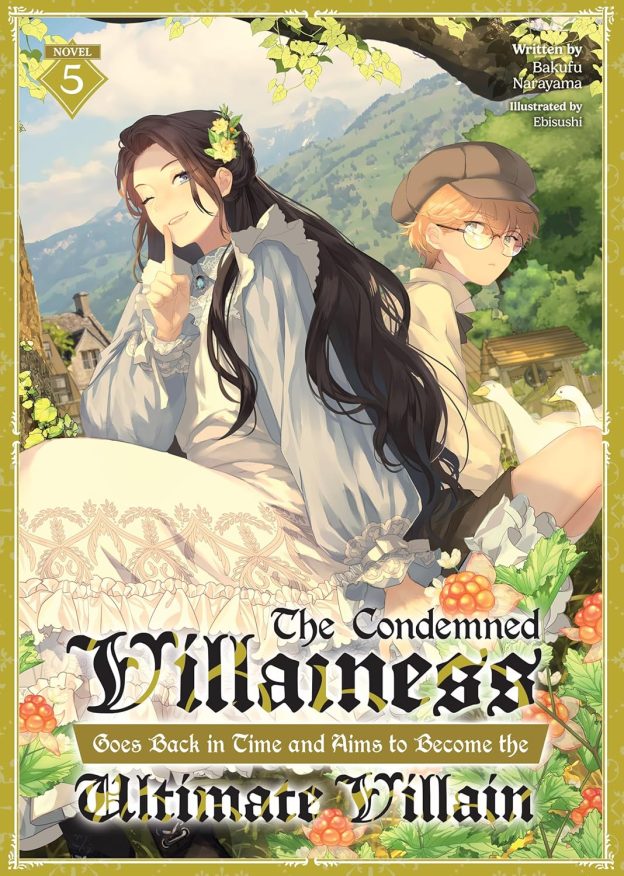
The Reincarnator and the Goblin Maiden’s Happily Ever After: Using a Past Life to Keep a Joyful Wife, Vol. 3

By Shinten-Shinchi and Tokima. Released in Japan as “Goblin Reijō to Tensei Kizoku ga Shiawase ni Naru Made: Konyakusha no Tame no Zense Chishiki no Jōzu na Tsukaikata” by Kadokawa Books. Released in North America by J-Novel Heart. Translated by Geirrlon Dunn.

I am noticing that a lot of these light novel romances, particularly in the “J-Novel Heart” line, tend to wrap up in three volumes. It seems like a natural ending point, and I’ve grown very used to seeing the classic “couple in wedding gear” cover on that third book. We don’t get that here, because Gino and Ana are already married (instead you get one of their few moments of downtime in the book), but I am pleased that the author has realized this is the time to stop. Mostly, it needs to stop before it becomes a shonen manga. As Gino reveals more of his true abilities, and Ana learns just how powerful her magic really is, they are forced to go up against the king, and also go to war with another country. The book ends with Ana being named a literal saint. Where does one go from there? Best to wrap it up.

Gino and Ana have been gifted new territory… which just had the most important people leave it. Yup, he’s being set up to fail again, so that they can justify having him divorce Ana and getting her properly married to a prince. This is the danger of curing your wife’s condition and showing off the beauty she always had. Fortunately, they’re both very clever and are able to get the territory running smoothly. And then the king is, supposedly, tragically killed on a coach journey. And the queen and crown prince are, tragically, also supposedly dead. Which means the first prince is now the king. He’s already sent assassins to try to kill Gino, that didn’t work. Now he’s going to send Gino to fight in a pointless war. Does this happy couple ever get to relax?

As with so many other romance novels, the unstated message here is “communicate with your spouse!”. Despite growing increasingly more powerful and confident, the pair are still beset by doubts constantly, and therapy can only do so much. Ana, in particular, has PTSD from Gino dumping her in the last book, and is convinced it will happen again if she ever disobeys him. This despite the fact that she was the top military strategist in their school, and also has enough magic power to reduce a battlefield to molten lava. Fortunately, they both get over it by the end of the book. I also liked the subplot with Lady Francess, which reminds people that, as much fun as it’s been seeing Ana’s mother be the power behind everything in the country, sometimes women want to actually run things. I’m not sure that I buy not executing her with the rest of her family, but hey. I also appreciated, once again, the crown prince becoming a better person through the power of therapy. More therapy in light novels!

All this and references to Sailor Moon, Naruto, Jesus, Buddha, and magical stuffed animal bodyguards that will make readers think of Bookworm. This was a solid series, I’m happy to have read it.

Ascendance of a Bookworm: Hannelore’s Fifth Year at the Royal Academy, Vol. 1

By Miya Kazuki and You Shiina. Released in Japan as “Honzuki no Gekokujou: Hannelore no Kizokuin Gonensei” by TO Books. Released in North America by J-Novel Club. Translated by quof.

I’ll be honest, I was a bit worried about this title. I have mentioned before that I get very uncomfortable about books where the key feature is “let’s embarrass the main character”, and Hannelore seems to run on that half the time. I was expecting to be cringing a lot. And, well, I wasn’t wrong, to a degree. Especially in the first half, it can be difficult to watch Hannelore attempt to be the waif-ish romantic heroine in a duchy filled with meatheads who only care about fighting. That said, given that we’re getting Hannelore’s POV for an extended period, we get to see a far deeper side of her here, and we discover that she’s not really as far away from the Dunkenfelger default as she pretends to be. We especially see this in the second half of the book, where things go completely bananas and Hannelore shows that it’s not just Rozemyne that can accidentally derail an entire country.

Hannelore shows up for her penultimate year at the academy with a few new complications in her life. After the disaster with the bride-stealing ditter, she has been assigned two fiances from within the Duchy – Rasantark, a typical hot-headed, not-so-bright knight guy, and Kenntrips, a milder, smarter sort. Both grew up with Hannelore and both are in love with her, something that she only finds out as this book goes on. This is to avoid her being snatched away by Sigiswald, who’s an Aub now but still appalling, and still thinks he deserves whatever he wants. Oh yes, and Ortwin, of Drewanchel, *also* proposes to her. The trouble is that none of this surfeit of fiances is who she wants – she’s still carrying a torch for Wilfried. So she decides now is the time to make her feelings clear… and things get weird.

I don’t want to spoil too much about the last half of the book, which comes as a genuine surprise. I will say that it seems to put a nail into the coffin of Hannelore and Wilfried. We see what his future is expected to be, and we also see him trying to convey to Hannelore without actually saying anything that his reputation is actually FAR worse than is publicly known. He indicates that if had been a year earlier he might have said yes… but the Wilfried of a year earlier was far more bratty, immature and impulsive, and that would just be a bigger disaster. The other great thing about this book is Hannelore’s character development, as she’s made to see, over and over again, how her tendency to play all her cards close to her chest and not give away what she’s feeling just makes everyone around her uncomfortable and distrusting, especially after the ditter last year. By the end of the book she’s grown and learned how to lead better… and she’ll need it, as the cliffhanger of the book is (I’m paraphrasing) “My lady, you are fucked.”

The second volume of this sequel (it’s a full sequel, Rozemyne is here but in support – and she’s also clearly the best person to marry Hannelore, except she has Ferdinand and, as far as I can tell, gay people don’t exist in this universe) has just been announced for this August, so it’ll be a year till we see it. I expect the third short story collection will be next. Bookworm fans should love this.

The Tiny Witch from the Deep Woods, Vol. 1

By Yanagi and Yoh Hihara. Released in Japan as “Mori no Hashikko no Chibi Majo-san” by TO Books. Released in North America by J-Novel Club. Translated by Nathan Macklem.

This is an excellent book, which tends to wander around genres, but about a third of the way through I reasoned that it’s a disgraced noble book in disguise. Which the first half almost is, but then once she sets off on her journey to another country that has requested her (also very disgraced noble), it suddenly becomes a slow life feel good sort of book. At its heart is Misha, who is the tiny witch on the cover, and her journey from innocent child to grieving, stricken child (it’s not a spoiler, one of the chapter titles is literally “Sudden Tragedy”) and gradually trying to come to terms with that grief and live on. That said, all of that has to war with the insatiable curiosity that permates everything Misha does, which makes her a great apothecary, but like so many other fictional heroines also makes her prone to stumbling on the mystery of the week, which is the genre this eventually settles on.

Misha is a young girl who lives, as the title might suspect, deep in the woods, where she learns medicine from her mother, who is from a people who specialize in medicine. Her father visits every month or so, and they seem happy, till after a couple of months of no visiting it turns out her father was in a war and is on the verge of death… and is also a duke. So her mother takes Misha and rushes to the castle (where, years earlier, her mother had been severely injured by the duke’s wife) to try to save his life. She does this, but, alas, the wife is still around, so you can probably guess what happens. Worst of all, now that Misha is here she’s bound to get involved in… sigh… politics. Fortunately, she’s not only a terrific apothecary but has the ability to charm anyone who spends more than ten seconds around her.

This is a fantasy, sort of. Misha’s mother comes from a people who really, really made me think of elves but are not actually elves. Late in the book there’s also a dragon god, who acts exactly like you’d expect a dragon god to act in a light novel written for women. But it’s also grounded in the reality of Misha’s entire life being upended and her never really being allowed to stand still. She leaves the woods via horse (she’s never been on one before), has to treat all the wounded soldiers (she has very little hands-on experience), and then she’s sent as a student (she avoids concubine when people figure out who her relatives are) to another country, where she comes across attempted murders, attempted sacrifices, and wolf puppies who she heals through the power of goodness and niceness. No, really, it’s hinted that she literally has some sort of magical calm healing powers. The reason this works is that Misha is written terrifically, never getting too cloying, and remembering the grief that she’s still processing all book.

So, to sum up: this is a winner, and you should go get it.