Yesterday was light to nonexistent. The same for tomorrow. But today? We had ALL THE THINGS! Starting off with the joint Kodansha and Vertical panel, which was in a nice big panel room and there was no line. A good start!
Ben Applegate was there from Kodansha and Tomo Tran from Vertical. They talked about all the giveaways they had at the booth, with Summer Wars stickers, After the Rain music download cards, Devils’ Line stuff, Pop Team Epic “shitty merchandise” (nicely done), and some of the Monogatari art exhibit being available to look at. Vertical then announced a new artbook from VOFAN, the artist for the Monogatari Series novels. This is actually a collection of his non-commercial art, so it should be far more intriguing than just another collection of stuff you’ve seen before in a larger size. It’s coming in Fall 2019.
Kodansha ran through some of their titles currently being released, including the Sailor Moon Eternal Edition, and mentioned the Sailor Moon musical is coming to NYC and DC. They then got on to new titles, though one is a collected edition: Princess Jellyfish is getting a Complete Box Set! Given at one point they weren’t sure they’d even finish the series, this is terrific news. Tales of Berseria is a three-volume series from Ichijinsha’s Comic REX, and is a fantasy title based off of a video game – I think it has an anime as well.
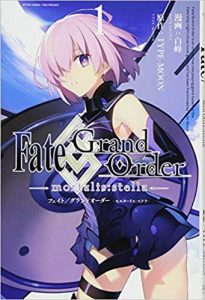
Fate/Grand Order gets its first manga adaptation license with the mortalis stella series, a 2-volume manga that is also Ichijinsha, from their Comic Zero Sum. I believe this stars Mash. Lastly, Kodansha is doing a new Cardcaptor Sakura edition with all the bells and whistles – hardcover, some new covers, new translation – the whole nine yards. I was a bit surprised by this, given it wasn’t too long ago that Dark Horse had re-released the series, but I’ve heard this will be worth the repurchase.
There were also two new digital announcements, coming out the first and second week of December, respectively. Red Riding Hood’s Wolf Apprentice (Akazukin no Ookami Deshi) is a Betsushonen title with Little Red Riding Hood as a beast hunter, and it’s supposed to be amusing. And on a more ridiculous note, we have Crocodile Baron, a Weekly Morning title that is three volumes long. Kodansha emphasized that the synopsis was irrelevant because there was a crocodile in a top hat on the cover. They’re not wrong.
After this there was Q&A, but I had to leave right away to get to the debut panel for Denpa Books, run by Ed Chavez (ex-Vertical) and Jacob Gray (ex-Fakku). They had special guests at the panel, though they quickly had to leave, so weren’t the focus – Range Murata, character designer for Last Exile and others, whose futurelog artbook is out next month and has ALL the bells and whistles – seriously, I could not believe how tricked out this artbook is. Hiroyuki Asada is known here for Tegami Bachi, but is putting out a more experimental title via Denpa, PEZ.
Most of the titles talked about have been mentioned before in some way or another. I was most interested in Invitation from a Crab and Maiden Railways, both of which seem to come from Hakusensha’s Rakuen Le Paradis, as well as Dining with the Emiya Family, for Fate/Stay Night fans who know what the most important thing in the Fate franchise is – FOOD.
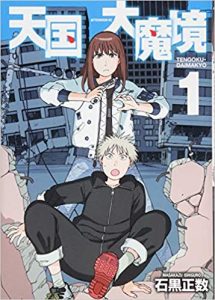
The new titles included Super Dimensional Love Gun, a Shintaro Kago title that Fakku had previously released, but this is a nicer edition. It contains the usual Shintaro Kago warnings – if you aren’t a fan of his, you’ll likely be grossed out. Heavenly Delusion (Tengoku Daimakyou) is a brand new seinen series running in Kodansha’s Afternoon, and Denpa managed to license it before the first volume was even out in Japan. They’re super excited for it – it’s post-apocalyptic slice of life, a popular genre lately. The creator may be better known for SoreMachi. The last Denpa title was Pleasure and Corruption (Tsumi to Kai), from Square Enix’s Young Gangan. Honestly, it feels more like a Fakku title than a Denpa title, but it’s being sold to those who liked the sort of dark sexuality of Flowers of Evil. Expect BDSM themes.
After eating lunch, I had a choice: I could go to Viz, or go to Vertical’s Katanagatari panel. I chose the latter (sorry, Viz, I always seem to miss you at these events). Vertical’s panel had the translator, Sam Bett, who walked through some of the things they’re doing with the title – the footnotes, which are half gag and half serious, as well as the hardcover omnibus editions. Given its author, you can imagine how much sword wordplay and how many sword puns there are. Most of the audience has already seen the anime, but Sam was quick to note that even given the novels are short (each is approximately 100 pages in English, meaning the omnibus is 300), there is a lot the anime had to adapt or leave out.
Even leaving aside that it was Nisioisin, translating it could be difficult – these are not “light” novels, and there’s lots of obscure or archaic Japanese terms that need adapting. He also explained why he used “mutant blades” rather than “deviant blades” – he felt the latter made them sound more evil than they really should be seen. It takes him longer to do Nisio’s translation than other titles, but not a LOT longer – about 20% longer, on average. He said even a Japanese reader might find themselves reaching for a dictionary to look up words with this one.
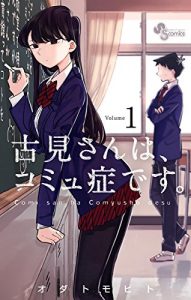
Despite not being at the Viz panel, I will be looking at their announcements anyway, at least the manga ones. My Hero Academia SMASH! is a 5-volume comedy series that ran in Shonen Jump +, and is, as you might have guessed, a wacky 4-koma take on the popular series. This license was obvious, but I am quite pleased nevertheless. Komi Can’t Communicate (Komi-san wa Komyushou Desu) was a very popular license announcement, being a Shonen Sunday title with a lot of buzz. Komi is the cool, aloof beauty according to the school, but in reality, she’s just bad at communication.
Beastars is a Weekly Shonen Champion title (nice to see Akita Shoten stuff out over here in a (mostly) post-Tokyopop world), and it’s an award winning manga about anthropomorphic high school students. It’s 11+ volumes, and looks dark but cool. Lastly, Haikasoru has a new sci-fi novel announcement with Automatic Eve, that seems to be a steampunk title.
I was lurking waiting for Yen Press, so I checked out the GKids panel. They’re a group that puts out a lot of the “anime movie” series we’ve seen recently, the most recent varieties being Mirai and Fireworks: Shall We See It from the Side or the Bottom?. They’re also now in charge of the Ghibli line, with nice handsome DVD/Blu-Ray releases of those titles. They are clearly cery excited about getting these releases into theaters, and the trailers for the movies looked exciting and fun – I particularly liked the Miyazaki documentary.
My last panel of the day was Yen Press, but they also announced the most titles – easily. The panel room filled up rapidly, being near standing room only 15 minutes before, but I think everyone who wanted to get in was able to. Announcing for Yen were Kurt Haessler and Tania Biswas, as well as Carl, Ivan, and Anna, who sadly remained last name-less. Unlike all the other panels I went to, Yen knew it had a pile to announce, so did not do a run-through of any recent releases – through they did have some poster giveaways, including Psycome, much to my surprise.
We began with the novel of Wolf Children: Ame and Yuki. Yen had previously released the manga, but they now have the novel adaptation of this popular movie. (Anna spoiled a death when describing the plot, which Kurt mercilessly mocked her for.) Whenever Our Eyes Meet is a yuri anthology a la Eclair, but this time the protagonists are all adult women, for those who are tired of the usual high school girls. Speaking of yuri, we also have Killing Me!, a one-volume title from Comic Cune about two high school girls who are a vampire and a vampire hunter. It looks very much like a “yuri for guys” series.
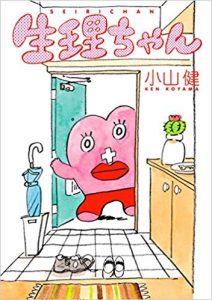
Also one volume is Little Miss P (Seiri-chan), an Enterbrain series about an anthropomorphic period. As in menstruation period. The audience was taken aback, but Yen clearly really enjoyed talking about this one, and think it will be great fun. Last Round Arthurs: Scum Arthur and Heretic Merlin is a brand new fantasy title – brand new in Japan too, so there’s not much info about it. The author did Akashic Records of Bastard Magical Instructor, the artist does Index. It seems to be about an Arthurian tournament, and is two volumes to date.
On a darker note, they have both the novel and the manga for Torture Princess (Isekai Goumon Hime), whose artist has also done Black Bullet. It’s a Media Factory title and is apparently quite violent, about a man who is reincarnated in an artificial body and the demon hunter who wants his help. The German subtitle is Fremd Torturchen, and the manga runs on Kadokawa’s Comic Walker site. We also get an Enterbrain light novel called The Dirty Way to Destroy the Goddess’ Hero (Megami no Yuusha wo Taosu Gesu na Houhou). No, not that kind of dirty. The demon lord just wants to eat tasty food, but heroes keep trying to kill them. So… they summon their own hero.
Back to manga with The Monster and the Beast (Bakemono to Kedamono), a BL title from Asuka Ciel, about a nice monster and a nasty older man, and their budding relationship. Yuri Life is another yuri title, this one taken from Pixiv artist Kurikurihime, and also features two women in their late twenties, not late teens. It’s very sliec-of-yuri life. For fans of Beasts of Abigaile, we have a title from the same creator. Kaiju Girl Caramelizer (Otome Monster Caramelize) runs in my old nemesis, Comic Alive (pauses to shake fist at sky), but looks good anyway, and is about a girl who has an affliction that when she gets upset, her body parts “monsterize”.
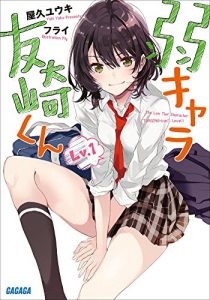
More light novels with Bottom-Tier Character Tomozaki (Jaku Chara Tomozaki-kun), a Shogakukan title (in other words, expect print-only for this one) about a loser gamer guy who thinks the world is awful, and a winning gamer girl who shows him the “cheats” to help him succeed at life. It gets points for not being a fantasy title, I’ll say that. The artist is also pretty fly. (I’m so sorry.) Back to manga for God Shining Moonlight Howling Moon (Mahou Shoujo Flaming Star), by the creators of Trinity Seven and High School of the Dead. Given that combo, you know there will be breasts a plenty. It also runs in Bessatsu Dragon Age, which sort of clinches that, and is about a Magical Girl called upon to save the Earth… but is she one of the good guys?
The last one is another light novel, The Hero Is Overpowered But Overly Cautious (Kono Yuusha ga Ore Tueee Kuse ni Shinchou Sugiru), a fairly recent Kadokawa series. A fantasy world is in desperate straits. They need a hero. They get a really strong one… but he’s far too wary, never wanting to attack unless he knows he can win. What makes this interesting is that the book is from the POV of the goddess who summoned him, and she has to find a way to make him do what needs to be done. It’s five volumes in Japan. After that came Q&A, but honestly, let’s just move along now.
And with that, I wrapped up my second and busiest day of Anime NYC. Again, I was pretty happy. The staff was nice and knowledgeable, the crowds were large but reasonable, and I got to see everything I wanted. Tomorrow I have no panels I want to see, so will take in Artist’s Alley, and may also scope out the AMV contest.