Franken Fran, Vols. 5-6

By Katsuhisa Kigitsu. Released in Japan by Akita Shoten, serialized in the magazine Champion Red. Released in North America by Seven Seas. Translated by Jocelyne Allen, Adapted by Shanti Whitesides.

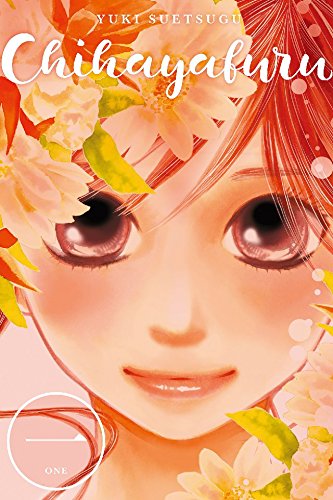
One of the strengths of Franken Fran is how it can be both an anthology of one-off horror concepts and also have an increasingly diverse continuity to call on when it needs to. Sometimes this means that one chapter bleeds into the next, as with the actor who has Fran give him pheromones so he can have more personal magnetism, followed by his co-star getting surgery so that she looks like a shoujo manga cover. Sometimes it’s building on previous volumes, as with the increasingly bizarre and over the top stories of the superhero Sentinel and his many knockoff imitators. And sometimes it uses the regular cast of Franken Fran, as when Fran tries to stop the horror that is her sister Gavril by unleashing a never ending army of Kuho clones, which Fran apparently decides to do for no reason other than to show us how hilariously awful Kuho’s life is.

franken5-6

I mentioned Gavril, and there’s no question she’s one of the best things about this volume, as well as possibly the most popular character in North American fandom. Fran saves lives as a doctor but has morals and ethics that make no sense to us whatsoever; Veronica has a moral and ethical sense, but is a killing machine. Combine the two in the worst way and you get Gavril, who loves slaughtering for its own sake, and has a deep desire to kill off Fran. I was wondering how Seven Seas would translate her initial chapter, and readers who may have read the source via other means may rest assured that in this official volume Gavril’s potty mouth is present and correct. With a heap of four and five-letter swears, appalling violent carnage, and walking around with her top unzipped, Gavril is a walking M rating. (Franken Fran is still rated OT by Seven Seaas, in case you wondered.)

Franken Fran’s bread and butter is still its horror and humor, though, and both combine well here provided that you don’t try to sympathize with anyone involved. Several times in this book Fran is overwhelmed with emotion at what she considers to be a touching, tragic story (even when it isn’t), and manages to make it even worse. She is helped out a great deal by her clients, many of whom are horrible examples of humanity. Franken Fran shows us the seedy underbelly of human desires, and the greed, lust, and desire for power within so many people. If your amusement park is filled with mascots that will immediately kill once they stop hearing music… well, that fits in perfectly with the amusement park aesthetic! This volume doesn’t have as many moments when I laughed out loud, but it has many, many moments when I put my hand to my mouth and went “Oh my god.” It’s that kind of series. If you don’t mind horror (and be warned, the cockroaches make a return here) and love twisted humor, Franken Fran remains a must reda.

A Bride’s Story, Vol. 8

By Kaoru Mori. Released in Japan as “Otoyomegatari” by Enterbrain, serialization ongoing in the magazine fellows!. Released in North America by Yen Press. Translated by William Flanagan.

As you might have guessed from the cover, Pariya is the main focus of this volume, though we do see a brief wrapup of the ‘two wives’ arc from the previous book. We’ve been building up to this storyline for a while, Pariya being the most obvious next bride in line (at least, back at our home base of Amir’s village). But this is definitely going to be a story that will take longer than just one volume, as Pariya’s issues are not ones that are easily solved. I’ve called her the tsundere of A Bride’s Story, but the label doesn’t quite fit her well (indeed, you can argue that most tsunderes don’t fit the label all that well). Pariya is highly emotional, has difficulty focusing, and most importantly, has a low self-image of herself due to everyone’s expectations of what a good wife should be.

bride8

I’ll be honest, it’s very clear that Mori loves drawing Pariya’s faces, especially when she’s frustrated, humiliated, or otherwise blushing her head off. And I love it, even as I sympathize with her. She feels like a modern girl trapped in the late 19th century, and things aren’t helped by the events that begin her arc in this volume: their house burns to the ground, taking with it most of the cloth that had been saved up for her dowry. The family panics; they don’t few Pariya as someone who’s easily married off to begin with, and now without something to give to her potential husband’s family, it’s going to take even more years to make things happen. Pariya, of course, is painfully aware of this, and because she actually DOES like her latest suitor, she’s determined to do something about it, even if it involves… grr… actual needlework.

The scenes of Pariya’s slow, steady progression with the needle, as she drives herself forward by imagining the caustic words of the village elder, who she is literally hallucinating behind her. The good news is that her hard work IS rewarded, and the others are there to show her the joy that can be taken in it – seeing Pariya with a happy blush as opposed to frustrated is also a reward to the reader. That said, the last chapter is darker, as Pariya imagines her future husband dumping her at the altar because of her personality, and then, thanks to her overenthusiastic physical labor during the cleaning of the streams they use for water, she is terrified that he’s scared of the “real” her. (My guess is it’s probably the opposite, but we’ll have to wait till next time to figure that out.)

Pariya is also not helped by having Amir as the perfect example of a superwoman – not only does she have the temperament of a good bride, she also rides horses, hunts big game, can prepare an instant picnic, is good at making friends… she’s the impossible standard that Pariya can’t hold herself up to. No wonder Karluk is trying to improve himself so that he can stand beside her as a good husband. Whether you like Pariya or Amir, though, this is a typically excellent volume of A Bride’s Story.

Strike the Blood, Vol. 4

By Gakuto Mikumo and Manyako. Released in Japan by ASCII Mediaworks. Released in North America by Yen On. Translated by Jeremiah Bourque.

This volume of Strike the Blood features a) our hero trying to stop a molestor on a subway only to get mistaken for a molestor himself; b) our hero walking naked into a bathroom where two young girls are bathing, and the heroine’s reaction as if this is his fault even though it isn’t; c) a childhood friend that everyone assumes is a boy who’s actually a tomboyish girl, now all grown up, here to make everyone in love with the hero uncomfortable; d) two girls waking up next to each other, and teh teasing one saying “you were wonderful last night” despite nothing actually happening; e) bodyswapping, with all the cliches that this entails; and f) two women presented as the big bads of this volume who turn out to be rather pathetic, and are really just a ruse to cover up the actual big bad, who is herself merely a pawn in the game of the actual actual big bad.

Welcome to TV Tropes: The Light Novel.

striketheblood4

Again, there’s no way to really review a series like this without repeating what I’ve said before, so please put up with it. The books still feel as if they’re an adaptation of a pre-existing anime, rather than the other way around. Kojou remains a somewhat underdone hero, though he’s not helped by the fact that this turns out to be the first book in a longer arc, meaning he doesn’t get a big fight to show off with. This is because he spends half the book in the body of his childhood friend Yuuma, and thus is “a normal human” in the sense that most girls who are bred to be a mind controlled tool to rescue a woman from the most well-kept prison in the world is a normal human. And make no mistake about it, Kojou would definitely insist she’s absolutely a normal human, because if you’re going to be an off-the-rack discount copy of Kamijou Touma, you may as well go all the way.

And the series’ strengths remain strong. It’s a light, breezy read, showing that it may copy Index’s hero but not its prose style. The fight scenes are fun. It has several amusing scenes, mostly involving Yukina, such as when she informs the now female Kojou that he should never use the toilet in that body ever, and telling Sayaka “Stuff happened, so he’s a girl now.” As for Yuuma herself, I’m always a sucker for powerful kids with a past history of abuse who hate themselves and think they’re disposable, especially as most narratives exist, rightly, to prove that they’re wrong. I expect the next book in the series will be a lot more serious, and involve a lot more use of vampire powers. Till then, we have this book, which, like the others in the series, is well-written and completely lacking in ambition. It is what it is.