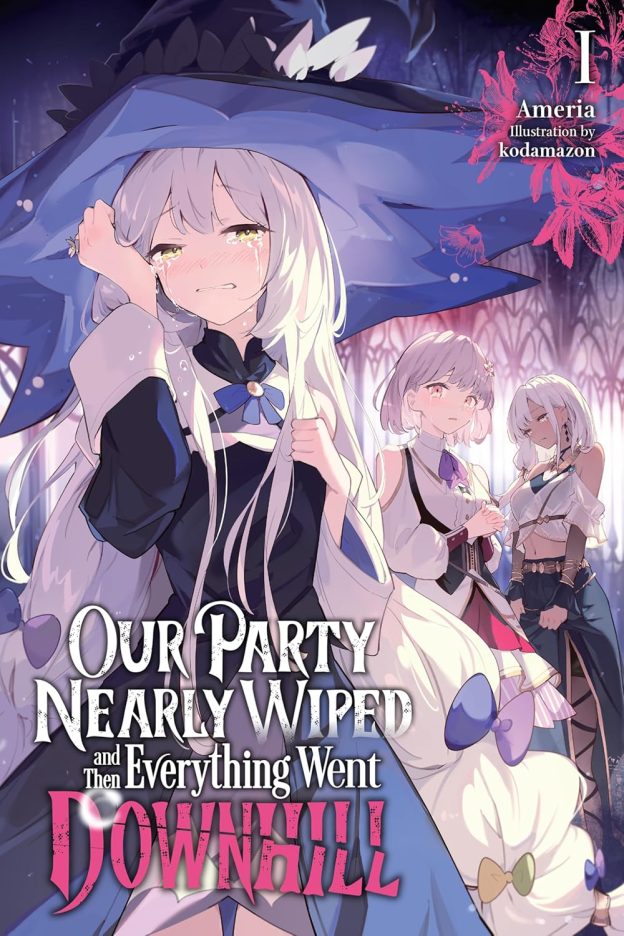
By Ameria and kodamazon. Released in Japan as “Zenmetsu End wo Shi ni Monogurui de Kaihishita. Party ga Yanda” by Enterbrain. Released in North America by Yen On. Translated by Leah Sargent.
Our main character, Walker, remembers his past life from Japan, and also that he’s in a grimdark manga that begins with an adventuring party getting murdered (him) and raped and murdered (the rest of his party) by a monster almost no one has defeated called Grim Reaper. He remembers all this just in time to figure out a way to defeat it. He does not remember this in time to avoid losing an eye and a leg to it. Now he’s recuperating in the Church and trying to combine his stoic, overly serious in-world memories with his somewhat current personality, as well as try to work out if he can ever use a sword again. Because boy, does Walker love swords. He’s invented a new sword style this world doesn’t know. Which is probably why he was able to survive. As for the rest of his party… well, they’re a bit traumatized and guilt-ridden. He really should do something about that too.
Things that annoyed me about this book:
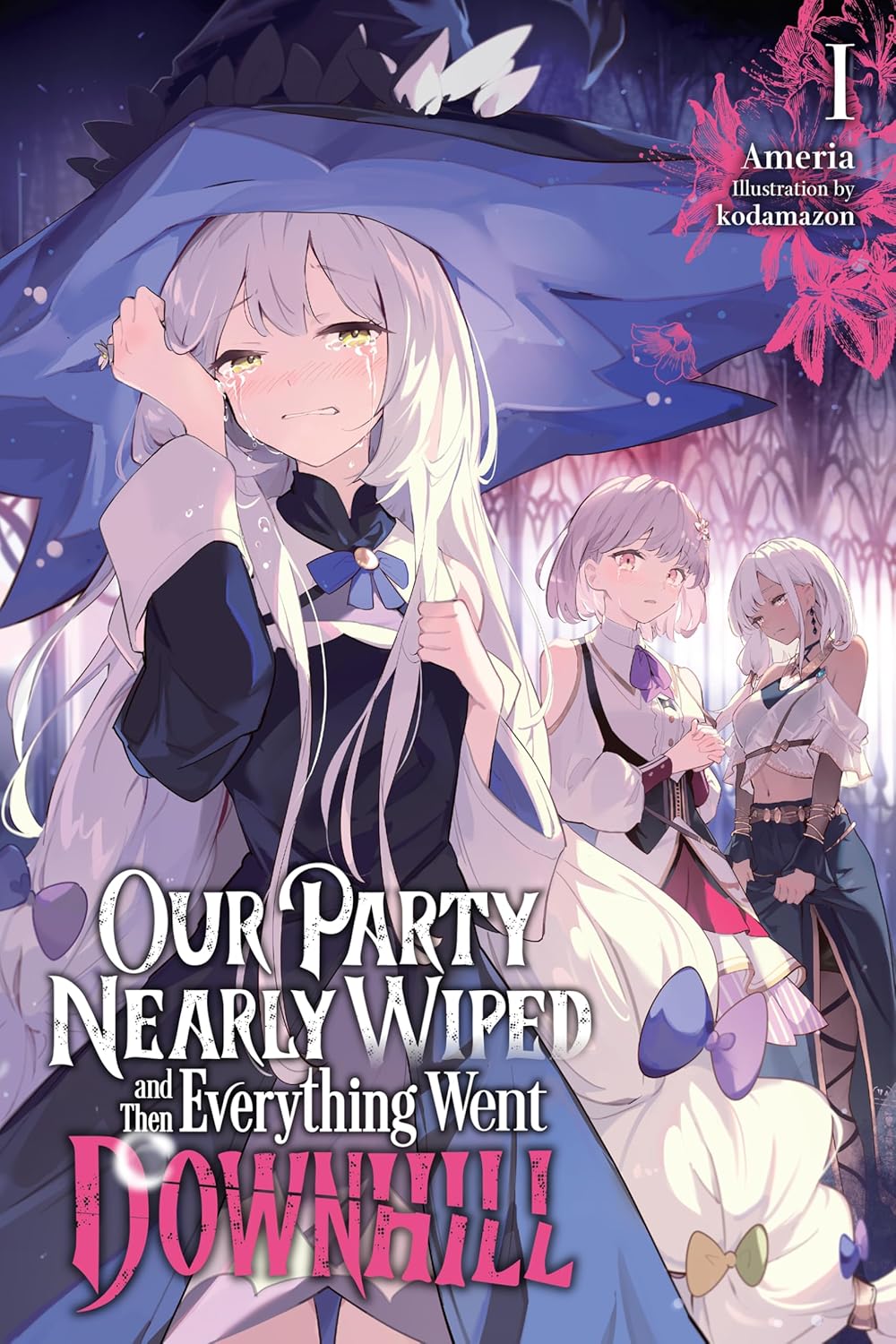
• Lisellarte, the girl with the giant witch hat on the cover, is a supposedly hundred year old magic user who acts like a 7-year-old child most of the time, even before the tragic event that starts things off. She feels like she was added to fulfill the “loli” quotient.
• Euritia, a 13-year-old swordswoman who has a problem with men constantly trying to pick her up, has decided that the best way to deal with her grief is to kill everyone who even comes close to being against Walker.
• Atri, the obligatory Amazon girl, has been told by her grandmother that when she finds the one she loves she needs to “Accept his seed”, but of course every time she tries to he assumes she’s trying to fight him because he is dense.
• Walker himself started off (in the fantasy world) as a stoic blank slate dedicated to his sword fighting and his party. Adding the memories of his past life mostly makes him more annoying than anything else, and the book could easily have happened without any of that.
• Anze, the holy woman who knows their party, gets the fanservice jokes. I’m mostly annoyed at this as otherwise the book is relatively free of a leering fanservice gaze. There are rape mentions throughout, as that’s what originally happened to the party in the “manga”, but Walker doesn’t see the girls as anything but family.
• This is far more serious than I expected it to be, and that works to its detriment. I had assumed, based on the premise, we’d be in for some yandere stuff, and that’s true, but it’s really mild and not funny. Honestly, I wish there was more yandere stuff, it might lighten up the book.
• Most importantly, though, is that the author’s barely disguised fetish in this book isn’t yanderes or lolis or large-breasted nuns. It’s the girls all crying brokenly and feeling guilt-ridden and sad. They say in the afterword this is true, I’m not reading into it. And that makes this a different kind of book. It’s not about this group having to overcome a severe setback and tragedy, about Walker overcoming his disability, and about the girls regaining their confidence. We won’t see the girls regaining their confidence because the sad crying guilt-ridden monologues are the point. This is about the reader going “awwww” while seeing them castigate themselves.
And you know what that is? It’s torture porn. Bye-bye. You weren’t enjoyed.